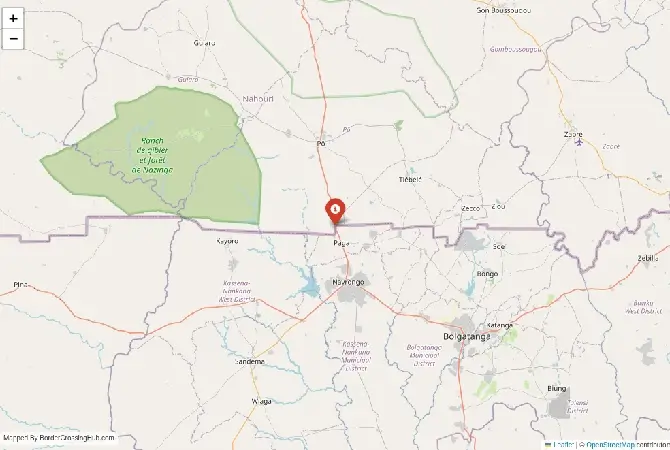
Monthly Update (September 2026):
Dakola & Paga remains one of the key Burkina Faso-Ghana road crossings and continues to be important for traffic between Ouagadougou and northern Ghana. The border itself has no major September closure to report, but the two countries are carrying out a formal reaffirmation of their shared boundary, with work launched at Dakola in June. This is a longer-term boundary-management project rather than a restriction on travelers. September road users should also keep an eye on weather conditions, as Burkina Faso is still in its rainy season.
About this crossing
Unlike more remote crossings in the region, this one is well-established, handling a steady mix of long-distance buses, freight trucks, and individual travelers moving between Ouagadougou and southern Ghana.
Security Situation and Regional Stability
Compared to Burkina Faso’s eastern regions, the Dakola–Paga crossing is generally considered more stable, though you should still stay updated on current conditions. Northern Ghana remains relatively secure, while southern Burkina Faso has experienced fewer incidents than other parts of the country.
Nearby Border Crossings



You may encounter security checks on the Burkina Faso side, particularly on approach roads. These are usually routine, but they can add time to your journey.
Staying informed through official travel advisories is always recommended, especially if you plan to travel further north into Burkina Faso.
Historical Role and Trade Importance
This crossing has long played a role in regional trade and movement. Ghana’s access to the Atlantic coast and Burkina Faso’s landlocked position make routes like this essential for commerce.
Over time, Dakola and Paga developed into key transit points. Goods such as agricultural products, fuel, and manufactured items pass through here regularly. You will notice this in the presence of cargo trucks, though not at the overwhelming scale seen at some larger West African borders.
The route also serves as a cultural link, connecting communities with shared histories across the border.
Border Layout and Facilities
Facilities at Dakola and Paga are relatively well-developed for the region. You will find designated immigration and customs buildings on both sides, along with separate areas for vehicles and pedestrians.
The layout is more organized than at smaller crossings, but it can still feel busy. Signage exists but may not always be clear, so you should be prepared to ask for directions.
Electricity and basic systems are generally available, though much of the process still involves manual checks and paperwork.
Operating Hours and Timing Your Crossing
The border typically operates during daylight hours, often from early morning until evening. While there may be some activity beyond these hours, you should not rely on crossing late at night.
Arriving early in the day helps reduce waiting time. Traffic increases as buses and trucks arrive, particularly around منتصف النهار.
Weekends can be slightly less busy, but the crossing remains active throughout the week.
Visa Requirements and Documentation
You should prepare all necessary documents before arriving.
For Burkina Faso, most travelers require a visa obtained in advance. Visa-on-arrival is not consistently available at land borders.
For Ghana, a visa must typically be arranged before travel. Ghana does not generally offer visa-on-arrival for standard турист travelers at land crossings.
A yellow fever vaccination certificate is mandatory for both countries. Border officials routinely check this, so keep it easily accessible.
Crossing Procedure and Wait Times
The process follows the usual sequence: exit formalities on one side, then entry procedures on the other. Distances between offices are short and easy to walk.
Wait times are moderate. On a typical day, you might complete the crossing in 30 to 60 minutes. During bus arrivals or peak truck movement, delays can extend beyond an hour.
If you are traveling by bus, expect to wait longer as all passengers are processed together. Private travelers may move slightly faster, depending on conditions.
Road Conditions and Transport Connections
Road infrastructure is one of the advantages of this crossing. The route connecting Dakola to Ouagadougou is paved and in relatively good condition.
On the Ghana side, Paga connects to the national road network leading south toward Bolgatanga and further to Accra. This makes the crossing accessible and practical for long-distance travel.
Public transport is widely available. Long-distance buses, minibuses, and shared taxis regularly operate along this corridor, making it easy to reach the border without private transport.
Seasonal Factors and Weather Impact
Weather can influence your experience, though the main roads remain usable year-round.
During the rainy season, heavy rains can slow travel and create muddy conditions in surrounding areas. In the dry season, heat and dust are the main challenges, especially when waiting in queues.
Carrying water and sun protection is advisable, particularly during hotter months.
Scams & Warnings
As a busy crossing, you may encounter unofficial helpers offering assistance with paperwork. These individuals often expect payment and are not necessary for completing the process.
You should follow official procedures and avoid paying for unnecessary services. If fees are requested, ask for receipts and clarification.
Another common issue is missing a step in the process. With multiple checkpoints, it is important to ensure you receive all required stamps before leaving each side.
Local Atmosphere and Daily Movement
The Dakola–Paga crossing reflects a mix of commercial and personal travel. You will see traders transporting goods, families visiting across the border, and long-distance travelers moving between countries.
The atmosphere is active but manageable. Compared to larger crossings, it feels more organized while still retaining the energy of regional trade.
Language can vary. English is widely spoken in Ghana, while French is used in Burkina Faso. Being prepared for both can make communication easier.
Practical Tips for Travelers
You should keep your documents organized and ready for inspection. Printed copies of visas and vaccination certificates are essential.
Carrying small amounts of local currency helps with legitimate fees and small purchases. Food and basic services are available near the border, but having your own supplies can be useful during delays.
Mobile network coverage is generally available, though it may vary near the border area.
Final Thoughts
The Dakola–Paga crossing is one of the most practical and commonly used routes between Burkina Faso and Ghana, supported by solid road connections and steady transport links.
Closing Note
You should approach this crossing with preparation and patience. It offers a reliable way to travel between the two countries, and with the right planning, it is one of the more straightforward border experiences in the region.
View all border crossings between Burkina Faso and GhanaPractical information
Fuel
Burkina Faso: <1 km - Ghana: <1 km
Currency
XOF,GHS exchangers
Safety information
Well used, monitored
Connectivity
Highway,buses,taxis
Have you crossed here?
Help other travelers by sharing your experience, wait times, and any updates.