Monthly Update (September 2026):
Lunga & Nakovo is currently moving with only short waits. September 4 reports showed waiting times fluctuating between about 5 and 15 minutes during the afternoon and evening, with the latest report at around 5 minutes. The crossing is open to all citizens and operates from 07:00 to 19:00, making it a useful daytime alternative to busier Romania-Serbia routes. Travelers should avoid arriving close to closing time.
About this crossing
Operational Details
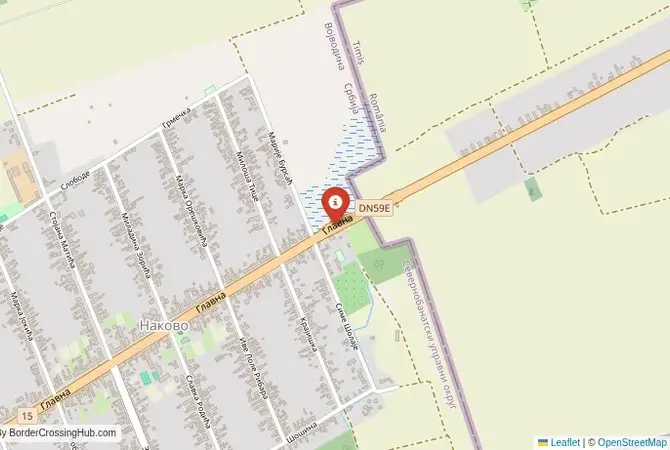
This checkpoint connects Serbia’s North Banat District with Romania’s Timiș County. It is a minor, local crossing, and the most important factor for any traveler is its restricted operating hours. The crossing is typically open daily from 8:00 AM to 8:00 PM and is designed exclusively for passenger cars, cyclists, and pedestrians. The complete absence of freight traffic ensures a tranquil and unhurried experience. It is absolutely essential to verify the current schedule before planning your trip, as hours for such small, local crossings can be subject to change, especially during the off-season or on public holidays. This is not a crossing for those on a tight schedule, but for those who have time to embrace its rural rhythm.
A History of Settlement
The history of this region is one of planned settlement and agricultural development. After the Habsburgs took control of the Banat from the Ottoman Empire, they initiated a large-scale colonization program in the 18th century. German settlers, known as Banat Swabians, were brought in to drain the marshlands and establish the orderly agricultural villages that still characterize the landscape today. The villages of Nakovo and Lunga (originally known as Kettős-major) are products of this era, built on a grid plan to maximize agricultural efficiency. The border, drawn after World War I, divided this culturally and economically cohesive region, often separating villages from the very lands their residents farmed. This crossing, therefore, serves as a small but important link, helping to maintain the cross-border connections that have existed for centuries.
Nearby Border Crossings


Border Crossing Procedure
The border crossing procedure is as simple and low-key as its surroundings. As Serbia is not an EU member, you will undergo full customs and immigration checks. The process involves two stops at small, functional checkpoints on either side of the border line. You will first clear the Serbian exit control, where your passport and vehicle documents (registration and Green Card insurance) will be checked. You will then drive a short distance to the Romanian entry point at Lunga for inspection by the Poliția de Frontieră. Due to the very low volume of traffic, the entire process is usually extremely quick, often taking only a few minutes. The guards are often familiar with the local cross-border commuters, adding to the informal, community feel of the checkpoint. Recent reports confirm minimal or no waiting times.
The Surrounding Region
The surrounding area is a flat, open landscape of vast agricultural fields, stretching to the horizon. This is the Pannonian Plain at its most characteristic. On the Romanian side, Lunga is part of the larger commune of Comloșu Mare. The nearest significant town is Jimbolia, which has a number of interesting museums, including one dedicated to the history of the press and another to the firefighter Karl Florian. The regional capital, Timișoara, is about an hour's drive away. On the Serbian side, Nakovo is a small village. The nearest major town is Kikinda, which is famous for being a wintering ground for thousands of long-eared owls that take up residence in the trees of the town's central square, creating an incredible natural spectacle. Kikinda is also known for its annual "Days of the Pumpkin" festival, where growers compete to have the largest pumpkin. The region is a paradise for birdwatchers, with the open fields and wetlands attracting a wide variety of species.
Practical Travel Information
Practical planning is essential for using this route. The crossing is reached by secondary roads on both sides. These roads are paved but can be narrow and are primarily used by local agricultural traffic. A relaxed driving pace is appropriate. You will need the Romanian `rovinietă` vignette, which can be purchased online. Serbia's motorway toll system does not apply to this rural area. The official currencies are the Serbian Dinar (RSD) and the Romanian Leu (RON). There are absolutely no services at the border itself. You must plan for fuel and currency exchange in the larger towns of Kikinda in Serbia or Jimbolia in Romania. It is a route that demands a degree of self-sufficiency.
Final Considerations
The Nakovo–Lunga crossing is for the traveler seeking solitude and an authentic glimpse into the rural life of the Banat. It is a peaceful and uncomplicated passage through a landscape of immense scale and quiet beauty. Its limited hours and remote location make it entirely unsuitable for transit on a schedule, but for those exploring the back roads of the Banat, it offers a unique and personal border crossing experience. It is a journey that emphasizes the vastness of the land and the small, resilient communities that call it home, a true escape from the hustle of the main international routes, now with efficient and quick passages reported.
View all border crossings between Serbia and RomaniaPractical information
Fuel
Romania: <1 km - Serbia: <1 km
Currency
Near Nakovo (RON, RSD)
Safety information
Rural, low crime
Connectivity
4G coverage
Have you crossed here?
Help other travelers by sharing your experience, wait times, and any updates.