Monthly Update (October 2026):
The Jaša Tomić & Jaša Tomić Border Crossing is seeing a relatively light flow from Romania this October. On October 6, the Romania-to-Serbia wait was around 25 minutes, while the crossing remains one of the smaller local routes through the Banat rather than a major international freight corridor. Its limited operating hours make the timing of the journey more important than the queue itself, particularly outside the main daytime period.
About this crossing
Operational Details
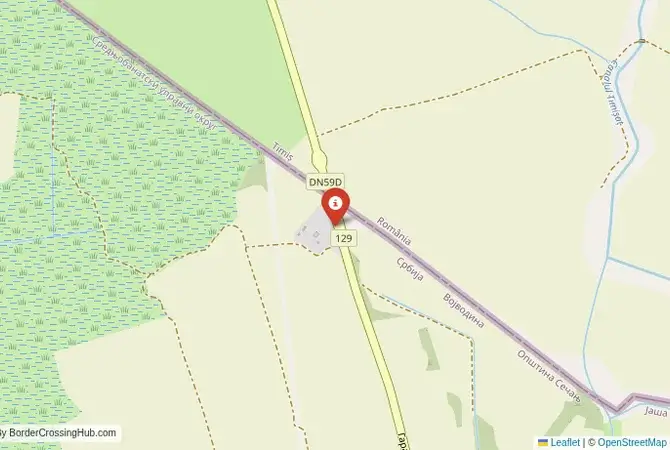
This crossing connects the Central Banat District of Serbia with Romania's Timiș County. It is a minor crossing point, and its most critical feature for any traveler is its restricted operating hours. It is typically open daily from 8:00 AM to 8:00 PM and is intended for passenger cars, cyclists, and pedestrians only. The lack of freight traffic ensures a peaceful and unhurried experience. However, it is absolutely essential to verify the current schedule before planning your trip, as hours for such local crossings can be subject to change, especially outside the main tourist season. Arriving to find the barrier down for the night would result in a significant and frustrating detour to the next nearest crossing at Srpska Crnja-Jimbolia.
A History of Taming the Marshes
The history of this area is a story of transformation. In the 18th century, the Habsburg authorities, after conquering the region from the Ottoman Empire, began a massive project to tame the wild, marshy plains of the Banat. This involved draining the swamps and regulating the rivers, most notably the Bega and Timiș. The Bega Canal, which was constructed during this period, made the land arable and also created a navigable waterway connecting the city of Timișoara to the Danube river system, turning it into an inland port. This incredible engineering feat allowed for the intensive agricultural development that defines the region to this day. The villages of Jaša Tomić and Foeni are products of this era, settled by various ethnic groups to cultivate the newly reclaimed land. The border, drawn in 1920, cut across this engineered landscape. The Serbian village, formerly known as Modoš, was renamed after Jaša Tomić, a prominent Serbian journalist and political figure from the late 19th and early 20th centuries.
Nearby Border Crossings



Border Crossing Procedure
The border crossing procedure reflects the local character of the checkpoint. As Serbia is a non-EU country, you will pass through full customs and immigration controls. The process consists of two stops at small, functional checkpoints. You will first clear the Serbian exit control, where your passport and vehicle documents (registration and Green Card insurance) will be checked. You will then drive a short distance to the Romanian entry point at Foeni for inspection by the Poliția de Frontieră. Because the traffic volume is extremely low, the entire process is usually very quick and personal, often taking just a few minutes. It feels less like an international border and more like a community checkpoint, where the guards might be processing a local farmer one minute and a curious tourist the next.
The Surrounding Region
The surrounding area is a flat, open landscape of agricultural fields, ideal for those who enjoy the quiet beauty of rural scenery. On the Romanian side, Foeni is a small village. A point of interest nearby is the Foeni domain, which includes a historic manor house associated with the Mocioni noble family. The regional capital, Timișoara, with its grand squares, vibrant cultural life, and stunning Habsburg-era architecture, is about an hour's drive away. On the Serbian side, Jaša Tomić is a quiet village. The nearby city of Zrenjanin is the administrative center of the Central Banat District and has a charming city center with impressive 19th-century architecture, a testament to its past as a major trade and industrial hub in the Austrian Empire. The region is also popular for its hunting grounds and fishing spots along the canals and rivers.
Practical Travel Information
Practical planning is essential for this route. The crossing is reached by secondary roads on both sides. These roads are paved but can be narrow, so a relaxed driving pace is appropriate. You will need the Romanian `rovinietă` vignette, which can be purchased online. Serbia's motorway toll system does not apply to this area. The official currencies are the Serbian Dinar (RSD) and the Romanian Leu (RON). There are no currency exchange services at the border. You must obtain local currency in a larger town like Zrenjanin or Timișoara. Likewise, fuel up before heading to the border, as service stations are scarce in the immediate vicinity. Having offline maps downloaded is a wise precaution for navigating the rural road network.
Final Considerations
The Jaša Tomić–Foeni crossing is a route for the curious traveler looking to escape the main arteries of transit. It offers a peaceful and uncomplicated passage through the unique, engineered landscape of the Banat. Its limited hours demand careful planning, but the reward is a border crossing experience that is personal, swift, and deeply connected to the agricultural rhythm of the region. It is a journey that highlights the quiet, everyday connections that persist across a line drawn on a map, a testament to the shared environment and history of the people who call this fertile plain home.
View all border crossings between Romania and SerbiaPractical information
Fuel
Romania: >3 km - Serbia: >2 km
Currency
Near Jaša Tomić (RON, RSD)
Safety information
Remote, rural zone
Connectivity
4G coverage
Have you crossed here?
Help other travelers by sharing your experience, wait times, and any updates.