Monthly Update (September 2026):
Selb-Wildenau & Aš remains a useful Germany–Czech Republic crossing, with no major September closure reported. Germany's current controls on its Czech border continue through September 15, followed by a newly notified control period beginning September 16 and running into March 2027. Travelers should therefore keep valid identification available throughout September even though this is normally an open Schengen frontier.
About this crossing
Location and Connections
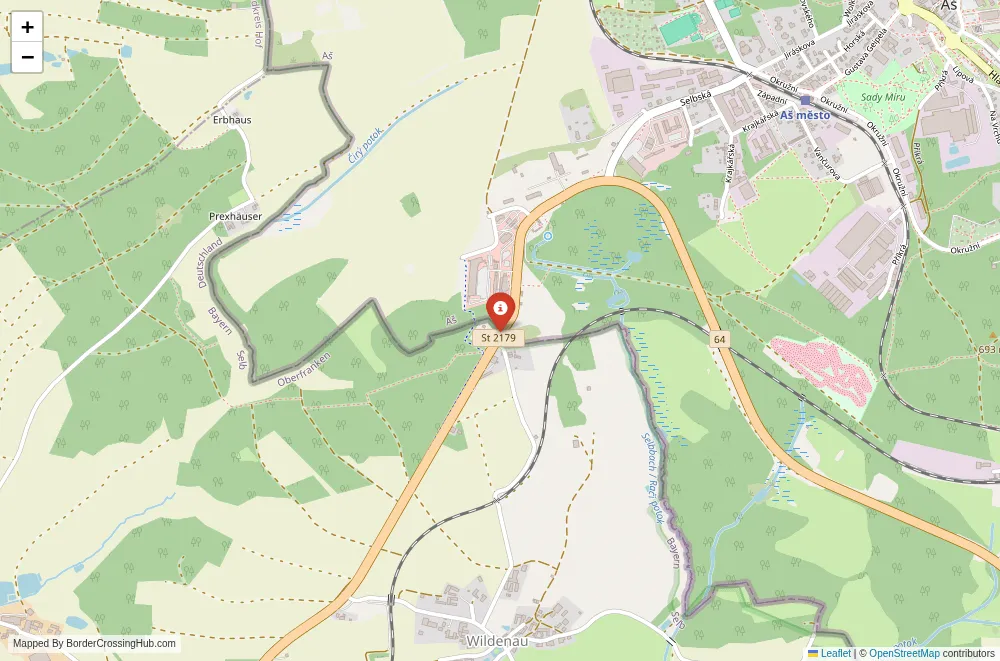
You arrive here where Wildenau, a small district of Selb in Germany, meets the western edge of Aš (formerly Asch) in Czechia's Karlovy Vary Region. The road follows Bundesstraße 299 (B299) on the German side, transitioning to Silnice I/25 or local routes into Aš. From Selb's center, Wildenau sits a short 5 to 10 minute drive south. On the Czech side, Aš lies about 5 minutes from the line, with connections to Cheb (20-30 minutes) or Františkovy Lázně nearby. Cars, local buses, cyclists, and pedestrians dominate; truck use remains limited on this non-motorway path. The crossing supports shopping trips, work commutes, and access to the tri-border area near Germany, Czechia, and Poland farther north.
Alternative Names
It appears as Selb-Wildenau – Aš border crossing, Wildenau-Aš, or Selb-Aš (with Wildenau as the German border point). Older references use Selb-Asch or Wildenau-Asch.
Nearby Border Crossings


Historical Background
The spot gained fame on October 3, 1938, when Adolf Hitler crossed here into the Sudetenland after the Munich Agreement, entering annexed territory amid Nazi propaganda fanfare. Stones and the old German customs building still mark the 1938 line on the German side near today's crossing. Post-WWII, the Iron Curtain fortified it heavily until 1989. The border reopened gradually in the early 1990s (noted as one of six new crossings in July 1990), with full Schengen access in 2007 removing permanent infrastructure. Old checkpoint buildings were dismantled around 2008, leaving little trace beyond markers and photos from that era.
Geopolitical Context
Schengen since late 2007 normally permits unrestricted movement. Germany maintains temporary controls on all Czech land borders due to migration and security concerns. As of February 10, 2026, these extend at least through March 15, 2026, with Bundespolizei conducting random spot checks. This smaller crossing sees lighter enforcement than motorways, but inspections for ID or vehicles can occur near the line. No fixed booths remain. Check German Federal Police or Czech Interior Ministry sources for updates, as extensions follow periodic reviews.
Practical Crossing Procedures
You drive straight across the local road, guided by border signs or stones. Temporary measures may lead to a police stop shortly after entering Germany for passport/ID verification, travel questions, or quick document checks. EU citizens show national ID or passport. Non-EU nationals need valid passports, visas/residence permits if required, and supporting details like accommodation. Carry vehicle insurance; no vignette needed for this non-highway route. Pedestrians and cyclists cross easily on the road or shoulder.
Typical Wait Times
Under normal flow, you pass in seconds. Random checks introduce variability: most vehicles clear quickly, but selected stops take 10 to 30 minutes depending on questions or short queues. Traffic stays moderate with locals and shoppers, so delays rarely build significantly even on weekends.
Operating Hours
The road operates 24 hours a day, year-round. Schengen eliminated fixed schedules. Winter snow might slow hilly approaches briefly, but the crossing point remains open.
Transportation Options and Road Conditions
Own car offers flexibility; local buses connect Selb to Wildenau and Aš to Cheb or nearby towns. No direct rail crosses here (nearest lines serve Selb or Aš indirectly). The road provides decent pavement through gentle hills with curves, farmland, and wooded patches. Views include open fields and the Fichtelgebirge slopes. Watch for local vehicles or bikes on quiet sections.
Scams & Warnings
Scams stay minimal at this community-oriented crossing. No widespread touts or fake services reported. Czech border shops in Aš sell cheaper fuel, groceries, tobacco, alcohol, or other goods to Germans; occasional mentions involve pushy vendors or unfavorable informal exchanges. Secure items in cars during any police stops. The area feels calm and low-risk for prepared travelers.
Nearby Attractions
Aš features the Aš lookout tower (rozhladna) on Benešův palouček hill, offering views over the tri-border region, plus historic sites and spa proximity in Františkovy Lázně. Selb is known for porcelain museums and factories (Porzellanikon). Wildenau provides quiet village access. Cross-border cultural trails include art installations like "Wir 2 / My 2" steel sculptures along paths between Selb and Aš. The zone suits hikers, cyclists, and those interested in border history or porcelain heritage.
Seasonal Variations and Weather Impacts
Winter snow December to March calls for winter tires; roads can ice in shaded hills. Summer brings more day-trippers and hikers with milder conditions. Autumn colors the landscapes with fewer crowds. Rain slicks surfaces occasionally, but weather closures remain uncommon on this local route.
Travel Tips and Preparation
Carry passport or ID always due to possible checks. Shop or refuel in Czechia for savings. Offline maps help in rural areas with variable signal. Pack layers for hill weather shifts. Check police sites or border apps for control updates before setting out. Follow marked paths on trails to respect private land.
Cultural and Economic Significance
Cross-border shopping sustains local trade: Germans buy affordable Czech items, supporting Aš's small economy. The route fosters ties in the Fichtelgebirge and western Bohemia through shared history (including Sudetenland events), joint cultural trails, and community projects that bridge past divisions.
Before You Cross
Confirm temporary check status from official sources right before travel. With prep for occasional stops and regional roads, you handle this historic local crossing and explore the porcelain-spa borderlands. Safe travels.
View all border crossings between Germany and Czech RepublicPractical information
Fuel
Germany: <1 km - Czech Republic: <1 km
Currency
EUR; CZK in Aš/Selb; ATMs
Safety information
Queue spillback at times; follow cones
Connectivity
Wi-Fi points; 4G
Have you crossed here?
Help other travelers by sharing your experience, wait times, and any updates.