Monthly Update (September 2026):
Bad Brambach & Horní Paseky remains a quiet local connection between Saxony and Czechia, with no major September change identified. Germany's temporary border controls on the Czech frontier continue throughout the month and into the renewed period beginning September 16. The route should remain useful for local travel, with occasional checks more likely than significant queues.
About this crossing
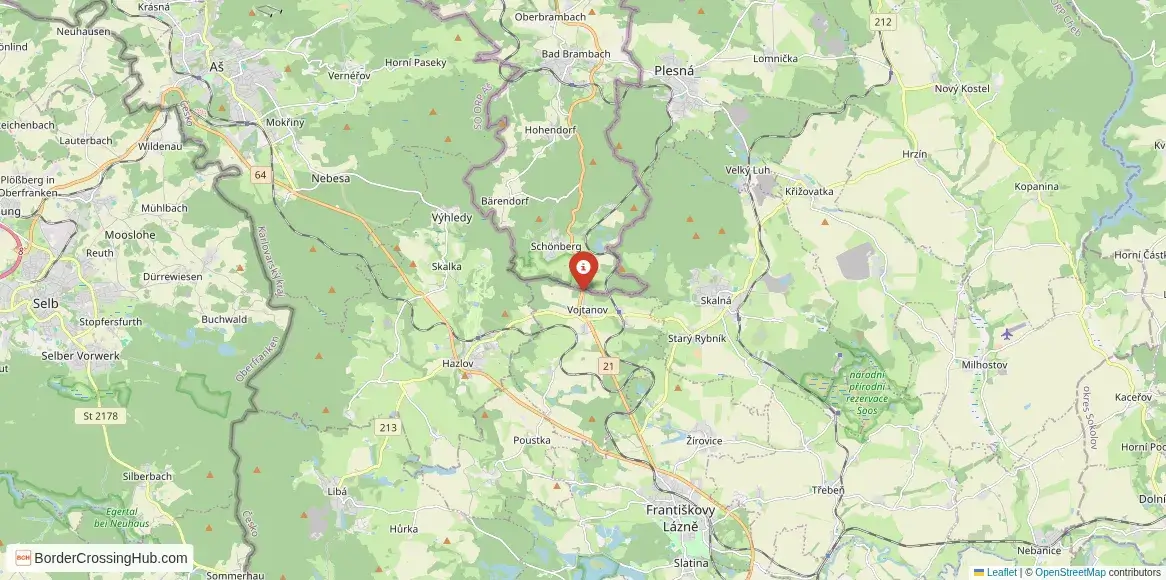
Location and Basic Connections
You come to this crossing where the Czech settlement of Horní Paseky (part of Aš municipality in the Karlovy Vary Region) borders Bad Brambach in Germany's Vogtlandkreis. It occupies a hilly, forested spot near the historical site of former Oberreuth village, with a small road or path serving as the link. Foreign visitors cross here for quiet hikes, to visit memorials to vanished settlements, or as part of short walks from Bad Brambach's spas into the Czech borderlands. Alternative names include the Horní Paseky Bad Brambach frontier crossing or Oberreuth border. As a Schengen internal point, it normally allows unrestricted movement with no fixed infrastructure, but temporary controls stay in effect on the German side as of February 10 2026.
Historical Background and Geopolitical Role
The border line here stems from post-World War II agreements in 1945, which adjusted the Czech-German frontier in Central Europe. Horní Paseky (Upper Pastures) and adjacent areas like Oberreuth were predominantly German-speaking before the war, with expulsions and resettlements in the late 1940s changing the population. The crossing appears as a minor pedestrian or local access point, noted in EU lists during Czechia's 2004 accession and 2007 Schengen integration. It ties into the region's spa and natural heritage, with Bad Brambach's radon springs drawing visitors across. Nearby memorials, including a cross at the former Oberreuth site, commemorate lost villages. The spot supports low-key cross-border walks in this sparsely populated Vogtland-Egerland fringe, reflecting gradual reintegration after historical divisions.
Nearby Border Crossings


Current Status and Safety Considerations
Germany keeps temporary internal border controls with Czechia until at least March 15 2026, due to irregular migration, smuggling networks, asylum pressures, and security issues from global conflicts. These result in random spot checks on German approaches or the crossing rather than permanent booths at minor points. Czechia does not apply routine reciprocal controls here. At this very low-traffic location, checks remain rare given the limited use, but police could stop pedestrians or vehicles for ID verification. The surroundings offer typical rural safety, with no documented scams, aggressive approaches, or border-specific problems. Carry your passport or national ID at all times to respond to any possible check.
Operating Hours and Wait Times
The crossing functions continuously as an open local path or road under Schengen rules, with no gates or fixed operating hours. Temporary controls create occasional variability: most passages occur without notice, while a random intervention lasts 5 to 20 minutes for document inspection or questions. This secluded point sees very few people, so delays stay negligible even during spot operations. Summer hikers or occasional spa day-trippers might add slight activity on weekends. Weather in the foothills influences access, with winter snow or ice complicating hilly paths and rain making them muddy.
Visa Requirements for Foreign Visitors
Schengen regulations cover entry: EU/EEA/Swiss citizens move freely with valid ID or passport. Non-EU nationals receive visa exemptions for up to 90 days in any 180-day period if eligible, or must possess a Schengen visa. The Entry/Exit System applies at external borders but not routinely at internal crossings like this; spot checks might confirm compliance. During a control, show your passport and supply details on accommodation, financial means, or travel intentions if requested. No entry or exit fees apply here.
Crossing Procedures Step by Step
You approach via local roads or trails from Horní Paseky or Bad Brambach, where the border often shows only through subtle signs, boundary stones, or natural shifts in terrain. Normally, walk, cycle, or drive across as forests and hills continue without pause. Should German police perform a control, anticipate a roadside or path stop for ID submission and simple inquiries about your journey. Respond directly and the exchange ends rapidly in this sparse environment. Pedestrians and cyclists follow the same routes without dedicated facilities. The change appears minimal, with immediate rural scenery on both sides.
Transportation Options and Road Details
Local roads from Bad Brambach lead to the crossing, narrow and winding but paved in parts through hilly Vogtland countryside. On the Czech side, paths connect to Horní Paseky and Aš. No major public transport directly serves this minor point: regional buses reach Bad Brambach, with trains via nearby crossings like Vojtanov/Bad Brambach on the Plauen-Cheb line. Driving suits the short scenic route. Scenery features dense woods, pastures, small streams, and Ore Mountain vistas. Traffic remains extremely light, perfect for peaceful drives or hikes. Cycling fits moderate terrain with trails in the area.
Nearby Attractions and Practical Tips
Bad Brambach features its renowned radon mineral springs, baths, wellness facilities, and parks. Horní Paseky area includes memorials to former Oberreuth village and hiking paths through forests. Carry ID always because of controls. Euros circulate on both sides, Czech koruna helpful in Horní Paseky; cards work in spas and towns. Pack layers for foothill weather, sturdy shoes for trails, and water for remote walks. Explore boundary stones or memorials on foot. Cross in daylight for safer navigation on smaller paths.
Cultural and Economic Significance
The crossing preserves subtle connections in this Vogtland-western Bohemia borderland, where nature and spas attract shared visitors. Historical German-Czech elements persist in place names, memorials, and wellness customs. It enables modest tourism to trails and historical sites, representing Schengen's understated rural integration despite temporary security measures.
Final Planning Notes
Review current details on temporary controls from reliable EU or government sources before your trip, ensure ID stays handy, and incorporate a small buffer for any unexpected verification. This remote, forested path crossing delivers a tranquil border experience between Germany and Czechia for those who prepare accordingly.
View all border crossings between Germany and Czech RepublicPractical information
Fuel
Germany: ~3-5 km - Czech Republic: ~6-8 km
Currency
EUR; CZK in Cheb/Bad Elster; ATMs
Safety information
Forest roads; winter ice and fog
Connectivity
Wi-Fi points; 4G
Have you crossed here?
Help other travelers by sharing your experience, wait times, and any updates.