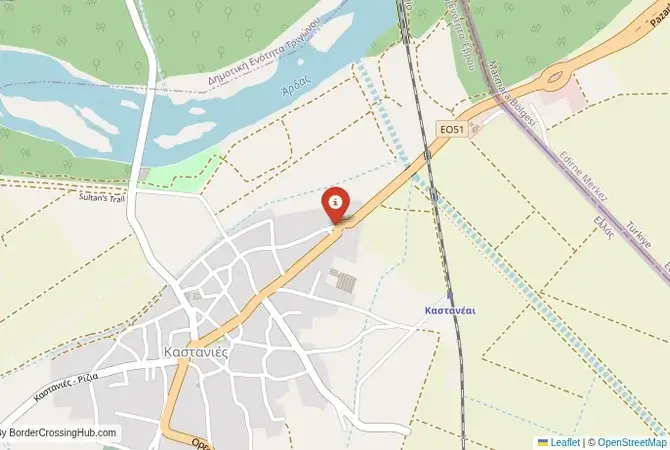
Monthly Update (October 2026):
Kastanies & Pazarkule is currently showing more variable traffic than its smaller scale might suggest. On October 6, monitoring put the wait around an hour and at another point above 100 minutes, while İpsala was briefly moving in about 20 minutes. Pazarkule remains useful for travelers heading toward Orestiada and the Evros region, but the current figures make it worth comparing both crossings before leaving Edirne.
About this crossing
Historical and Geopolitical Context
The 200-kilometer Greece-Turkey border, set by the 1923 Treaty of Lausanne, runs along the Evros River. Pazarkule-Kastanies, 9 kilometers southwest of Edirne, emerged as a secondary crossing after the Ottoman era. During the Cold War, NATO-Warsaw Pact tensions led to heavy guarding. In 2020, Turkey opened its side, drawing 13,000 migrants to Pazarkule, met with Greek border closures and tear gas. In 2025, the border operates 24/7 but features a Greek fence since 2012, extended further in recent years with additional sections to limit migration. Verify status with authorities due to periodic security alerts in the region.
Crossing Procedures and Wait Times
Passports are necessary, with visas required for non-Schengen nationals. Customs allow 1 liter of alcohol and 200 cigarettes, with vehicle inspections common. Walking is prohibited due to security; you must use a car, motorcycle, or bicycle. Vehicles wait typically 30 to 90 minutes during peak hours, 7 to 9 AM and 4 to 6 PM, with delays up to 2 hours in summer or Greek Easter, though strict controls persist. About 2,000 daily crossings occurred in 2023. Arrive by 6 AM to avoid bus crowds. Contact Greek or Turkish embassies to verify visa requirements before travel.
Nearby Border Crossings



Routes and Transportation
From Pazarkule, taxis from Edirne cost 10 dollars for a 9-kilometer trip. No public buses cross directly, but minibuses from Edirne to Pazarkule cost 3 dollars. From Kastanies, taxis to Orestiada, 20 minutes away, cost 15 euros. Buses from Orestiada to Thessaloniki take 3 hours for 20 euros. The D550 highway on the Turkish side and Egnatia Odos on the Greek side link major cities. Cyclists face a 10-kilometer flat route along the river. Winter snow or spring floods may slow travel, so review road conditions. Avoid unofficial taxis, as overcharges up to 30 dollars are reported.
Scams & Warnings
Always carry your passport and visa, as Greek officials examine documents closely. Border money changers provide poor rates; use ATMs in Edirne or Orestiada for Turkish lira or euros. Fake border assistants may request 10 dollars for help; deal only with uniformed officials. Pickpocketing is rare but reported at Edirne’s bus stops in summer. Declare goods to avoid fines up to 100 dollars for undeclared items. Avoid photography on the Turkish side due to military restrictions. Review embassy travel advisories for security updates in 2025–2026, especially near the Evros River.
Cultural and Economic Significance
With 2,000 daily crossings in 2023, the region supports trade in textiles, olive oil, and produce. Turkish and Greek languages mix in Edirne’s bustling markets, offering baklava and spices, while Kastanies’ stalls sell feta and olives. Festivals like Edirne’s Kirkpinar Oil Wrestling, a UNESCO event, draw cross-border visitors. Turks purchase Greek dairy, while Greeks buy Turkish textiles, boosting local economies. The border’s Ottoman heritage adds cultural depth, with bilingual signs reflecting centuries of shared history.
Nearby Attractions
Edirne’s Selimiye Mosque, a UNESCO World Heritage site, is a 15-minute drive from Pazarkule. Kastanies’ Evros Delta offers birdwatching with migratory species. Visit Orestiada’s markets for Greek honey or Edirne’s bazaar for lokum and handmade crafts, popular among travelers.
Seasonal and Weather Considerations
Summer, from June to August, brings 25 to 35 degrees Celsius, ideal for travel, but crowds peak during holidays. Winter, December to March, sees 0 to 10 degrees Celsius with snow or rain, slowing roads. Spring and fall offer 10 to 20 degrees Celsius, though Evros River floods may occur. Review weather forecasts for river conditions to plan your trip effectively.
Planning Recommendations
Cross early to avoid delays and carry Turkish lira or euros for convenience. Book taxis through Edirne agencies for reliability. Verify border status for security alerts or closures, especially in winter. Visit Edirne’s tourist office for maps, festival schedules, or hiking guides. Pack rain gear for spring or warm layers for winter. Arrange a vehicle, as walking is not allowed. With preparation, this crossing connects you to the vibrant cultural and historical tapestry of the Greece-Turkey borderlands.
View all border crossings between Turkey and GreecePractical information
Fuel
Turkey: <1 km - Greece: <1 km
Currency
Nearby exchange; TRY, EUR
Safety information
Congested at peak hours
Connectivity
Wi-Fi, 4G/5G
Have you crossed here?
Help other travelers by sharing your experience, wait times, and any updates.