Monthly Update (September 2026):
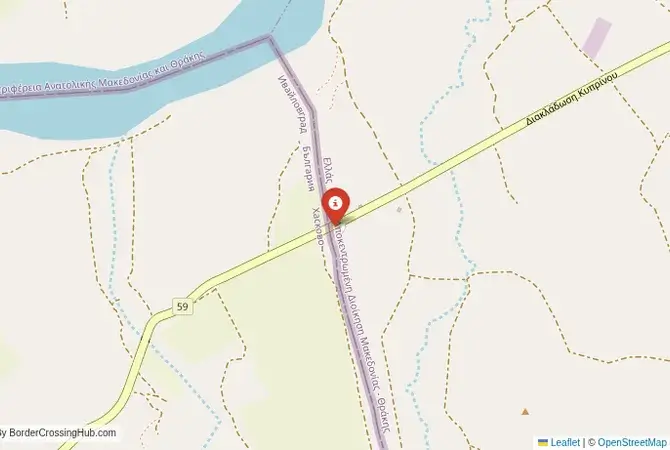
Ivaylovgrad & Kyprinos remains an active Bulgaria-Greece crossing for passenger cars and minibuses up to 3.5 tonnes. Bulgarian authorities reported normal traffic at all Bulgaria-Greece checkpoints on September 4, while live monitoring around midday showed only a small queue at Kyprinos. The crossing remains a useful alternative to the busier Kulata route, particularly for travelers heading toward northeastern Greece. There is no significant September closure affecting ordinary passenger traffic.
About this crossing
Operational Details
This checkpoint connects the Haskovo Province of Bulgaria with the Evros regional unit of Greece. It is a smaller international crossing, and it is crucial to check its operational status and hours before travel, as it may not be open 24/7. It is intended for passenger cars and local traffic, with a weight restriction that excludes heavy freight. The road leading to the crossing is a scenic, winding route through the mountains. The traffic is generally very light, making it a quick and uncomplicated crossing for those exploring the region; post-Schengen land accession Oct 2025, no systematic controls reported, with seamless passage typical.
A History of a Depopulated Land
The history of this region is one of a once-thriving multicultural area that was devastated by the conflicts of the 20th century. The Eastern Rhodopes were home to Bulgarian, Greek, and Turkish communities. The Balkan Wars and World War I led to the drawing of the new border and subsequent population exchanges and expulsions. During the Cold War, this was a heavily militarized and depopulated "dead zone." The opening of this new crossing is a powerful symbol of the new era of peace and cooperation. It is helping to revitalize the region, promoting cross-border tourism and allowing for the joint management of the area's incredible natural heritage.
Nearby Border Crossings


The Seamless Border Procedure
Today, there is no border procedure for travelers. You simply drive through the hills. There are no passport checks and no customs inspections. This is the reality of the Schengen Area since full land integration Oct 2025. However, it is important to remember that both Greek and Bulgarian police and customs authorities can and do perform random checks on vehicles anywhere in their territory, including near the former border. You are still required to carry a valid passport or national ID card with you at all times.
The Surrounding Region: Bulgaria Side
On the Bulgarian side, the crossing is in the heart of the Eastern Rhodopes, one of the wildest and most biodiverse regions in Europe. The area is a paradise for birdwatchers, being one of the last habitats for griffon vultures, Egyptian vultures, and black vultures in the EU. The nearby town of Ivaylovgrad is known for the magnificent Roman Villa Armira, with its stunning mosaics, and the medieval fortress of Lyutitsa. The region is also known for its high-quality wine and its traditional cuisine.
The Surrounding Region: Greece Side
On the Greek side, the crossing is in the Evros region of Western Thrace. The village of Kyprinos is a small, agricultural settlement. The area is known for the Dadia-Lefkimi-Soufli Forest National Park, which is contiguous with the nature reserves on the Bulgarian side and is also a major center for vultures and other birds of prey. The nearby town of Didymoteicho has a magnificent Ottoman-era mosque and a Byzantine fortress. The city of Orestiada is the main commercial center of the region.
Practical Travel Information
Practical planning is essential for this route. You must have a suitable vehicle and be comfortable with narrow, winding mountain roads. Check the operating hours of the border before you travel. The official currencies are the Bulgarian Lev (BGN) in Bulgaria and the Euro (EUR) in Greece. There are no services at the border itself. You must be self-sufficient with fuel, food, and water. You will need to purchase an electronic vignette for your vehicle for Bulgaria. Greece uses a toll system on its main motorways; with Schengen internal status, no border queues typical.
Final Considerations
The Ivaylovgrad–Kyprinos border crossing is a route for the nature lover and the explorer. It is a journey through a landscape of raw, stunning beauty and a region that is a model for cross-border nature conservation. It is a border that you might not even notice you have crossed, a testament to the success of the Schengen project in this wild and beautiful mountain landscape. For those looking to explore the incredible biodiversity and the rich history of the Eastern Rhodopes, it is an essential and highly recommended route.
View all border crossings between Bulgaria and GreecePractical information
Fuel
Bulgaria: <1 km - Greece: <1 km
Currency
Local exchange; BGN, EUR
Safety information
Quiet crossing; low crime
Connectivity
Basic mobile
Have you crossed here?
Help other travelers by sharing your experience, wait times, and any updates.