Staying near the crossing? Places to stay around Misión La Paz & Pozo Hondo on Booking.com Partner link: we may earn a commission, at no extra cost to you.
Monthly Update (October 2026):
Misión La Paz & Pozo Hondo remains a remote Argentina-Paraguay crossing in October, with no significant new traveler-facing development reported. The route is becoming more relevant as the Paraguay-Argentina Chaco connection develops, but services remain limited compared with the main crossings farther east. Travelers should confirm road and border conditions before making the long approach.
Driving there, or sending a driver? Send them this guide.
For reports and websites
Cite this page
Border Crossing Hub (2026). Misión La Paz & Pozo Hondo Border Crossing. Updated October 2026. https://bordercrossinghub.com/mision-la-paz-pozo-hondo-border-crossing/<a href="https://bordercrossinghub.com/mision-la-paz-pozo-hondo-border-crossing/">Misión La Paz & Pozo Hondo Border Crossing (Border Crossing Hub)</a>Put this crossing's card on your website
Free. It updates on its own when our information changes.
<iframe data-bch-card src="https://bordercrossinghub.com/mision-la-paz-pozo-hondo-border-crossing/?bch_view=card" width="100%" height="980" scrolling="no" style="border:0;max-width:480px;display:block" loading="lazy" title="Misión La Paz & Pozo Hondo border crossing information"></iframe>
<p style="font-size:12px;margin:4px 0 0">Crossing information: <a href="https://bordercrossinghub.com/mision-la-paz-pozo-hondo-border-crossing/">Border Crossing Hub</a></p>
<script src="https://bordercrossinghub.com/?bch_embed_js=1" async></script>Paste it where you want the card. The last line (a script) only adjusts the height and can be left out.
About this crossing
Location and Basic Connections
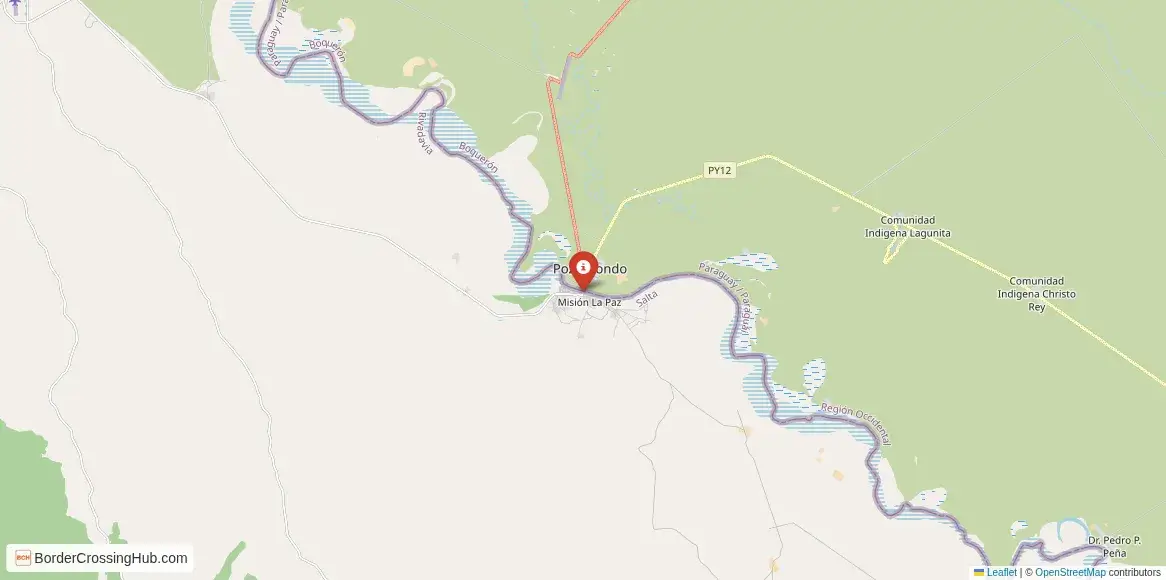
You find this point far from major cities, around 600 km north of Salta capital and deep in the dry Chaco plains. Misión La Paz lies just south of the river, with Pozo Hondo about 7 km north on the Paraguayan side. The crossing features an existing narrow international bridge over the Pilcomayo. From Argentina, access comes via Provincial Route 72 from Tartagal or Las Lajitas, involving long drives on mostly paved but isolated roads. On the Paraguayan side, Route 15 connects Pozo Hondo toward Mariscal Estigarribia and the emerging Bioceanic Corridor. This route forms part of the Capricorn Bioceanic Corridor project, aiming to link Brazilian Atlantic ports through Paraguay and northern Argentina to Pacific outlets in Chile. Traffic includes local residents, occasional trucks, and limited passenger vehicles rather than heavy tourist flows.
Alternative Names
Travelers know it as the Misión La Paz border, Pozo Hondo crossing, Pilcomayo River bridge at Misión La Paz-Pozo Hondo, or simply the Chaco frontier point between Salta and Boquerón.
Nearby Border Crossings





Historical Background
The Pilcomayo River has long defined parts of the Argentina-Paraguay border, with this area shaped by early 20th-century agreements amid Chaco disputes. The region saw conflicts in the 1930s during the Chaco War between Paraguay and Bolivia, though this specific crossing stayed peripheral. Misión La Paz developed as a small indigenous and missionary settlement, while Pozo Hondo grew around river access. The current bridge appeared decades ago to support local ties, though its narrow design limits capacity. Recent decades brought renewed interest through regional integration plans, turning attention to upgrading infrastructure for broader trade.
Geopolitical Significance
This crossing supports the Bioceanic Corridor, a multi-nation effort to create an east-west trade route avoiding traditional bottlenecks. It links Paraguay's western Chaco to Argentine highways toward Salta and beyond. Bilateral agreements designate Misión La Paz and Pozo Hondo as "linked towns," allowing residents simplified movement for daily needs like shopping, work, or services within border zones. Trade focuses on agricultural goods, fuel, and basic supplies. As of early 2026, the crossing operates normally, but plans for a new, wider bridge remain in feasibility studies and design phases, with potential construction timelines extending into late 2026 or beyond. Always check official Argentine and Paraguayan sources for updates on status or restrictions.
Practical Crossing Procedures
You cross via the bridge by vehicle or on foot. Argentine immigration handles exit or entry stamps first, followed by Paraguayan checks on the other side. Processes include passport verification, possible vehicle inspections, and customs forms if carrying goods. Many nationalities enter both countries visa-free for short tourism stays (90 days in Argentina, similar in Paraguay), but bring proof of onward travel and sufficient funds if requested. Paraguay sometimes requires a small entry fee or tourism card. Vehicles need temporary import documents from customs. The bridge setup means you clear one side, drive across, then handle the second. Pedestrians walk the bridge after stamping.
Typical Wait Times and Operating Hours
Hours run from 07:00 to 20:00 daily. Waits generally stay short, under 30 minutes for most travelers, since traffic remains low outside local market days or trade peaks. Commercial vehicles add time during business hours. The remote setting keeps crowds minimal compared to urban bridges.
Transportation Options
From Salta or Tartagal in Argentina, long-distance buses reach nearby towns, then local taxis or shared rides cover the final stretch. Private vehicles offer the most control on these rural routes. On the Paraguayan side, buses or vans connect Pozo Hondo to Filadelfia or Mariscal Estigarribia. Hitchhiking occurs among locals, but plan ahead as services are sparse. The Bioceanic route may bring more transport options in coming years.
Road Conditions and Scenery
Approach roads feature flat, arid Chaco landscape with thorny scrub, occasional cattle ranches, and sparse vegetation. Argentine Route 72 stays mostly paved, though sections feel rough after rain. Paraguayan Route 15 improves steadily with corridor upgrades. The Pilcomayo River crossing offers views of wide, sandy banks that flood seasonally. Scenery emphasizes isolation and vast open spaces typical of the Gran Chaco.
Scams & Warnings
Remote borders like this see fewer organized scams than busier points, but informal helpers may approach offering paperwork assistance for fees. Decline and use official booths. Currency exchange rates can favor locals; change money in towns. Occasional reports mention small unofficial charges during stamping. The Chaco area has low crime against travelers, but keep valuables secure and avoid night travel on empty roads. Border blockades from local protests happen rarely but can delay crossings. Monitor advisories for any smuggling-related security notes.
Nearby Attractions
Misión La Paz provides basic services and a glimpse into indigenous Wichí communities. Pozo Hondo offers markets and quiet rural life. The region suits nature seekers, with access to Chaco wildlife like armadillos or birds in nearby reserves. Mariscal Estigarribia, farther in Paraguay, has Mennonite colonies and historical sites from the Chaco War. For bigger draws, head south to Salta's valleys or north toward Bolivia's tripoint area.
Seasonal Variations and Delays
Dry season (May-October) delivers stable conditions and easier river flow. Wet season (November-April) brings heavy rains, flooding the Pilcomayo and potentially closing the bridge or making roads impassable. Heat stays intense year-round in this lowland zone. Corridor construction could cause temporary detours or added checks.
Cultural and Economic Role
Cross-border life centers on family visits, small trade in produce or goods, and shared resources in the Chaco. "Linked towns" status eases access to education, health, or markets. The area mixes Argentine gaucho influences with Paraguayan rural customs, visible in local foods and festivals. Emerging corridor plans promise greater economic ties through increased freight.
Final Planning Notes
Travel during operating hours and carry passport, cash in small bills (ARS, PYG, or USD), water, and snacks for remote stretches. Confirm bridge status and visa needs ahead via embassies or official sites. This suits adventurous overlanders comfortable with isolation. Prepare for basic facilities and potential waits from weather.
Handling This Remote River Crossing
Misión La Paz-Pozo Hondo gives you a true frontier experience in the Chaco, where river, bridge, and corridor ambitions meet quiet daily life. Stay prepared, check conditions regularly, and cross with awareness of the area's isolation.
View all border crossings between Argentina and ParaguayHeading to Misión La Paz & Pozo Hondo? Take this with you.
One page with the hours, waits, emergency numbers and coordinates. Works without signal.
Practical information
Currency
AR$; ₲, Bs via kiosks; cash-heavy
Safety information
Remote services; avoid late-night travel
Connectivity
Wi-Fi points; 4G
Have you crossed here?
Help other travelers by sharing your experience, wait times, and any updates.