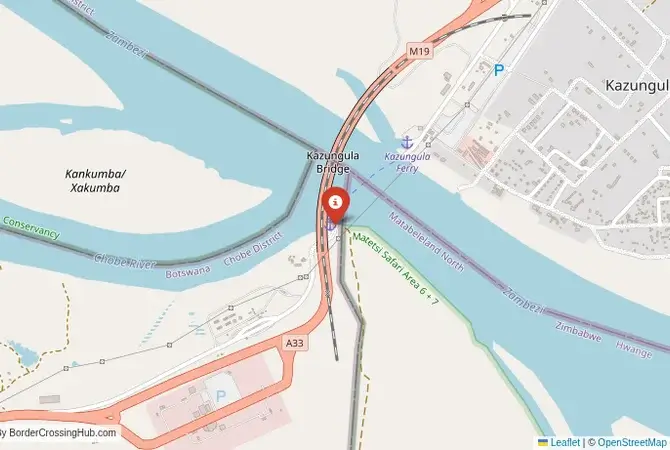
Monthly Update (September 2026):
Kazungula is entering a new phase of operation this month, with Botswana moving toward round-the-clock operation of the Kazungula One Stop Border Post. The move is part of a broader plan to turn the crossing into a non-stop facility and is being coordinated through the newly established Kazungula Bridge Authority. For travelers, the eventual 24-hour operation should make this already important Victoria Falls–Chobe gateway considerably more flexible.
About this crossing
A History at a Strategic Confluence
The history of this crossing is the history of the strategic importance of this unique geographical point. For centuries, the confluence of the rivers has been a major center for trade and migration. During the colonial era, it became a point of intense geopolitical interest. The unusual shape of the borders here, particularly the Caprivi Strip of Namibia, is a direct legacy of the "Scramble for Africa." During the liberation struggles and the apartheid era, this quadripoint was a frontline. The Kazungula Ferry, which connected Botswana and Zambia, was a vital lifeline for the "Frontline States," and the only point where two friendly, black-ruled nations met, completely bypassing the white-ruled territories of Rhodesia (Zimbabwe) and South African-controlled Namibia. The border between Botswana and Zimbabwe was a tense one. In the post-independence and post-apartheid era, the entire region has been transformed into one of the world's greatest tourism hubs. The development of the new Kazungula Bridge and the upgrading of the border posts are a testament to the power of tourism to drive regional cooperation and infrastructure development.
The Border Crossing Procedure: A Smooth and Efficient Process
The border is open daily from 6:00 AM to 10:00 PM. The facilities on both sides are modern and the process is known for being very smooth and efficient, as it is designed to handle a high volume of tourists. Wait times are typically short (under 30 minutes for pedestrians and light vehicles), though occasional longer delays occur during peak holiday periods. You must have the correct visas if your nationality requires them. Exiting Zimbabwe (Kazungula Road): The Zimbabwean immigration and customs post is a modern facility located a few kilometers from the town of Victoria Falls. You will go to the immigration hall and get your passport stamped for exit. The customs process for vehicles is straightforward. The officials are professional and the process is generally quick. The No-Man's-Land: After clearing the Zimbabwean side, you will drive a short distance through a no-man's-land that is essentially part of the surrounding wildlife area. It is not uncommon to see elephants or other animals in this area. Entering Botswana (Kazungula Road): You will arrive at the modern and efficient Botswanan border post. You will go to the immigration hall. For most nationalities, Botswana offers visa-free entry. The officer will stamp your passport. After immigration, you will proceed to the customs and road authority offices. If you are in a vehicle, you will need to pay a road tax. You will also need to have third-party insurance for Botswana. A key feature of Botswanan land borders is the veterinary control. You will have to walk through a foot-and-mouth disease control footbath, and your vehicle will have to drive through a disinfectant dip. This is a mandatory step to protect Botswana's valuable cattle industry. The entire process is very well-organized and hassle-free.
Nearby Border Crossings




Route, Onward Travel, and The Chobe National Park
This crossing is on the main tourist highway. On the Zimbabwean side, the road connects to the town of Victoria Falls, the main base for visiting the spectacular waterfall. On the Botswanan side, the road connects to the town of Kasane, which is located on the banks of the Chobe River and is the gateway to the world-renowned Chobe National Park. The park is famous for having the largest concentration of elephants in Africa, and a river cruise on the Chobe is one of the greatest wildlife experiences on the continent. The journey between Victoria Falls and Kasane is a very short one, typically taking only about 1.5 to 2 hours, including the border crossing. For those without a car, this is one of the easiest borders to cross. Numerous companies in both Victoria Falls and Kasane offer daily road transfers, which are very convenient and affordable. Many safari lodges will also arrange the transfer for their guests.
Final Planning Advice for the Chobe Gateway
The Kazungula crossing between Zimbabwe and Botswana is one of the easiest, most scenic, and most popular tourist borders in Africa. The process is smooth, the officials are friendly, and the journey is a short and beautiful one. The key to a successful crossing is to have all your documents in order. Check the visa requirements for both countries in advance. The KAZA uni-visa, which covers both Zambia and Zimbabwe for 30 days and allows for day trips into Botswana from Kazungula, is an excellent and highly recommended option. Be prepared for the mandatory veterinary checks when entering Botswana. This crossing is the perfect link between two of southern Africa's greatest natural wonders. It is a border that feels less like a barrier and more like a welcome gate into a vast, shared wilderness, a testament to the power of transfrontier conservation and tourism.
View all border crossings between Zimbabwe and BotswanaPractical information
Fuel
Zimbabwe: <1 km - Botswana: <1 km
Currency
Exchange near Kazungula (USD, ZiG, BWP)
Safety information
Safe, river nearby
Connectivity
Wi-Fi at checkpoints, 4G
Have you crossed here?
Help other travelers by sharing your experience, wait times, and any updates.