Monthly Update (October 2026):
Kakarbhitta & Panitanki remains an important eastern India-Nepal gateway in October, with passenger and commercial movement continuing through the corridor. There is no major new closure reported, although traffic can increase around the border and nearby Siliguri logistics routes. Travelers using Kakarbhitta & Panitanki should allow extra time when freight traffic is heavy.
About this crossing
A History of Tea, Trade, and Strategic Corridors
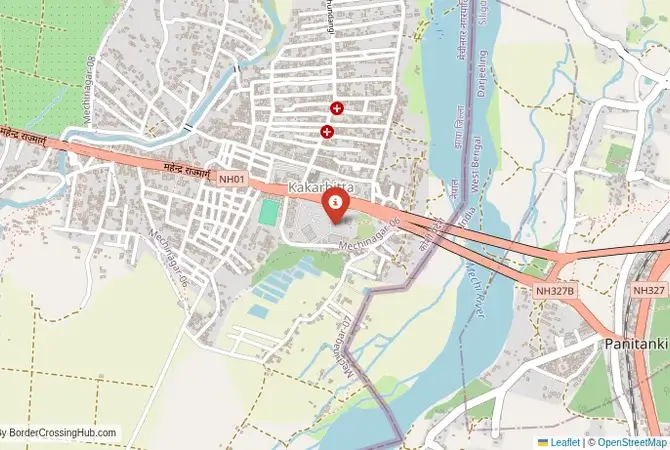
The history of this region is tied to the development of the tea industry in Darjeeling and the strategic importance of the "Chicken's Neck," the narrow strip of Indian territory that connects the main part of India with its northeastern states. The Panitanki-Kakarbhitta crossing lies at the heart of this sensitive corridor. It developed as a major trade route, facilitating the movement of goods between Nepal, India, and even Tibet via the passes in Sikkim. For Nepal, Kakarbhitta is the eastern terminus of the Mahendra Highway, the country's main east-west artery, making it a vital gateway for the entire eastern region. For India, the crossing is a key point for both trade and for monitoring the movement of people in a geopolitically complex area that borders Nepal, Bhutan, and Bangladesh. The border is a testament to the deep economic integration of the region, a place where the tea from Nepal's hills finds its way to the markets of India and beyond.
The Border Crossing Procedure: A Bridge Between Nations
The border is open during daylight hours (typically 6:00 AM to 10:00 PM). The process is well-established and accustomed to handling foreign tourists, but it requires navigating the busy bridge and the offices on either side. Exiting India (Panitanki): The Indian immigration office is located in the town of Panitanki, on the main road leading to the Mechi Bridge. It is a simple office where you must stop to get your passport stamped for exit. After the immigration formalities, you will proceed towards the bridge. Indian customs may have a checkpoint here as well. The Mechi Bridge: You will then travel across the Mechi Bridge, which is the no-man's-land. You can walk, take a cycle rickshaw, or drive across. The bridge is a bustling thoroughfare, offering views of the wide, rocky riverbed below. It is the physical and symbolic link between the two countries. Entering Nepal (Kakarbhitta): The Nepali immigration office is a large, clearly marked building on the left side of the road immediately after you come off the bridge. It is impossible to miss. Here, you will obtain your Nepali visa on arrival (available for most nationalities). You will need to fill out an application form, provide a passport-sized photograph, and pay the visa fee in a major international currency (US dollars are best). The process is usually efficient. Once you have your visa, you are officially in Nepal. The customs office for vehicle permits (bhansar) is located in the same area for those traveling with their own vehicle.
Nearby Border Crossings



Route, Onward Travel, and Regional Connections
The nearest major Indian city and transport hub is Siliguri, which is about a 45-minute drive from the Panitanki border. Siliguri has a major railway station (New Jalpaiguri - NJP) and an airport (Bagdogra - IXB), with excellent connections to Kolkata, Delhi, and the rest of India. It is also the main base for travel to Darjeeling and Sikkim. On the Nepali side, Kakarbhitta is a major bus terminal. From here, you can get buses to all over eastern and central Nepal. There are regular day and night buses to Kathmandu (a long 14-16 hour journey), Pokhara, and Chitwan. You can also travel north into the hills to the tea-growing region of Ilam. For travelers heading to Bhutan, the Bhutanese border town of Phuentsholing is only a few hours' drive from Panitanki/Siliguri, making this crossing a key part of a multi-country Himalayan itinerary.
Final Planning Advice for the Eastern Crossroads
The Panitanki-Kakarbhitta crossing is a vibrant and strategically vital gateway. It is the most practical entry point for anyone wishing to explore eastern Nepal or for those combining a trip to Nepal with Darjeeling, Sikkim, or Bhutan. The key to a smooth crossing is to have your documents organized. Have your passport photo and clean US dollar bills ready for your Nepali visa. Make sure you get your Indian exit stamp in Panitanki before you get on the bridge. The area can be chaotic, so a calm and focused approach is best. By being prepared, you can easily navigate this bustling Himalayan crossroads and begin your journey into the beautiful landscapes of eastern Nepal.
View all border crossings between India and NepalPractical information
Fuel
India: <1 km - Nepal: <1 km
Currency
Exchange near Panitanki (INR, NPR)
Safety information
Low risk, traffic buildup
Connectivity
Wi-Fi at checkpoints, 4G
Have you crossed here?
Help other travelers by sharing your experience, wait times, and any updates.