Monthly Update (October 2026):
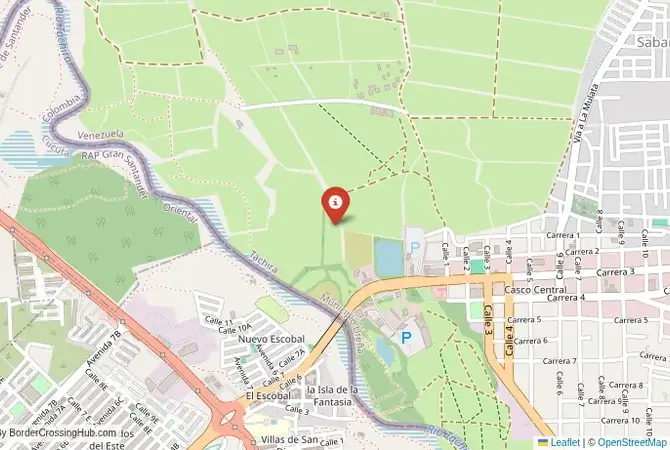
Cúcuta & Ureña is entering October with the Francisco de Paula Santander bridge back in vehicle service after being closed for roughly three months because flooding and erosion damaged its structure. The first phase of repairs was completed in August, but the recent reopening followed substantial work on the Venezuelan approach, so travelers should still expect infrastructure work and restrictions to remain a possibility while the recovery continues.
Driving there, or sending a driver? Send them this guide.
For reports and websites
Cite this page
Border Crossing Hub (2026). Cúcuta & Ureña Border Crossing. Updated October 2026. https://bordercrossinghub.com/cucuta-urena-border-crossing/<a href="https://bordercrossinghub.com/cucuta-urena-border-crossing/">Cúcuta & Ureña Border Crossing (Border Crossing Hub)</a>Put this crossing's card on your website
Free. It updates on its own when our information changes.
<iframe data-bch-card src="https://bordercrossinghub.com/cucuta-urena-border-crossing/?bch_view=card" width="100%" height="980" scrolling="no" style="border:0;max-width:480px;display:block" loading="lazy" title="Cúcuta & Ureña border crossing information"></iframe>
<p style="font-size:12px;margin:4px 0 0">Crossing information: <a href="https://bordercrossinghub.com/cucuta-urena-border-crossing/">Border Crossing Hub</a></p>
<script src="https://bordercrossinghub.com/?bch_embed_js=1" async></script>Paste it where you want the card. The last line (a script) only adjusts the height and can be left out.
About this crossing
Although the nearby Simón Bolívar International Bridge connecting Cúcuta with San Antonio del Táchira is the main crossing in the region, the Francisco de Paula Santander Bridge provides an important alternative when you are traveling between the two countries.
Before you set out, however, you should check the latest operating conditions. The crossing has experienced periods of closure and restriction in recent years. Most recently, the bridge was closed to vehicular traffic for approximately three months in 2026 because of erosion and damage caused by the Río Táchira. It reopened to vehicles on August 5, 2026, initially restoring access for private vehicles, motorcycles, public transportation, and light cargo.
Nearby Border Crossings


The Border Crossing Procedure
When the bridge is operating normally, you cross through formal immigration and customs facilities on both sides of the border.
As you cross, you should expect immigration checks and, depending on your nationality, destination, and circumstances, customs procedures. The crossing can become busy, particularly at peak times, so allow yourself sufficient time.
The exact procedures and operating conditions can change because of government decisions, security conditions, or infrastructure work. Before leaving, verify the latest requirements for entering and exiting both countries and make sure your travel documents are in order.
You should also avoid the unofficial crossing points known as trochas. These are not legitimate alternatives to the international bridge and can be controlled or influenced by criminal and armed groups. If you are crossing the Colombia–Venezuela border, use an official international crossing.
Practical Travel Information
You will use the Colombian Peso (COP) on the Colombian side and the Venezuelan Bolívar (VES) in Venezuela. US dollars are also widely used for many transactions in Venezuela.
Before you travel, make sure you have the passport, visa, entry permit, and other documentation required for your nationality and destination. Requirements can differ depending on whether you are entering or leaving Colombia or Venezuela.
You should also check the current status of the bridge shortly before your journey. The August 2026 reopening restored vehicle traffic, but additional rehabilitation work means that temporary restrictions remain possible.
Security is another important consideration. Parts of the wider Cúcuta–Venezuela frontier are affected by criminal and armed groups, particularly around unofficial crossings. Stay on established routes and do not attempt to use trochas.
The Colombian Side: Cúcuta
Once you cross into Colombia, you will reach Cúcuta, the capital of Norte de Santander and the region's main commercial and transportation center.
If you are stopping in Cúcuta, you will find a large urban center with accommodation, restaurants, transportation, financial services, and other facilities. The city has strong economic and social ties with Venezuela, and people regularly cross the border for shopping, employment, education, medical services, and other everyday needs.
Cúcuta has also played a major role in the humanitarian response to Venezuela's migration crisis. If you are continuing your journey through Colombia, the city serves as an important transportation and service hub for the wider region.
The Venezuelan Side: Ureña
On the Venezuelan side, you will arrive in Pedro María Ureña, commonly known simply as Ureña. The town has historically been an important industrial and commercial center in Táchira.
As you travel through Ureña, you will see the effects of its close relationship with Colombia. The local economy was heavily connected to cross-border trade, and many residents and businesses have traditionally depended on movement between the two countries.
From Ureña, you can continue toward the Venezuelan Andes and San Cristóbal. The town remains an important gateway into the region despite the economic difficulties Venezuela has experienced in recent years.
A Border Used for Everyday Life
As you cross the Francisco de Paula Santander Bridge, you are not simply traveling between two countries. You are moving through a border region where communities on both sides remain closely connected.
One of the most distinctive examples is cross-border education. Thousands of Venezuelan children living in the Ureña area have attended schools in Cúcuta, with organized transportation helping them cross the international boundary. In 2025, approximately 3,000 students were expected to benefit from a dedicated cross-border school transportation program.
This means that the bridge is part of everyday life for people who live, work, study, shop, and maintain families on opposite sides of the border.
A History of a Closely Connected Border
The relationship between Cúcuta and Ureña predates the current migration crisis. For generations, the surrounding communities have formed an interconnected economic region, with workers, merchants, families, and goods regularly moving across the border.
Ureña developed as an important industrial center, while Cúcuta became a major commercial hub in northeastern Colombia. During periods of economic prosperity in Venezuela, cross-border trade was particularly strong.
The economic crisis that affected Venezuela during the 2010s dramatically changed this relationship. Cúcuta increasingly became a source of food, medicine, employment, and other essential goods for people on the Venezuelan side, while the international bridges became important routes for Venezuelans leaving the country.
Final Considerations
When you cross the Cúcuta–Ureña border, you are using a bridge that serves travelers, commuters, businesses, students, and families while connecting two communities with a long shared history.
Before you go, check the current operating status of the Francisco de Paula Santander Bridge, confirm the immigration requirements that apply to you, and make sure you use an official crossing point.
Conditions along this frontier can change quickly, but with the right preparation, you can understand what to expect before you arrive at the border.
View all border crossings between Colombia and VenezuelaHeading to Cúcuta & Ureña? Take this with you.
One page with the hours, waits, emergency numbers and coordinates. Works without signal.
Practical information
Fuel
Colombia: 500 m - Venezuela: 500 m
Currency
Available near Cúcuta (COP, VES)
Safety information
High risk due to armed groups, crime, smuggling
Connectivity
Wi-Fi at checkpoints, 4G
Have you crossed here?
Help other travelers by sharing your experience, wait times, and any updates.