Monthly Update (September 2026):
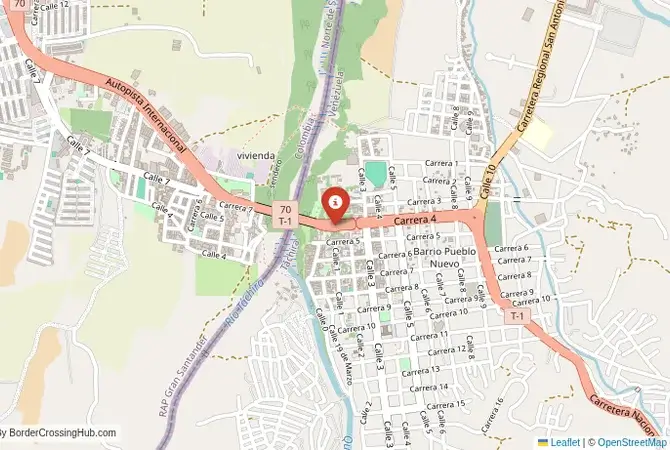
Cúcuta & San Antonio del Táchira remains an important Colombia–Venezuela connection, but September travel around the Colombian approach is facing additional disruption. On September 4, authorities carried out a major traffic operation in La Parada, close to the Simón Bolívar International Bridge, with multiple traffic officers and a tow truck causing noticeable disruption to vehicles approaching the crossing. The incident comes amid heightened security concerns around Cúcuta following a September 1 car bombing that killed one person and injured 11.
Driving there, or sending a driver? Send them this guide.
For reports and websites
Cite this page
Border Crossing Hub (2026). Cúcuta & San Antonio del Táchira Border Crossing. Updated September 2026. https://bordercrossinghub.com/cucuta-san-antonio-del-tachira-border-crossing/<a href="https://bordercrossinghub.com/cucuta-san-antonio-del-tachira-border-crossing/">Cúcuta & San Antonio del Táchira Border Crossing (Border Crossing Hub)</a>Put this crossing's card on your website
Free. It updates on its own when our information changes.
<iframe data-bch-card src="https://bordercrossinghub.com/cucuta-san-antonio-del-tachira-border-crossing/?bch_view=card" width="100%" height="980" scrolling="no" style="border:0;max-width:480px;display:block" loading="lazy" title="Cúcuta & San Antonio del Táchira border crossing information"></iframe>
<p style="font-size:12px;margin:4px 0 0">Crossing information: <a href="https://bordercrossinghub.com/cucuta-san-antonio-del-tachira-border-crossing/">Border Crossing Hub</a></p>
<script src="https://bordercrossinghub.com/?bch_embed_js=1" async></script>Paste it where you want the card. The last line (a script) only adjusts the height and can be left out.
About this crossing
If you are crossing from Colombia into Venezuela, the bridge connects the Cúcuta area with San Antonio del Táchira and provides the main route into western Venezuela. For decades, it was one of the most important commercial and travel corridors in South America. The Venezuelan crisis transformed the crossing dramatically, but it remains an active international gateway today.
Important Note for Travelers
The political and economic situation in Venezuela can change quickly, and border procedures may be affected by temporary restrictions or changes in government policy. Before you travel, check the latest entry requirements and crossing conditions. The official Simón Bolívar International Bridge is the normal route between Cúcuta and San Antonio del Táchira; unofficial crossing points (trochas) should be avoided.
Nearby Border Crossings

Operational Details
The crossing connects Colombia's Norte de Santander Department with Venezuela's Táchira state. On the Colombian side, the bridge is reached through the Villa del Rosario and La Parada area, just outside Cúcuta. On the Venezuelan side, it leads directly into San Antonio del Táchira.
The bridge handles both pedestrian and vehicular traffic and is the principal crossing in this section of the frontier. When you cross, you pass through the official immigration and customs facilities operated by the two countries.
The crossing has not always operated normally. During the Venezuelan crisis, the Venezuelan government periodically closed the bridge to vehicles or restricted it to pedestrians. Large numbers of Venezuelans crossed on foot, while many others made regular trips into Cúcuta to buy food, medicine, and other essential goods.
Today, the bridge functions as a regular international crossing, although conditions can still change because of political decisions, security concerns, or other temporary circumstances.
A History of a Symbiotic Relationship
The relationship between Cúcuta and the Venezuelan border towns is deeply intertwined. Cúcuta and San Antonio del Táchira developed close economic and social connections through trade, employment, family relationships, and daily travel. San Cristóbal, the capital of Táchira state, serves as the major regional center farther inside Venezuela.
During Venezuela's oil boom, the region was a land of opportunity, and many Colombians crossed into Venezuela for work. Cross-border commerce flourished, and people regularly moved between the two countries.
The economic collapse of Venezuela in the 2010s dramatically reversed this flow. Millions of Venezuelans left the country, and the Cúcuta–Táchira frontier became one of the principal migration corridors into Colombia.
The bridge also became the setting for major political confrontations, most notably the February 2019 attempt to bring humanitarian aid into Venezuela, when clashes took place around the international bridges.
The Border Crossing Procedure
When you cross through the Simón Bolívar Bridge, you should expect formal immigration controls and, depending on your journey and what you are carrying, customs procedures as well. Make sure you have the documents required for your nationality and destination before reaching the border.
The crossing can be busy because of the large number of people using it every day. During particularly busy periods, you may encounter queues at immigration or customs, so allowing some extra time is sensible.
You should use the official crossing rather than attempting to bypass immigration controls. The wider frontier contains unofficial crossing points known as trochas. These are not normal alternatives for international travelers, and some are associated with armed criminal groups. If you are making the journey, stay on the official route.
The Surrounding Region: Colombia Side
Before you cross, Cúcuta is likely to be your main base on the Colombian side. The city has a long history of trade with Venezuela and remains an important commercial center for the region.
Cúcuta also became one of the principal hubs of the Venezuelan migration response. During the height of the crisis, large numbers of Venezuelans passed through the city, while humanitarian organizations provided food, medical assistance, shelter, and other support.
The city has a rich history of its own and is known as the place where the Congress of Cúcuta met in 1821 and adopted the Constitution of Cúcuta, an important document in the creation of Gran Colombia.
The Surrounding Region: Venezuela Side
Once you cross into Venezuela, San Antonio del Táchira is the first major town you encounter. It has traditionally depended heavily on cross-border trade and commerce with Colombia and serves as a gateway toward San Cristóbal and the Venezuelan Andes.
The economic crisis severely disrupted the local economy and many of the commercial relationships that once connected the two sides. Nevertheless, the border remains an important route for people and goods, and San Antonio continues to function as a major transportation and commercial point in western Venezuela.
Practical Travel Information
Before you set out, check the latest operating conditions and make sure your passport, visa, and other required documents are in order. Border procedures and requirements can change, so do not rely solely on information from an earlier trip.
The official currency is the Colombian Peso (COP) on the Colombian side and the Venezuelan Bolívar (VES) on the Venezuelan side. US Dollars are also widely used for transactions in Venezuela.
If you are driving, check the current requirements for taking your vehicle across the border before arriving. If you are traveling on foot or by public transportation, allow extra time for immigration and customs procedures, particularly during busy periods.
Most importantly, stay on the official route and use the Simón Bolívar International Bridge. Do not attempt to cross through unofficial trochas.
Final Considerations
Crossing from Cúcuta to San Antonio del Táchira takes you through one of the most important and heavily used border corridors in South America. The Simón Bolívar Bridge has experienced dramatic changes over the past decade, but it remains a functioning international gateway between Colombia and Venezuela.
If you are making the crossing, you will encounter a busy border used by commuters, families, businesses, and international travelers. Check the latest conditions before you leave, have your documents ready, and use the official crossing to make your journey between Cúcuta and Venezuela.
View all border crossings between Colombia and VenezuelaHeading to Cúcuta & San Antonio del Táchira? Take this with you.
One page with the hours, waits, emergency numbers and coordinates. Works without signal.
Practical information
Fuel
Colombia: 500 m - Venezuela: 500 m
Currency
Available near Cúcuta (COP, VES)
Safety information
Generally safe, border tensions
Connectivity
Wi-Fi at checkpoints, 4G
Have you crossed here?
Help other travelers by sharing your experience, wait times, and any updates.