Monthly Update (September 2026):
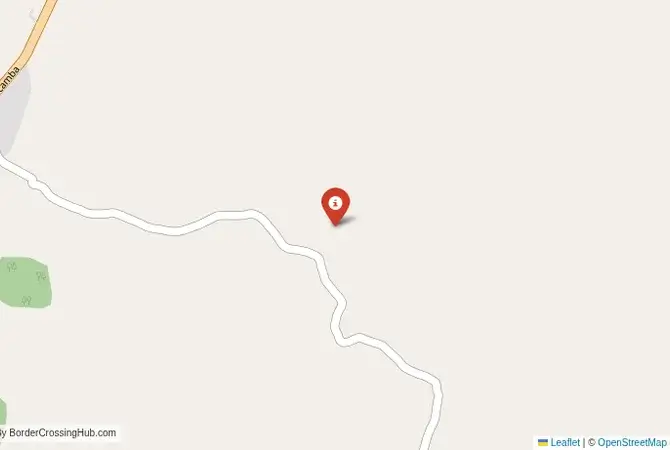
Massabi remains a relatively quiet Angola–Republic of the Congo crossing in Cabinda, with no significant September closure or new passenger restriction reported. Angola has been expanding transport and border-management services in Cabinda, including new cross-border transport activities at Yema and continued attention to Massabi as a trade gateway. For travelers, however, the crossing remains much less developed than the main regional corridors, so confirming local transport and immigration arrangements before departure is still important.
About this crossing
A History of a Contested Exclave
The history of this border is the history of the Cabinda exclave itself. Cabinda was a separate Portuguese protectorate from Angola, with its own distinct history and culture. It was administratively merged with Angola by the Portuguese in the 20th century. After Angola's independence, a separatist movement, the Front for the Liberation of the Enclave of Cabinda (FLEC), began a long-running, low-level insurgency, arguing that Cabinda should be an independent state. The discovery of massive offshore oil deposits in Cabinda, which account for the majority of Angola's oil production, has made the region immensely valuable and has ensured that the Angolan government has maintained a heavy military presence to control the territory. The border crossing at Massabi has been a sensitive security point throughout this conflict. In recent years, the security situation has improved, and the crossing functions as a key economic link between Cabinda and its northern neighbor, the Republic of the Congo, which is also a major oil producer.
The Border Crossing Procedure: A Formal and Straightforward Process
The border is open during daylight hours, typically from 8:00 AM to 6:00 PM, with occasional extensions for commercial traffic. The process is generally formal and straightforward, but you must have all your visas sorted in advance. The traffic is a mix of local commuters, oil industry personnel, and some commercial trucks. Exiting Angola (Massabi): The Angolan immigration and customs post is a functional facility. You will present your passport and your Angolan visa. Note that an Angolan visa is often specific, and you may need to ensure it is valid for entry into the Cabinda exclave. You will receive your exit stamp. The customs check is usually a brief formality. The No-Man's-Land: After clearing the Angolan side, you will proceed a short distance through a no-man's-land to the Congolese side. Entering the Republic of the Congo: You will arrive at the Congolese border post. You must have a pre-arranged visa for the Republic of the Congo. Visas on arrival are not available. You will present your passport and visa to the immigration officer. You will also need your yellow fever vaccination certificate. The officials will stamp you into the country. The customs check is usually straightforward for tourists. The officials on both sides are professional, and the process is generally hassle-free.
Nearby Border Crossings





Route, Onward Travel, and The Coastal Corridor
This crossing is on the main coastal highway. On the Angolan side, the road connects to the city of Cabinda. On the Congolese side, the road connects to Pointe-Noire, the second-largest city and main port of the Republic of the Congo. The road is paved and generally in good condition. The journey takes you through a beautiful coastal landscape of forests and beaches. For those without a car, there are shared taxis and minibuses that run between Cabinda city and Pointe-Noire. This is the most common way for locals and travelers to make the journey. The main reason for a traveler to be in this region is to explore the unique culture of Cabinda and the vibrant city of Pointe-Noire. Cabinda has a rich history and beautiful beaches. Pointe-Noire is a bustling, French-influenced city with a lively music scene and is the terminus of the historic Congo-Ocean Railway.
Final Planning Advice for the Exclave Route
The Massabi crossing is a fascinating and off-the-beaten-path border. It is a journey into a politically complex but beautiful and culturally rich part of Central Africa. The key to a successful crossing is meticulous visa planning. You must have your visas for both Angola (ensuring it is valid for Cabinda) and the Republic of the Congo in your passport before you arrive. Do not expect any flexibility at the border. The crossing itself is relatively straightforward. The journey it enables, between the two major oil cities of the region, is a unique one. It is a border that offers a deep insight into the colonial history, post-colonial conflicts, and modern, resource-driven economy of this fascinating corner of the African continent.
View all border crossings between Angola and Republic of the CongoPractical information
Currency
Limited exchange (AOA, XAF)
Safety information
Restricted, security risks
Connectivity
Limited Wi-Fi, 2G
Have you crossed here?
Help other travelers by sharing your experience, wait times, and any updates.