Monthly Update (November 2026):
There has been little new disruption reported at the M’Banza-Kongo–Luvo crossing this November. The upgraded border facilities opened earlier in 2026 are intended to improve customs processing between Angola and the Democratic Republic of the Congo, but recent information does not establish a further change to passenger arrangements. No new road closure or immigration restriction has been confirmed. For travelers, November has brought little change beyond the improvements already introduced earlier in the year.
Driving there, or sending a driver? Send them this guide.
For reports and websites
Cite this page
Border Crossing Hub (2026). M’Banza Congo & Manga Missou Border Crossing. Updated November 2026. https://bordercrossinghub.com/mbanza-congo-manga-missou-republic-of-the-congo-border-crossing/<a href="https://bordercrossinghub.com/mbanza-congo-manga-missou-republic-of-the-congo-border-crossing/">M’Banza Congo & Manga Missou Border Crossing (Border Crossing Hub)</a>Put this crossing's card on your website
Free. It updates on its own when our information changes.
<iframe data-bch-card src="https://bordercrossinghub.com/mbanza-congo-manga-missou-republic-of-the-congo-border-crossing/?bch_view=card" width="100%" height="980" scrolling="no" style="border:0;max-width:480px;display:block" loading="lazy" title="M’Banza Congo & Manga Missou border crossing information"></iframe>
<p style="font-size:12px;margin:4px 0 0">Crossing information: <a href="https://bordercrossinghub.com/mbanza-congo-manga-missou-republic-of-the-congo-border-crossing/">Border Crossing Hub</a></p>
<script src="https://bordercrossinghub.com/?bch_embed_js=1" async></script>Paste it where you want the card. The last line (a script) only adjusts the height and can be left out.
About this crossing
The M'Banza Kongo-Luvo Crossing: The Ancient Kingdom's Gateway
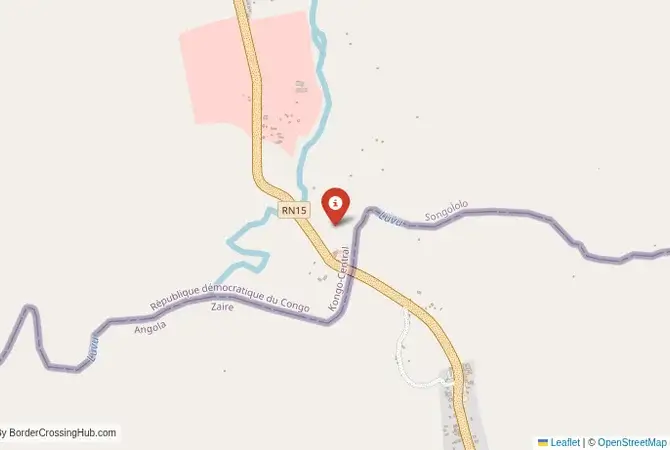
The border crossing at Luvo, near the Angolan city of M'Banza-Kongo, is a gateway of immense historical significance. This is the heartland of the ancient Kongo Kingdom, a powerful and sophisticated state that flourished for centuries before and during the early colonial period. The city of M'Banza-Kongo was its capital and is now a UNESCO World Heritage site. The border is a colonial line, drawn by the Portuguese and Belgians, that cut directly through the middle of this historic kingdom, dividing the Bakongo people. The crossing itself is a secondary, rural border, a dusty outpost on a road that was once the main artery of a great African kingdom. The atmosphere is one of profound history, a place where the ghosts of a powerful past meet the challenging realities of the modern-day frontier. For the historically-minded traveler, it is a deeply poignant passage through a divided land, a journey that requires a deep appreciation for the region's complex past and a high tolerance for its difficult present.
A History of a Great Kingdom and a Divided People
The history of this border is the history of the Kongo Kingdom. From the 14th to the 19th centuries, the kingdom was a major power in Central Africa. Its capital, M'Banza-Kongo, was a large and well-organized city. The kingdom was one of the first in Africa to have diplomatic relations with a European power, Portugal. The relationship was complex, involving trade (including the devastating slave trade), cultural exchange, and eventually, conflict. The "Scramble for Africa" in the late 19th century led to the kingdom's dismemberment, with its territory being divided between Portuguese Angola, the Belgian Congo, and the French Congo. The M'Banza Kongo-Luvo border is a direct result of this division. During the Angolan Civil War, the region was a conflict zone, with the border being a sensitive and often closed frontier. In the post-war era, the crossing has returned to its role as a local link for the Bakongo people, who still maintain strong cultural and family ties across the international line. The designation of M'Banza-Kongo as a UNESCO World Heritage site in 2017 has brought new attention to the region's incredible history and the arbitrary nature of the colonial borders that were imposed upon it.
The Border Crossing Procedure: A Challenging and Basic Affair
This is not a major tourist crossing. The process can be slow and bureaucratic, and the facilities are basic. You must have your visas for both countries sorted in advance. Exiting Angola (Luvo): The Angolan immigration and customs post is a simple facility. You will present your passport and get your exit stamp. The customs process for vehicles can be time-consuming. The officials are professional but the process is manual and can be slow. Entering DR Congo: The Congolese side is the main challenge. You must have a pre-arranged Congolese visa. Visas are not issued at the border. You will present your passport, visa, and yellow fever certificate to the immigration (DGM) officials. The process is known for being slow and bureaucratic. The customs process for a vehicle is also extremely complex. This is a very difficult border to navigate independently without the help of a local contact.
Route, Onward Travel, and Security Risks
This crossing is for the dedicated overland traveler with their own robust vehicle. On the Angolan side, the road from the capital, Luanda, to the northern city of M'banza-Kongo is a long journey on roads of variable quality. M'Banza-Kongo itself is a major historical destination, and a visit to the ruins of the ancient cathedral and the royal court is a must for any history enthusiast. On the Congolese side, the road from the border leads towards the DRC port of Matadi and on to the capital, Kinshasa. The road is known for being in very poor condition and is subject to security risks, including numerous illegal checkpoints and the risk of robbery. The security situation in the Kongo Central province of the DRC can be volatile. It is essential to get up-to-date, on-the-ground security information before attempting this journey. There are no regular, direct international bus services on this route. All travel requires a high degree of self-reliance and risk management.
Final Planning Advice for a Historic Route
The M'Banza Kongo-Luvo crossing is a journey into the deep history of Central Africa. It is a route for the serious, well-prepared adventurer, not for the casual tourist. The key to a successful crossing is meticulous planning. You must have your visas for both countries in your passport before you arrive. You must have a very capable vehicle and be prepared for a long, slow, and bureaucratic process at the border and a very challenging journey on the Congolese side. For almost all travelers, flying between the two countries is the only sensible option. For the very few who are equipped for such an expedition, this crossing offers an unforgettable adventure, a passage through the heart of a great, ancient African kingdom and a deep insight into the enduring legacy of the colonial division of the continent. It is a journey that requires a historian's mind and an explorer's spirit.
Nearby Border Crossings

Heading to M’Banza Congo & Manga Missou? Take this with you.
One page with the hours, waits, emergency numbers and coordinates. Works without signal.
Practical information
Fuel
Angola: 2 km - Democratic Republic of the Congo: 2 km
Currency
—
Safety information
—
Connectivity
N/A
Have you crossed here?
Help other travelers by sharing your experience, wait times, and any updates.