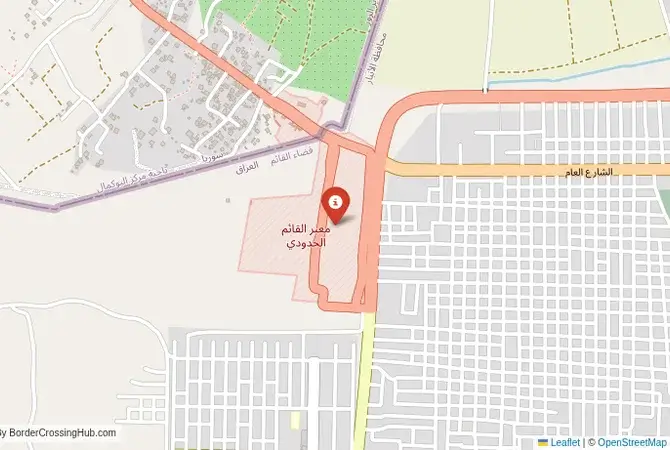
Monthly Update (November 2026):
Passenger movement through Al-Qa'im–Abu Kamal is continuing this November, while Iraq and Syria work on improving customs coordination and road transport between the two countries. A new development on November 12 was a report that foreign tourists entering Syria may need advance approval arranged through a tour operator, although its application at Abu Kamal has not been independently confirmed. The crossing has not faced a new general closure, but travelers should not assume that the resumption of commercial traffic guarantees straightforward tourist entry.
Driving there, or sending a driver? Send them this guide.
For reports and websites
Cite this page
Border Crossing Hub (2026). Abu Kamal & Al-Qa’im Border Crossing. Updated November 2026. https://bordercrossinghub.com/al-qaim-abu-kamal-border-crossing/<a href="https://bordercrossinghub.com/al-qaim-abu-kamal-border-crossing/">Abu Kamal & Al-Qa’im Border Crossing (Border Crossing Hub)</a>Put this crossing's card on your website
Free. It updates on its own when our information changes.
<iframe data-bch-card src="https://bordercrossinghub.com/al-qaim-abu-kamal-border-crossing/?bch_view=card" width="100%" height="980" scrolling="no" style="border:0;max-width:480px;display:block" loading="lazy" title="Abu Kamal & Al-Qa’im border crossing information"></iframe>
<p style="font-size:12px;margin:4px 0 0">Crossing information: <a href="https://bordercrossinghub.com/al-qaim-abu-kamal-border-crossing/">Border Crossing Hub</a></p>
<script src="https://bordercrossinghub.com/?bch_embed_js=1" async></script>Paste it where you want the card. The last line (a script) only adjusts the height and can be left out.
About this crossing
Historical and Geopolitical Context
A key supply route since the 1980s, this crossing closed from 2011 to 2019 due to the Syrian and Iraqi Civil Wars, reopening on September 30, 2019. Islamic State controlled it in 2014, but U.S.-backed forces reclaimed it by 2017. Iran-backed Kata’ib Hezbollah militias now secure Iraq’s side, while Syrian Democratic Forces and Assad’s regime split Abu Kamal. In December 2024, 1,500 Syrian soldiers crossed to Iraq, surrendering post-Assad fall, signaling ongoing instability. The border’s role in Iran’s supply lines to Syria fuels U.S.-Israel tensions, making it a regional flashpoint.
Crossing Procedures and Wait Times
Closed to most civilians, the crossing allows limited humanitarian and military traffic. From Iraq to Syria, you need a passport valid for six months, a $100 Syrian visa (from Baghdad), and special permits, often restricted to aid workers. From Syria to Iraq, expect a $3-5 entry fee and rigorous checks by Iraqi forces and militias. The border operates from 8:00 AM to 4:00 PM, with waits of 1-3 hours for authorized personnel. Closures are common due to rebel offensives or militia activity, so confirm access with embassies.
Routes and Road Conditions
From Baghdad, buses to Al-Qa'im (340 km, 5-6 hours, $15) pass desert checkpoints. From Damascus, the M2 to Abu Kamal (450 km, 7 hours, $20) is paved but risky due to militia presence. Iraq’s side has basic facilities; Syria’s side is heavily militarized. The Euphrates River nearby adds scenic contrast, but poor road maintenance and security risks demand caution. Driving requires armed escorts in Syria and coordination with Iraqi forces to avoid delays or incidents.
Practical Tips for Travelers
Scams are rare due to restricted access, but unofficial fixers may charge $50 for invalid permits. Use US dollars, as local currencies face poor rates. No ATMs or reliable facilities exist, so bring cash, water, and food. Theft risks are low but present in aid convoys. Carry a passport copy and emergency contacts, as cell service is unreliable. Avoid night travel due to militia activity. Drones are banned and may be seized. Consult embassies for security updates, as Iranian-backed groups complicate access.
Cultural and Economic Role
The crossing supports limited trade, mainly aid and military supplies, due to its civilian closure. Sunni tribes in Iraq and Bedouin communities in Syria shape the area’s culture, with small markets offering dates and bread when open. The Al-Qa'im refugee camp reflects the region’s displacement crisis. The border’s strategic role in Iran’s regional influence overshadows commerce, but reopening in 2019 and 2025 aims to revive economic ties, though militia presence limits growth.
Nearby Attractions to Explore
In Iraq, Husaybah (10 km) has local markets, while Ramadi (2 hours) offers a glimpse of Anbar’s recovery. In Syria, Palmyra’s UNESCO ruins (4 hours, if safe) draw adventurers, though access is restricted. The Euphrates River, 20 km away, offers scenic views but no tourist facilities. Jordan’s Azraq (3 hours) has historical castles, a safer side trip. Travel only with security clearance and guides due to ongoing risks.
Seasonal and Weather Impacts
The dry season (May to October) brings 40°C heat, making crossings grueling without shade. The wet season (November to April) offers 20°C but sandstorms disrupt travel. Ramadan or rebel offensives can delay crossings. Check for closures due to Iranian militia activity or Syrian instability, as seen in 2024-2025. Early morning travel (8:00 AM) minimizes heat and wait times, but security checks remain unpredictable.
Planning Your Journey
Travel only with official clearance, arriving by 8:00 AM. Carry US dollars, a valid passport, and permits. Coordinate with aid agencies or embassies, as civilian access is limited. Book buses from Baghdad early; in Syria, secure armed escorts. Check security advisories, as militia activity or rebel offensives can close the border. Safer routes via Jordan are recommended unless essential. A night in Ramadi or Azraq provides a secure base for planning.
Nearby Border Crossings




Heading to Abu Kamal & Al-Qa’im? Take this with you.
One page with the hours, waits, emergency numbers and coordinates. Works without signal.
Practical information
Fuel
Iraq: <1 km - Syria: <1 km
Currency
Limited exchange; IQD, SYP
Safety information
Heightened security
Connectivity
Limited 3G/4G
Have you crossed here?
Help other travelers by sharing your experience, wait times, and any updates.