Monthly Update (October 2026):
Kaynardzha & Lipnița remains a quiet local Bulgaria–Romania crossing, with no significant October disruption reported. Bulgarian authorities reported normal traffic across the Romania frontier in early October, while the crossing's smaller scale makes it more useful for regional journeys than long-distance transit. Travelers using it should still check the local road situation before committing to the rural route.
About this crossing
Operational Details
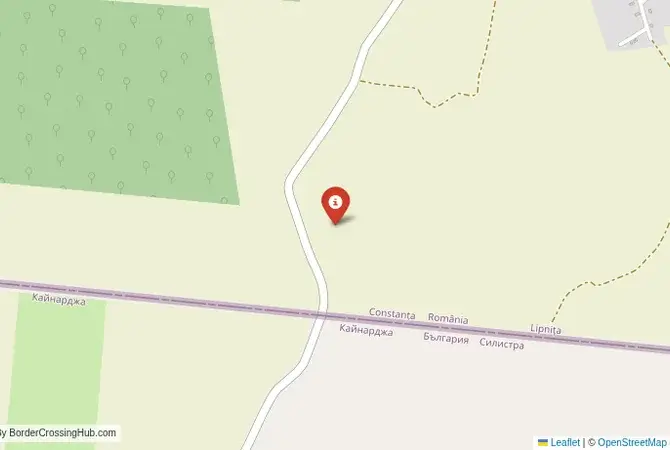
This checkpoint connects the Silistra Province of Bulgaria with Romania's Constanța County. It is a smaller, local crossing with restricted operating hours, typically from 8:00 AM to 8:00 PM, and is intended for passenger cars and vehicles up to 3.5 tonnes. The exclusion of heavy freight preserves the tranquility of this rural area. The road was built specifically to create this new crossing point. It is essential to verify the current schedule before planning your trip, as hours for such local crossings can be subject to change; post-Schengen land accession Jan 1, 2025, no systematic controls apply, with quick/personal processing typical given low traffic per recent reports.
A History of the Treaty of Küçük Kaynarca
The history of this crossing is dominated by the name of the Bulgarian village: Kaynardzha. This is the modern name for Küçük Kaynarca, the site where the momentous Treaty of Küçük Kaynarca was signed in 1774 between the Russian Empire of Catherine the Great and the Ottoman Empire. This treaty ended a major Russo-Turkish War and was a turning point in European history. It granted Russia vast new territories on the Black Sea, the right to protect Orthodox Christians within the Ottoman Empire, and passage for its ships through the Turkish Straits. This treaty marked the beginning of the decline of the Ottoman Empire and the rise of Russia as the dominant power in the Black Sea region. The new border crossing is a modern footnote to this immense historical event.
Nearby Border Crossings

The Simplified EU Border Procedure
Today, the border procedure is simplified due to both countries being in the EU and full Schengen land area since Jan 2025. You will stop for a check of your documents (passport or national ID card for EU citizens) by both Bulgarian and Romanian border police. The process is generally quick and personal, in keeping with the low volume of traffic; no systematic immigration/customs inspections for private travelers apply, with random checks possible.
The Surrounding Region: Bulgaria Side
On the Bulgarian side, the village of Kaynardzha has a small museum and a monument commemorating the signing of the historic treaty. The area is part of the Dobruja plateau, the agricultural heartland of Bulgaria. The nearby city of Silistra, on the Danube River, is one of the oldest in Bulgaria, the site of the important Roman city of Durostorum, with a magnificent Roman tomb and the ruins of a medieval fortress. The Srebarna Nature Reserve, a UNESCO World Heritage site, is also a short drive from Silistra.
The Surrounding Region: Romania Side
On the Romanian side, Lipnița is a rural commune in the Dobrogea region. The crossing connects the agricultural hinterlands of the two countries. The road from the border leads towards the Danube River and the main routes to the port city of Constanța. The area is known for its multicultural heritage, with significant Turkish and Tatar minorities.
Practical Travel Information
Practical planning is essential for this route. The most important factor is the limited operating hours. The roads leading to the crossing are regional and well-maintained. The official currencies are the Bulgarian Lev (BGN) in Bulgaria and the Romanian Leu (RON) in Romania. There are no services at the border itself. You must plan for fuel and currency exchange in the larger towns. You will need to purchase electronic vignettes for your vehicle for both countries if you plan to use the main road networks. These can be bought online in advance; monitor politiadefrontiera.ro for current status.
Final Considerations
The Kaynardzha–Lipnița border crossing is a fascinating journey through a place where great history and quiet rural life intersect. It is a testament to the modern EU's focus on local integration, a new bridge in a place of old treaties. It offers a quiet and efficient passage through the heart of the Dobruja region. For the traveler with an interest in history, it is a unique opportunity to visit the site of an event that redrew the map of Europe, a small village with a very big name.
View all border crossings between Bulgaria and RomaniaPractical information
Fuel
Bulgaria: 2 km - Romania: 2 km
Currency
Limited exchange; BGN, RON, EUR
Safety information
Quiet rural area
Connectivity
3G signal
Have you crossed here?
Help other travelers by sharing your experience, wait times, and any updates.