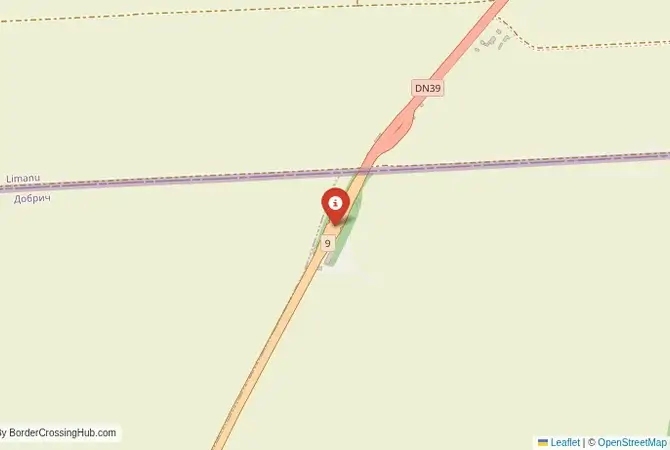
Monthly Update (September 2026):
Durankulak & Vama Veche remains a major Black Sea coastal crossing between Bulgaria and Romania, with no significant September closure identified. Bulgarian authorities reported normal traffic at all Romania crossings on September 4. The crossing remains useful for travelers following the coastal route between Varna and Constanța, although the summer tourist season can still produce heavier traffic around weekends. Public transport between the two border communities is also operating in early September, with direct buses scheduled on September 4–6.
About this crossing
Operational Details
This checkpoint connects the Dobrich Province of Bulgaria with Romania's Constanța County. It is a major international crossing, open 24/7 to all passenger cars, buses, and commercial freight. The facility is large and modern, but it can become extremely congested during the summer months (July and August) when a huge volume of tourists, particularly from Romania, head south to the Bulgarian beach resorts. The queues can be very long during these peak times. Outside of the summer season, it is a much quieter and more relaxed crossing; recent patterns from 2025-2026 show summer peaks still notable but non-peak waits generally short per monitoring sources.
A History of a Divided Coast
The history of this region is the history of Dobruja, a land that has been a crossroads of civilizations for millennia. The border here, established in 1940, divided the historic Dobruja coast. During the Cold War, this was a heavily restricted border. After the fall of communism, the crossing opened up, and the Romanian village of Vama Veche ("Old Customs") began its transformation. It became a haven for students, artists, and intellectuals, a place of resistance to the commercialization of the other Black Sea resorts, famous for its rock music, its laid-back atmosphere, and its tradition of sleeping on the beach. It is a cultural phenomenon that defines the character of this crossing.
Nearby Border Crossings

The Simplified EU Border Procedure
Today, the border procedure is simplified due to both countries being in the EU and full Schengen land area since Jan 2025. You will stop for a check of your documents (passport or national ID card for EU citizens) by both Bulgarian and Romanian border police, who work in close proximity. Customs checks are focused on commercial freight. The process is generally quick, but the main delay is the sheer volume of traffic during the summer; no systematic immigration/customs inspections for private travelers apply, with random checks possible.
The Surrounding Region: Bulgaria Side
On the Bulgarian side, the crossing is in a region of wild and beautiful coastline. The village of Durankulak is famous for the nearby Lake Durankulak, a coastal lagoon that is a major bird sanctuary and the site of a major Neolithic settlement, including the oldest stone architecture in Europe. The nearby beaches at Shabla and Krapets are some of the last remaining wild and undeveloped beaches on the Bulgarian coast. The stunning cliffs and sea caves at Cape Kaliakra are also a short drive away.
The Surrounding Region: Romania Side
On the Romanian side, the crossing is in the legendary village of Vama Veche. For decades, it has been the epicenter of Romania's alternative culture, a place where people come for the rock music, the vibrant nightlife, and the spirit of freedom. The beach is lined with quirky bars and terraces, and the atmosphere is unique. The crossing is the gateway to the southern Romanian Black Sea coast, including the major resorts of Mangalia, Neptun, and the port city of Constanța.
Practical Travel Information
Practical planning for this route requires patience in the summer. Be prepared for potentially long wait times. The official currencies are the Bulgarian Lev (BGN) in Bulgaria and the Romanian Leu (RON) in Romania. Currency exchange facilities are available at the border. You will need to purchase electronic vignettes for your vehicle for both countries if you plan to use the main road networks. These can be bought online in advance. The coastal road is well-maintained and very scenic; monitor live traffic sources for current summer congestion levels.
Final Considerations
The Durankulak–Vama Veche border crossing is the gateway to the Black Sea Riviera. It is a journey that connects the wild, natural beauty of the northern Bulgarian coast with the vibrant, bohemian atmosphere of Vama Veche. It is a border that is defined by the sun, the sea, and the pursuit of summer freedom. While the queues can be a challenge, the journey is a rite of passage for the thousands of tourists who flock to this unique and lively corner of the Black Sea coast each year.
View all border crossings between Bulgaria and RomaniaPractical information
Fuel
Bulgaria: <1 km - Romania: <1 km
Currency
Nearby exchange; BGN, RON, EUR
Safety information
Tourist traffic; controlled
Connectivity
Wi-Fi, 4G/5G
Have you crossed here?
Help other travelers by sharing your experience, wait times, and any updates.