Monthly Update (October 2026):
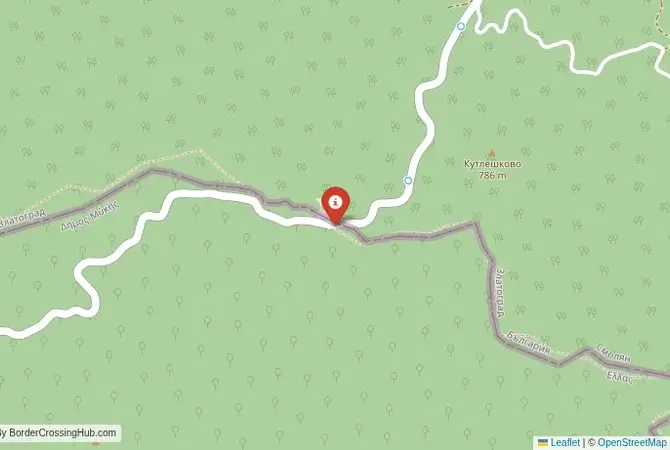
Thermes & Zlatograd has had an important recent change: passenger traffic was restored through the crossing on July 27, bringing this smaller Rhodope route back into practical use. By October it is no longer simply a historical or restricted crossing, and Bulgarian authorities continue to list Zlatograd among the Bulgaria–Greece checkpoints carrying passenger traffic. The mountain road is still a very different proposition from the main Kulata corridor, but it gives travelers another option between southern Bulgaria and northern Greece.
About this crossing
Operational Details
This checkpoint connects the Smolyan Province of Bulgaria with the Xanthi regional unit of Greece. It is a smaller international crossing, and it is crucial to check its operational status and hours before travel, as it may not be open 24/7. It is intended for passenger cars and local traffic, with a weight restriction that excludes heavy freight. The road is paved but is narrow and has many hairpin turns, requiring a cautious and confident driver. The road on the Greek side, in particular, is a spectacular but challenging mountain drive.
A History of a Thracian Heartland
The history of this region is the history of the ancient Thracians, and later of the Roman, Byzantine, and Ottoman Empires. The Rhodope Mountains have long been a place of refuge and a center of unique cultural traditions. The area has a significant population of Pomaks, or Bulgarian-speaking Muslims, on the Bulgarian side, and a large Turkish minority on the Greek side, in the region of Western Thrace. The modern border, established in the early 20th century, divided this mountainous region. The opening of this crossing has been a key factor in the economic development of this once-isolated region, promoting cross-border tourism and trade.
Nearby Border Crossings

The Seamless Border Procedure
Today, there is no border procedure for travelers. You simply drive through the mountain pass. There are no passport checks and no customs inspections. This is the reality of the Schengen Area. However, it is important to remember that both Greek and Bulgarian police and customs authorities can and do perform random checks on vehicles anywhere in their territory, including near the former border. You are still required to carry a valid passport or national ID card with you at all times.
The Surrounding Region: Bulgaria Side
On the Bulgarian side, the crossing is in the town of Zlatograd. Zlatograd has a beautifully preserved ethnographic complex, a historic old town with unique stone-roofed houses that is a living museum of Rhodopean architecture and crafts. The town is a popular tourist destination. The surrounding Central Rhodope mountains are a paradise for hikers, nature lovers, and those interested in traditional culture. The region is known for its unique polyphonic singing and its rich folklore, said to be the mythical home of Orpheus.
The Surrounding Region: Greece Side
On the Greek side, the crossing is in the region of Western Thrace. The village of Thermes is known for its thermal hot springs. The road descends from the mountains towards the city of Xanthi. Xanthi has a beautiful and well-preserved old town, with a unique blend of neoclassical mansions and Ottoman-era architecture. The city is famous for its spectacular carnival, one of the largest in Greece. The region is the heart of the Muslim minority of Greece and is dotted with mosques and traditional villages. The Nestos River delta, a major national park and wetland, is also in this region.
Practical Travel Information
Practical planning is essential for this route. You must have a suitable vehicle and be comfortable with narrow, winding mountain roads. Check the operating hours of the border before you travel. The official currencies are the Bulgarian Lev (BGN) in Bulgaria and the Euro (EUR) in Greece. There are no services at the border itself. You must be self-sufficient with fuel, food, and water. You will need to purchase an electronic vignette for your vehicle for Bulgaria. Greece uses a toll system on its main motorways.
Final Considerations
The Zlatograd–Thermes border crossing is a scenic and adventurous route through the heart of the Rhodope Mountains. It offers a beautiful journey through a region rich in nature, history, and a unique multicultural heritage. It is a border that you might not even notice you have crossed, a testament to the success of the Schengen project in this stunning mountain landscape. For those looking to explore the traditional villages of the Rhodopes and the historic old town of Xanthi, it is an excellent and highly recommended choice.
View all border crossings between Bulgaria and GreecePractical information
Fuel
Bulgaria: 2 km - Greece: 2 km
Currency
Small exchanges; BGN, EUR
Safety information
Mountain area; low incidents
Connectivity
Mobile data
Have you crossed here?
Help other travelers by sharing your experience, wait times, and any updates.