Monthly Update (September 2026):
Walserberg & Reichenhall remains one of the busiest Austria–Germany crossings, with German controls still affecting traffic in September. Recent reporting indicates that the controls at Walserberg are intended to continue, and Germany's internal border-control regime currently covers the Austrian frontier. Travelers using the Salzburg–Munich motorway should therefore allow some flexibility for checks, particularly during peak traffic periods.
About this crossing
Location and Connections
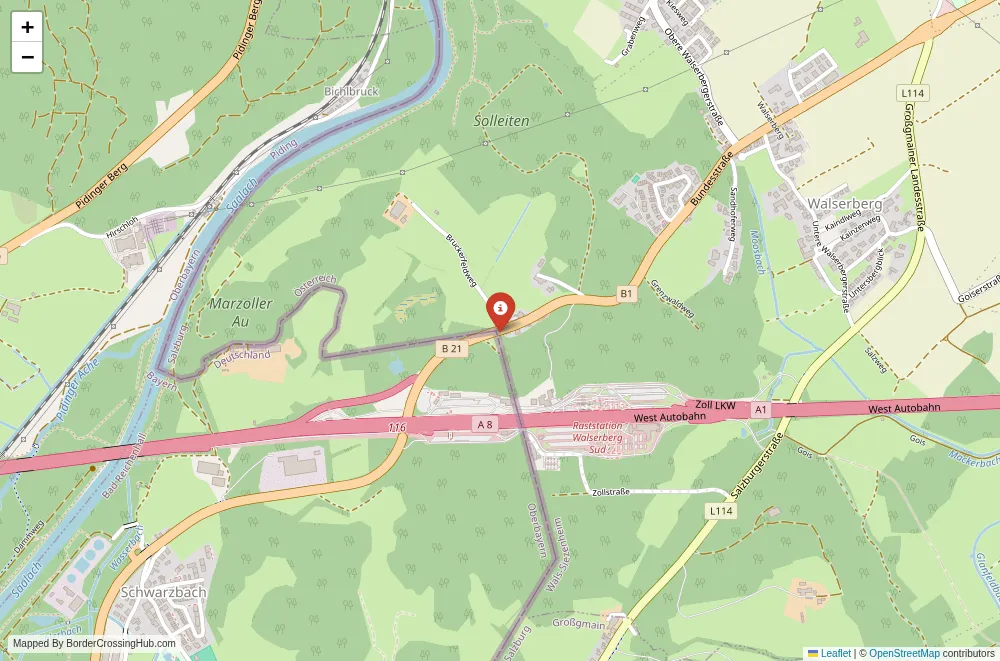
You approach this crossing on the German A8 from Munich or Bad Reichenhall direction, where it transitions seamlessly into the Austrian A1 West Autobahn at the Walserberg interchange. Walserberg (Austria) sits directly on the border, while Bad Reichenhall (Germany) lies about 10 to 15 minutes north on the German side. From Munich, the drive to the crossing takes roughly 1.5 to 2 hours; from Salzburg city center, it's a quick 10 to 15 minutes south. The A1 continues toward Salzburg Nord (toll-free section since 2019) and then Vienna. Cars, trucks, buses, and motorcycles dominate; no dedicated pedestrian or cyclist paths exist on the motorway. The route carries heavy commuter flow between Bad Reichenhall and Salzburg, plus tourists heading to Austrian ski areas or Vienna.
Alternative Names
It goes by the Walserberg border crossing, Walserberg/Reichenhall Grenzübergang, or A8/A1 motorway crossing at Walserberg (Austria)/Bad Reichenhall (Germany).
Nearby Border Crossings


Historical Background
The border line here stems from 19th-century Bavarian-Austrian agreements amid salt trade rivalries and territorial adjustments. The modern motorway link emerged in the 1970s as part of post-war infrastructure growth, replacing older local roads. Customs formalities persisted until Schengen implementation in the late 1990s. The crossing has seen periodic disruptions, from 1980s protests over nuclear issues to occasional queues during holiday peaks. The nearby area ties into Salzburg's long history as a trade hub and Bad Reichenhall's salt production legacy.
Geopolitical Context
Schengen since the late 1990s normally allows free movement without routine checks for EU citizens and visa-exempt travelers. Germany continues temporary land border controls due to migration, smuggling, and security concerns. As of February 10, 2026, these extend at least through March 15, 2026, with Bundespolizei conducting random spot inspections at crossings including Walserberg. Austria focuses temporary checks on eastern borders (extended to June 2026 for Czechia, Slovakia, Hungary, Slovenia), but the Germany-Austria segment sees German-led random activity. No permanent booths operate; checks occur roadside or in pullouts, sometimes causing kilometer-long queues during peaks.
Practical Crossing Procedures
You drive straight through the motorway with a border sign indicating the shift. Under current temporary measures, German police may pull you over shortly after entering Germany (or Austria depending on direction) for passport/ID verification, travel purpose questions, or quick vehicle glances. EU citizens show passport or national ID. Non-EU nationals need valid passports, visas/residence permits if applicable, and supporting documents like bookings or funds proof. Carry vehicle insurance and Austrian vignette (digital or sticker required for A1 onward, though the short section from Walserberg to Salzburg Nord remains toll-free since 2019). Trucks face customs rules for goods. Pedestrians and cyclists rarely cross here due to motorway design.
Typical Wait Times
Normal flow means seconds to cross. Spot checks add variability: many vehicles clear quickly, but selected stops, holiday traffic, or rush hours can stretch waits to 30 minutes or more, with reports of queues exceeding an hour during peak periods like holiday returns or events. Commuters note frequent delays impacting daily routines. Off-peak times, early mornings, or midweek often pass faster.
Operating Hours
The motorway operates 24/7 year-round. Schengen removed fixed hours. Winter snow or rare incidents might cause short disruptions, but the crossing stays open.
Transportation Options and Road Conditions
The A8/A1 provides high-standard lanes with good pavement, though valley terrain and curves appear near the line. Drive your car or use regional buses/trains (indirect via Salzburg or Freilassing). Views include alpine foothills, rivers, and distant mountains. Watch for trucks, holiday congestion, or weather slowdowns.
Scams & Warnings
Scams stay minimal at this major motorway point. No widespread touts or fake services reported. Fuel stations or shops near the border occasionally offer poor rates. Keep valuables secure during any police stop. Heavy truck traffic can lead to aggressive driving; maintain distance. Winter queues from checks and snow create frustration.
Nearby Attractions
Walserberg offers basic services and proximity to Salzburg's old town, fortress, and Mozart sites. Bad Reichenhall features spas, salt works, and alpine access. The route leads to Berchtesgaden National Park with Königssee lake and Watzmann mountain. Salzburg Nord connects to the city and Untersberg cable car. The area suits blending urban Salzburg visits with Bavarian alpine exploration.
Seasonal Variations and Weather Impacts
Winter snow December to March requires winter tires; queues spike from holiday traffic and checks. Summer sees tourist flow with clearer roads. Autumn brings foliage with moderate crowds. Rain or fog rarely closes the motorway.
Travel Tips and Preparation
Carry passport/ID for spot checks. Buy Austrian vignette online beforehand if needed. Use traffic apps for real-time queues. Pack snacks for delays. Check police/ASFINAG for updates. Refuel before border for options.
Cultural and Economic Significance
The crossing supports massive cross-border trade, tourism, and commuting in the Salzburg-Bavaria region. It ties Austrian urban life with Bavarian alpine spots, sustaining economies through day trips, shopping, and freight.
Before You Cross
Verify current check status and traffic from official sources right before travel. With prep for possible stops and solid driving, you manage this busy motorway crossing and continue between Bavaria and Salzburg. Safe travels.
View all border crossings between Austria and GermanyPractical information
Fuel
Austria: <1 km - Germany: <1 km
Currency
EUR only; ATMs at services/towns
Safety information
Congestion risk; occasional enhanced controls
Connectivity
Wi-Fi points; 4G
Have you crossed here?
Help other travelers by sharing your experience, wait times, and any updates.