Monthly Update (September 2026):
Bad Reichenhall & Großgmain remains a busy local connection between Bavaria and Salzburg, with Germany's temporary controls on the Austrian border continuing through September 15. Because checks are selective rather than a permanent stop for every vehicle, delays can vary considerably from one trip to another. There is no major September closure reported at the crossing itself.
About this crossing
Location and Connections
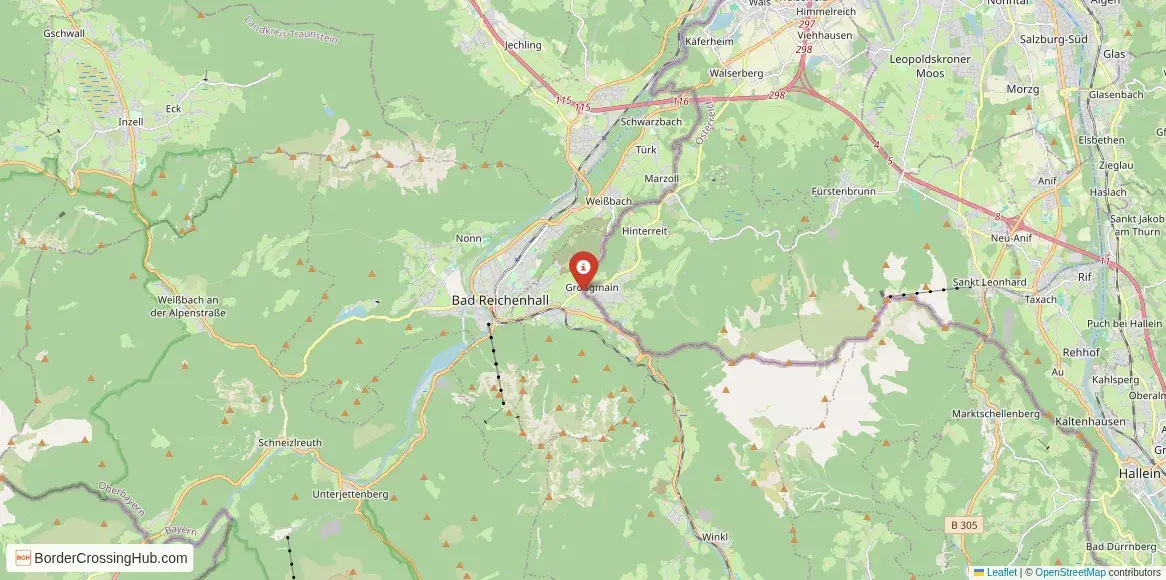
You arrive here where Großgmain (Austria) meets Bayerisch Gmain (Germany), along a local road that crosses the Weißenbach stream marking the border. Großgmain sits about 10 minutes south of Salzburg city center, while Bayerisch Gmain lies close to Bad Reichenhall and Berchtesgaden in Bavaria. From Salzburg, head south via local roads toward Großgmain; on the German side, it connects to Oberau or the Rossfeld area. Cars, local buses, cyclists, and pedestrians use it; trucks face limits (up to 3.5 tons per some regulations). The crossing provides a convenient backroad option for those avoiding the Walserberg motorway point or exploring the Berchtesgadener Land and Flachgau regions.
Alternative Names
It appears as Großgmain/Bayerisch Gmain border crossing, Bayerisch Gmain-Großgmain, or sometimes the Weißenbach bridge crossing from the stream that defines the line under the bridge.
Nearby Border Crossings


Historical Background
The Gmainer Tal valley saw border shifts over centuries, with Napoleon assigning parts to Bavaria in 1803 before Austria regained Großgmain in 1816. Salt mining and trade influenced the area, though less directly than nearby Dürrnberg. The border formalized in the 19th century and stayed open during Austria's neutral postwar period, with customs easing until Schengen in the late 1990s. The crossing reflects the close-knit alpine communities, with the stream serving as a natural divide and occasional customs presence in past decades.
Geopolitical Context
Schengen since the late 1990s normally allows free passage with no routine checks for EU citizens or visa-exempt travelers. Germany and Austria occasionally reinstate temporary controls for security or migration, but as of February 10, 2026, no active widespread restrictions apply specifically to this Bavaria-Salzburg border segment (unlike some eastern Austrian borders extended to mid-2026). Random spot checks remain possible on roads like this one. The border follows the Weißenbach here, with a simple bridge marking the transition. Confirm via official police or foreign ministry sites for any short-term changes.
Practical Crossing Procedures
You drive across the local road or bridge with a border marker or sign. No booths or regular queues exist. In rare spot checks, police may stop you for ID verification or basic questions. EU citizens show passport or national ID. Non-EU nationals carry valid passports, visas/residence permits if required, and proof like accommodation or onward travel. Vehicles need insurance; no vignette required for this non-motorway route. Pedestrians and cyclists cross easily on the bridge or road shoulder.
Typical Wait Times
You normally cross in seconds with no interruption. Any random checks add 5 to 20 minutes at most. Traffic stays light, so even during Salzburg tourist peaks or weekends, delays rarely build beyond brief pauses.
Operating Hours
The road operates 24 hours daily, year-round. Schengen removed fixed times. Winter snow or ice can slow the approach temporarily, but plowing keeps it open.
Transportation Options and Road Conditions
Drive your own car for flexibility; local buses connect Großgmain to Salzburg or Bad Reichenhall. The road offers decent pavement through gentle alpine terrain with some curves and valley views. It climbs modestly from Salzburg but stays manageable. Watch for cyclists, hikers, or local traffic on rural stretches. Scenery includes meadows, woods, and glimpses of the Untersberg massif.
Scams & Warnings
Scams stay minimal at this quiet local point. No common touts or fake services reported. Nearby border shops or roadside stops occasionally have inflated prices for goods, but issues remain rare. The area feels safe and peaceful; drive attentively on curves or in poor weather.
Nearby Attractions
Großgmain provides a charming holiday village with access to hiking trails and proximity to Salzburg's old town. Bayerisch Gmain offers quiet Bavarian village life near Bad Reichenhall's spas and salt works. The crossing lies close to the Berchtesgadener Land with Königssee lake, Watzmann mountain, and Obersalzberg sites. Salzburg's fortress, Mozart birthplace, and Mirabell Gardens sit just north. The region suits day trips combining city culture with alpine nature.
Seasonal Variations and Weather Impacts
Winter snow December to March requires winter tires; roads ice in shaded valleys. Summer draws tourists with clear conditions and longer days. Autumn brings foliage to the hills with lighter crowds. Rain slicks surfaces occasionally, but weather closures stay uncommon on this local route.
Travel Tips and Preparation
Carry passport or ID for possible spot checks. Refuel or shop in Salzburg or Bad Reichenhall. Offline maps help in hilly areas with variable signal. Pack layers for alpine weather shifts. Check weather and road apps before departure. Follow marked paths if hiking nearby to stay safe.
Cultural and Economic Significance
The crossing supports cross-border tourism and local commuting, linking Salzburg's urban draw with Bavarian alpine spots. Shared alpine heritage in hiking, spas, and salt history ties communities together through day trips and regional events.
Before You Cross
Verify road conditions and any temporary check info from official sources near your travel time. With basic prep for alpine driving and awareness of rare stops, you handle this low-key valley crossing and continue between Salzburg and Bavaria's scenic edges. Safe travels.
View all border crossings between Germany and AustriaPractical information
Fuel
Germany: <1 km - Austria: <1 km
Currency
EUR only; ATMs widely available
Safety information
Rush-hour queues; occasional checks
Connectivity
Wi-Fi points; 4G
Have you crossed here?
Help other travelers by sharing your experience, wait times, and any updates.