Monthly Update (September 2026):
Varnsdorf & Großschönau remains a small local Czech–Germany crossing with no major September disruption reported. Germany's temporary border controls with Czechia continue through September 15 and are scheduled to be renewed from September 16, so travelers can still encounter document checks throughout the month. The crossing itself remains primarily useful for local traffic rather than long-distance journeys.
About this crossing
Location and Connections
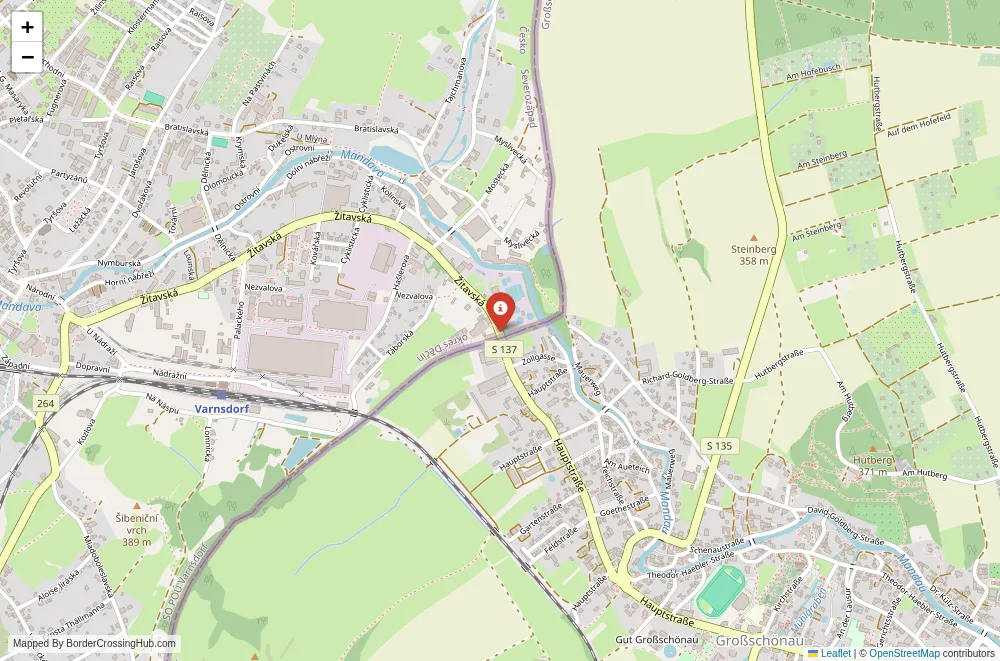
You reach this point directly in the built-up areas where Varnsdorf in Czechia's Ústí nad Labem Region borders Großschönau in Saxony's Görlitz district. The main road crossing uses a local route from Varnsdorf (often tied to Silnice I/9 or connecting streets) into Großschönau's southern or central parts. From Varnsdorf center, it's a matter of minutes. On the German side, Großschönau connects quickly to nearby Seifhennersdorf or about 30 minutes from Zittau. Rail line from Varnsdorf to Großschönau (part of historical networks) supports passenger service. Cars, local buses, cyclists, pedestrians, and occasional trains handle movement; the crossing suits daily locals, shoppers, and those exploring the border enclaves.
Alternative Names
It appears as Varnsdorf-Großschönau border crossing, Großschönau-Varnsdorf, or sometimes Warnsdorf-Großschönau from pre-1945 German naming.
Nearby Border Crossings


Historical Background
The rail link dates to 1871, part of networks connecting Bohemian towns to Saxony. Post-WWII, the Iron Curtain closed it from the late 1940s, with heavy fortifications dividing the communities. Passenger rail resumed in phases after 1989, while road access opened fully with Schengen in 2007. Varnsdorf (formerly Warnsdorf) lost much of its German population after the war and shifted focus to textiles. Großschönau preserves traditional Upper Lusatian houses and damask weaving heritage. The crossing reflects recovery from division, with old markers and photos documenting the past.
Geopolitical Context
Schengen since late 2007 normally means no routine checks. Germany maintains temporary controls on all Czech land borders due to migration and security. As of February 10, 2026, these extend at least through March 15, 2026, with Bundespolizei random spot checks possible. This local crossing gets lighter attention than motorways, but inspections for ID or vehicles can occur near the line. No permanent booths stand. Check German Federal Police or Czech Interior Ministry for any extensions or changes.
Practical Crossing Procedures
You drive or walk across the local road or bridge, marked by signs or boundary stones. Temporary measures may lead to police stopping you shortly after entering Germany for passport/ID checks, travel purpose questions, or basic documents. EU citizens present national ID or passport. Non-EU nationals need valid passports, visas/residence permits if required, and proofs like bookings. Rail passengers face occasional onboard checks. Carry vehicle insurance; no vignette for this local route. Pedestrians and cyclists cross easily.
Typical Wait Times
Usually you pass in seconds with no delay. Random checks vary: most clear fast, but detailed stops take 10 to 30 minutes depending on questions or minor queues. Traffic remains low-key, so even weekends rarely cause significant backups.
Operating Hours
The road and rail stay open 24 hours daily, year-round. Schengen removed fixed times. Winter snow might slow approaches briefly, but the crossing point remains accessible.
Transportation Options and Road Conditions
Own car works well; local buses connect Varnsdorf to Czech towns and Großschönau to German networks like Zittau. Passenger rail runs between Varnsdorf and Großschönau. The road offers solid pavement through valley terrain with gentle hills, curves, and village edges. Views feature small rivers, fields, and traditional houses. Watch for local traffic or bikes on quiet sections.
Scams & Warnings
Scams stay uncommon at this small, local spot. No frequent touts or fake services reported. Border shops in Varnsdorf sell cheaper fuel, groceries, tobacco, alcohol, or goods to Germans; some mention insistent vendors or poor informal rates. Keep belongings secure in cars during stops. The area feels peaceful for cautious visitors.
Nearby Attractions
Varnsdorf offers textile history museums, the Mandava River paths, and access to Šluknov Hook trails. Großschönau features the Damask Museum, traditional Umgebinde houses, and hiking routes around local hills. Cross-border cycling paths like the Umgebinde Houses Route connect the towns, with ponds and scenic corners. The region suits walkers, cyclists, and those interested in Lusatian-Bohemian heritage over big sights.
Seasonal Variations and Weather Impacts
Winter snow December to March needs winter tires; roads ice in low areas. Summer attracts more hikers and day-trippers with better conditions. Autumn brings foliage to the valleys with lighter crowds. Rain can slick surfaces, but weather closures remain rare on this maintained local road.
Travel Tips and Preparation
Carry passport or ID always for possible checks. Shop or refuel in Czechia to save. Offline maps help with rural signal. Pack layers for valley weather changes. Check police sites or border apps for control status before leaving. Follow marked paths on hikes to respect private property.
Cultural and Economic Significance
Cross-border shopping supports small businesses: Germans buy lower-cost Czech items, aiding Varnsdorf's local trade. The route ties communities in the Šluknov Hook and Upper Lusatia through shared textile and weaving history, joint trails, and cultural exchanges that bridge postwar divisions.
Before You Cross
Confirm temporary check details from official sources near your travel date. With readiness for spot stops and simple local roads, you handle this neighborly crossing and explore the valley's shared heritage. Safe travels.
View all border crossings between Czech Republic and GermanyPractical information
Fuel
Czech Republic: <1 km - Germany: <1 km
Currency
EUR; CZK in Varnsdorf; ATMs common
Safety information
Busy junctions; occasional ID checks
Connectivity
Wi-Fi points; 4G
Have you crossed here?
Help other travelers by sharing your experience, wait times, and any updates.