Monthly Update (September 2026):
Rumburk & Seifhennersdorf remains a quiet local crossing, with no significant September disruption reported. Germany's temporary controls on its Czech frontier continue through September 15 and are scheduled to continue under a new notification from September 16. For travelers, this means the crossing remains usable as normal but a document check is possible, so passports or ID cards should be readily accessible.
About this crossing
Location and Connections
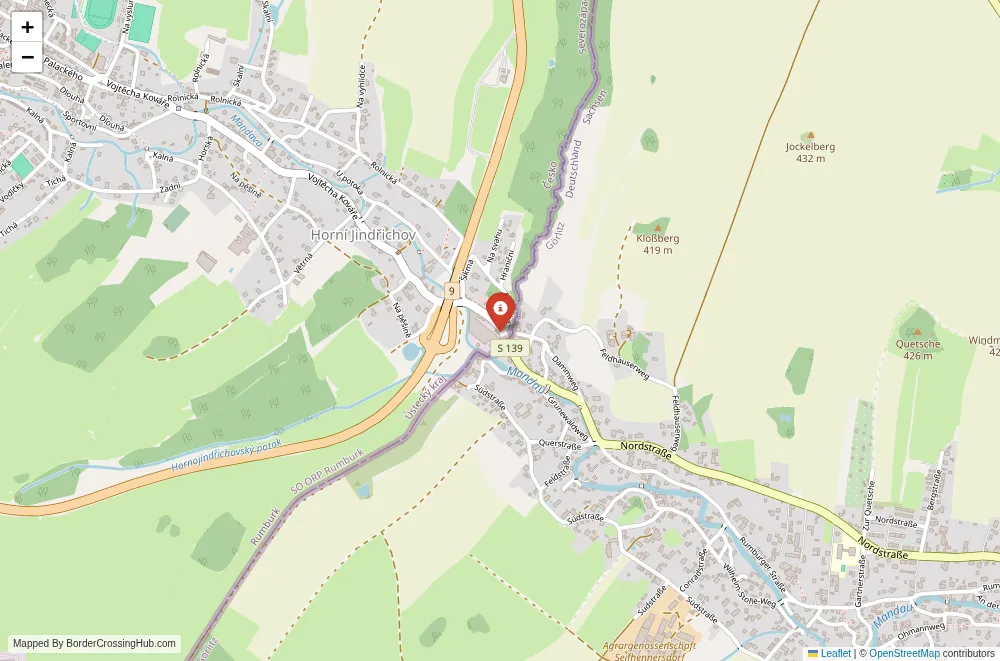
You arrive at this point where Rumburk in Czechia's Ústí nad Labem Region directly adjoins Seifhennersdorf in Saxony, Germany. The crossing uses a local road from Rumburk (often part of Silnice I/9 or connecting streets) into Seifhennersdorf's southern or central areas. From Rumburk town center, it's a short 5 to 10 minute drive. On the German side, Seifhennersdorf connects quickly to nearby Ebersbach or about 30 to 40 minutes from Bautzen. Cars, local buses, cyclists, and pedestrians handle most movement; trucks remain uncommon on this non-major route. The crossing serves daily commuters, shoppers, and those exploring the border region's small towns and trails.
Alternative Names
It appears as Rumburk-Seifhennersdorf border crossing, Seifhennersdorf-Rumburk, or sometimes tied to nearby Varnsdorf references since Seifhennersdorf also borders Varnsdorf on another line.
Nearby Border Crossings


Historical Background
The area formed part of older Lusatian-Bohemian frontiers. During the Cold War, the border closed tightly after 1945, with controls reintroduced gradually in the 1970s for limited traffic. A formal crossing reopened around 1970 for goods and later tourists, though full access came post-1989. The Iron Curtain divided communities here for decades. Railway history stands out nearby: the line from Varnsdorf to Seifhennersdorf saw passenger service resume in 2023 after years of bus replacements, while discussions continue on linking Rumburk directly by rail to Seifhennersdorf to close a gap. Boundary stones along the Grenzflößchen stream mark the line, preserving visible traces of the old division.
Geopolitical Context
Schengen since 2007 normally eliminates routine controls. Germany continues temporary border checks on all Czech land crossings due to migration and security issues. As of February 10, 2026, these extend at least through March 15, 2026, per Federal Interior Ministry orders, with Bundespolizei conducting random spot inspections. This local road receives less frequent attention than motorways, but checks for documents or vehicles can still occur near the line. No permanent facilities block passage. Check German Federal Police or Czech Ministry of Interior sources for any last-minute changes.
Practical Crossing Procedures
You drive or walk across the local road, marked by boundary stones or signs. Temporary measures may lead to police stopping you shortly after entering Germany for ID verification, travel purpose questions, or quick looks at documents. EU citizens show passport or national ID. Non-EU nationals carry valid passports, visas/residence permits if needed, and supporting items like bookings. Vehicle insurance suffices; no vignette applies to this non-highway route. Pedestrians and cyclists cross on the road with ease.
Typical Wait Times
Most crossings happen in seconds without interruption. Random checks introduce variability: many pass quickly, but selected stops take 10 to 30 minutes depending on questions or minor lines. Low overall traffic keeps delays minimal even on weekends.
Operating Hours
The road operates 24 hours a day, year-round. Schengen removed any fixed schedule. Winter conditions might slow rural access briefly, but the crossing stays open.
Transportation Options and Road Conditions
Own car provides flexibility; local buses connect Rumburk to Czech towns and Seifhennersdorf to German networks like Bautzen. No direct rail crosses at this exact point (nearby Varnsdorf-Seifhennersdorf line runs passenger service). The road offers solid pavement through gentle hills with farmland and village views. Curves appear in places, but conditions remain good overall. Watch for local vehicles or bikes on quiet sections.
Scams & Warnings
This small, community-focused crossing reports few scams. No common touts or inflated services show up in accounts. Czech border shops near Rumburk sell cheaper fuel, groceries, tobacco, alcohol, or other items to Germans; some travelers note pushy sales or substandard informal exchanges. Secure valuables in cars during any stops. The quiet rural feel keeps it low-risk for attentive visitors.
Nearby Attractions
Rumburk offers historic sites like the Loreto Chapel, textile museum, and access to Šluknov Hook trails. Seifhennersdorf provides quiet town amenities, preserved buildings, and links to Lusatian paths. The broader zone includes cross-border hiking/cycling routes, nearby boundary stones along streams, and spots highlighting northern Czechia's unique peninsula-like border shape. It draws those interested in local history, peaceful walks, or borderland exploration rather than major landmarks.
Seasonal Variations and Weather Impacts
Winter from December to March brings snow; winter tires help on potential icy patches. Summer sees more local crossers and hikers with favorable weather. Autumn adds color to fields and woods with reduced crowds. Rain slicks roads occasionally, but weather disruptions stay rare on this local route.
Travel Tips and Preparation
Carry passport or ID for possible checks. Shop or refuel in Czechia to save money. Offline maps help in areas with spotty signal. Bring layers for open countryside weather. Monitor police sites or border info apps for control updates before departure. Use marked paths for walks to respect private property.
Cultural and Economic Significance
Cross-border shopping sustains small shops: Germans buy lower-cost Czech goods, supporting Rumburk's local scene. The route strengthens ties in the Šluknov Hook and Upper Lusatia through shared history, community events, and ongoing rail improvement talks that aim to enhance connectivity.
Before You Cross
Verify the latest temporary check status from official channels just prior to travel. With prep for occasional stops and simple rural driving, you handle this community-oriented crossing and move into the border region's gentle landscapes. Safe travels.
View all border crossings between Czech Republic and GermanyPractical information
Fuel
Czech Republic: <1 km - Germany: <1 km
Currency
EUR; CZK in Rumburk; ATMs common
Safety information
Urban traffic; occasional ID checks
Connectivity
Wi-Fi points; 4G
Have you crossed here?
Help other travelers by sharing your experience, wait times, and any updates.