Monthly Update (October 2026):
Santa Ana & Valle Nuevo is entering October without a significant reported closure or restriction. Current border information lists the Guatemalan customs operation at Valle Nuevo as 24 hours, while the Salvadoran side also maintains continuous migration service. For travelers moving between Guatemala's western highlands and Santa Ana, the crossing therefore offers more flexibility than some of the smaller regional posts.
Driving there, or sending a driver? Send them this guide.
For reports and websites
Cite this page
Border Crossing Hub (2026). Santa Ana & Valle Nuevo Border Crossing. Updated October 2026. https://bordercrossinghub.com/valle-nuevo-santa-ana-border-crossing/<a href="https://bordercrossinghub.com/valle-nuevo-santa-ana-border-crossing/">Santa Ana & Valle Nuevo Border Crossing (Border Crossing Hub)</a>Put this crossing's card on your website
Free. It updates on its own when our information changes.
<iframe data-bch-card src="https://bordercrossinghub.com/valle-nuevo-santa-ana-border-crossing/?bch_view=card" width="100%" height="980" scrolling="no" style="border:0;max-width:480px;display:block" loading="lazy" title="Santa Ana & Valle Nuevo border crossing information"></iframe>
<p style="font-size:12px;margin:4px 0 0">Crossing information: <a href="https://bordercrossinghub.com/valle-nuevo-santa-ana-border-crossing/">Border Crossing Hub</a></p>
<script src="https://bordercrossinghub.com/?bch_embed_js=1" async></script>Paste it where you want the card. The last line (a script) only adjusts the height and can be left out.
About this crossing
Historical and Geopolitical Context
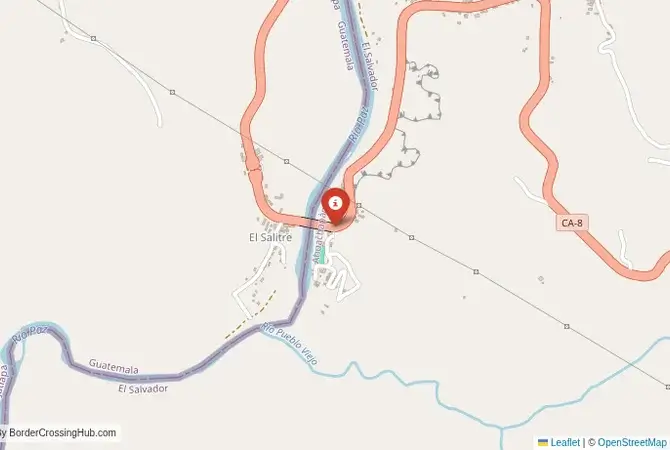
The 203 km Guatemala-El Salvador border, formalized after the 1821 dissolution of the Federal Republic of Central America, supports significant trade in coffee, textiles, and electronics through the Valle Nuevo-Las Chinamas crossing. Both countries participate in the CA-4 agreement, allowing visa-free travel for many nationalities for up to 90 days. The 2017 Customs Union introduced the DUCA-F electronic system, streamlining commerce, with El Salvador importing 8% of its goods from Guatemala. Historical water rights disputes in the region add geopolitical weight, while the crossing’s proximity to Santa Ana’s coffee plantations and cultural sites enhances its role in tourism and trade. Recent trade surges have occasionally caused congestion, underscoring its economic importance.
Crossing Procedures and Wait Times
Open from 6:00 AM to 10:00 PM (with some flexibility reported), the Valle Nuevo-Las Chinamas crossing features separate immigration offices. At Guatemala’s immigration in Valle Nuevo, obtain an exit stamp and a paper slip; no official fee applies, but some report unofficial “charges”. Walk 500 meters across the Rio Paz bridge to El Salvador’s immigration in Las Chinamas, often a pop-up canopy, where you submit the slip. No entry stamp is needed due to the CA-4 agreement, and most nationalities receive a 90-day visa-free stay, though some require a $12 USD tourist card in cash. Wait times range from 20-60 minutes in the early morning to 1-2 hours during peak afternoons or holidays. Vehicles need a $20.78 USD Guatemala import permit and $2.34 USD fumigation fee; El Salvador charges $10-12 USD for a temporary import permit, requiring copies of passport, license, and registration. The process takes 45-120 minutes, with recent reports noting straightforward crossing despite tout pressure.
Nearby Border Crossings


Route Details and Transportation
From Guatemala City, buses to Valle Nuevo cost 60 GTQ ($7.80 USD) and take 4 hours, often requiring a minivan change in Jalpatagua at no extra cost. From Las Chinamas, El Salvador, walk 200 meters to catch a bus to Ahuachapán ($0.50 USD, 20 minutes), then transfer to Santa Ana via bus 210 ($0.48 USD, 1 hour). The CA-1 highway is paved, offering views of coffee fields and Volcán Chingo, but heavy truck traffic can slow travel. The border area has comedores selling pupusas for $0.50 USD and a copy shop charging Q4 per document. Avoid touts offering “fast-track” services for $10; buses to Santa Ana or Guatemala City are nearby. A recent traveler reported an 8-hour journey from Guatemala City to Santa Ana, including a 1-hour crossing. Evening buses are limited, so aim for morning travel.
Scams & Warnings
Exchange money in Guatemala City or Ahuachapán; border changers charge a 3% fee or offer poor rates ($1:8 GTQ vs. $1:7.55 GTQ). Scams include unofficial “exit fees” or overpriced tuk-tuks; politely refuse and request receipts. Carry USD for El Salvador’s fees and proof of onward travel and accommodation. Cross early to avoid crowds and secure transport. For vehicles, pre-register via El Salvador’s aduana system and bring document copies to streamline customs. Monitor news for disruptions, as trade surges can clog the border. A Salvadoran SIM card ($5 USD) from Ahuachapán ensures connectivity. Keep valuables secure near comedores, as the area can get crowded.
Nearby Attractions and Cultural Significance
Santa Ana, 1 hour from Las Chinamas, features the neo-gothic Cathedral of Santa Ana and the early 1900s Teatro de Santa Ana, plus access to the Ruta de las Flores. Guatemala’s Jutiapa offers vibrant markets, and nearby Volcán Chingo is a hiking draw. The crossing supports trade and tourism, blending Mayan and Salvadoran cultures, evident in Santa Ana’s July Fiestas Julias and pupusa stalls ($0.50 USD). The area’s coffee heritage adds to its cultural richness.
Seasonal Considerations and Planning
The dry season (November-April) brings clear roads and mild temperatures (~25°C), ideal for crossing. The rainy season (May-October) risks flooding along the Rio Paz, slowing traffic and customs. Holidays, like Santa Ana’s July festival, increase congestion, so cross early. Budget 7-9 hours from Guatemala City to Santa Ana, including 1-2 hours at the border. Stay in Santa Ana for better lodging than Ahuachapán’s limited options. Carry USD, confirm CA-4 visa days, and check for health requirements like yellow fever vaccination. Monitor news for trade-related delays. With careful planning, this crossing connects you to El Salvador’s cultural hubs and Guatemala’s lively markets.
View all border crossings between Guatemala and El SalvadorHeading to Santa Ana & Valle Nuevo? Take this with you.
One page with the hours, waits, emergency numbers and coordinates. Works without signal.
Practical information
Fuel
Guatemala: <1 km - El Salvador: <1 km
Currency
Limited near Valle Nuevo (GTQ, USD)
Safety information
Remote, rural area
Connectivity
Basic 3G coverage
Have you crossed here?
Help other travelers by sharing your experience, wait times, and any updates.