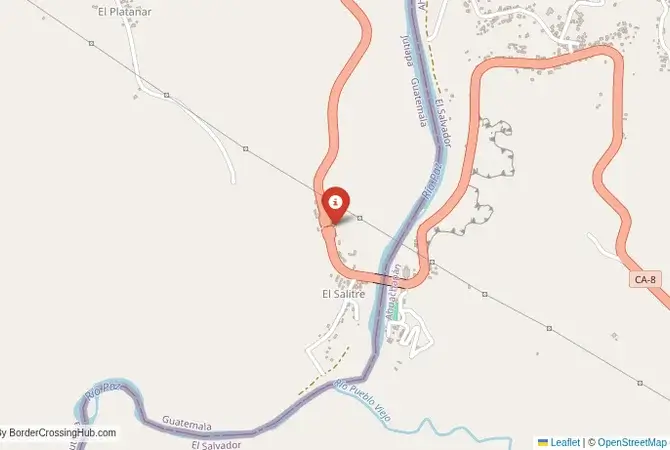
Monthly Update (September 2026):
Ahuachapán & San Cristóbal Border Crossing remains a regular Guatemala-El Salvador gateway, with El Salvador listing San Cristóbal as a 24-hour border facility. The crossing is also included in the Paso Ágil arrangement for Guatemala, El Salvador, Honduras and Nicaragua nationals, while other foreign travelers still use the normal immigration counters. No significant September closure has been identified, although the Independence celebrations can bring extra local traffic during the middle of the month.
Driving there, or sending a driver? Send them this guide.
For reports and websites
Cite this page
Border Crossing Hub (2026). Ahuachapán & San Cristóbal Border Crossing. Updated September 2026. https://bordercrossinghub.com/san-cristobal-ahuachapan-border-crossing/<a href="https://bordercrossinghub.com/san-cristobal-ahuachapan-border-crossing/">Ahuachapán & San Cristóbal Border Crossing (Border Crossing Hub)</a>Put this crossing's card on your website
Free. It updates on its own when our information changes.
<iframe data-bch-card src="https://bordercrossinghub.com/san-cristobal-ahuachapan-border-crossing/?bch_view=card" width="100%" height="980" scrolling="no" style="border:0;max-width:480px;display:block" loading="lazy" title="Ahuachapán & San Cristóbal border crossing information"></iframe>
<p style="font-size:12px;margin:4px 0 0">Crossing information: <a href="https://bordercrossinghub.com/san-cristobal-ahuachapan-border-crossing/">Border Crossing Hub</a></p>
<script src="https://bordercrossinghub.com/?bch_embed_js=1" async></script>Paste it where you want the card. The last line (a script) only adjusts the height and can be left out.
About this crossing
Historical and Geopolitical Context
The 203 km Guatemala-El Salvador border, formalized after El Salvador’s 1841 separation from the Federal Republic of Central America, is marked by 530 boundary pillars set in 1940. The San Cristóbal crossing, the busiest of the four Guatemala-El Salvador crossings, facilitates trade in coffee, textiles, and electronics, with El Salvador sourcing 8.2% of its imports from Guatemala. The 2017 Customs Union introduced the DUCA-F electronic system, streamlining commerce. The nearby Chingo volcano, at 5,823 feet, adds geological significance, while cultural ties, with over 111,000 Salvadorans living in Guatemala, enrich the region. Occasional water rights disputes and trade surges, as seen in recent years, underscore the crossing’s geopolitical importance.
Crossing Procedures and Wait Times
Open from 6:00 AM to 10:00 PM (with some flexibility reported), the San Cristóbal-Ahuachapán crossing suits daytime travel to avoid long queues. At Guatemala’s immigration, obtain an exit stamp; no official fee applies, but some report unofficial “charges”. Walk 100 meters through no-man’s-land to El Salvador’s immigration office, where a passport with six months’ validity and proof of onward travel are required. Most nationalities enter El Salvador visa-free for 90 days under the CA-4 agreement; a $12 USD tourist card may apply in cash. Wait times average 30-60 minutes in the morning, stretching to 1-2 hours during peak afternoons or holidays. Vehicles need a $20.78 USD Guatemala import permit and $2.34 USD fumigation fee; El Salvador charges $10-12 USD for a temporary import permit, requiring copies of passport, license, and registration. The process takes 45-90 minutes, with efficient staff despite occasional tout pressure.
Nearby Border Crossings


Route Details and Transportation
From Guatemala City, chicken buses to San Cristóbal cost 60 GTQ ($7.65 USD) and take 3-4 hours, departing from the main bus terminal. From Ahuachapán, El Salvador, bus 282 from Terminal Francisco Lara Pineda reaches the border in 1 hour ($0.75 USD). The Pan-American Highway is paved, offering views of the Chingo volcano and coffee plantations, but heavy truck traffic can cause delays. The border area has food stalls selling pupusas for $0.50 USD and a copy shop charging Q4 per document. Avoid touts offering “express” services for $10; public buses to San Salvador or Guatemala City are available just past immigration, though evening services are limited. A 2023 traveler noted a smooth 1-hour crossing with friendly staff.
Scams & Warnings
Exchange money in Guatemala City or Ahuachapán; border changers offer poor rates (e.g., $1:8 GTQ vs. $1:7.55 GTQ). Scams include unofficial “exit fees” or overpriced transport; politely refuse and demand receipts. Carry USD for El Salvador’s fees and proof of onward travel and accommodation. Cross early to avoid crowds and secure transport. For vehicles, pre-register via El Salvador’s aduana system and bring document copies to streamline customs. Monitor news for closures, as protests in November 2022 disrupted this crossing. A Salvadoran SIM card ($5 USD) from Ahuachapán ensures connectivity. Keep valuables secure near Ahuachapán’s crowded bus stops, as pickpocketing has been reported.
Nearby Attractions and Cultural Significance
In Guatemala, Jutiapa’s markets offer local crafts, while El Salvador’s Ahuachapán is a gateway to the Ruta de las Flores, with towns like Concepción de Ataco, 45 minutes away, known for coffee tours and murals. The crossing supports trade and tourism, blending Mayan and Salvadoran cultures, evident in Ahuachapán’s food stalls serving baleadas for $1 USD and Santa Ana’s July Fiestas Julias, a vibrant cultural event.
Seasonal Considerations and Planning
The dry season (November-April) brings clear roads and mild temperatures (~24°C), ideal for crossing. The rainy season (June-October) risks flooding near the Chingo volcano, slowing traffic and customs processes. Holidays increase congestion, so aim for early mornings. Budget 5-6 hours from Guatemala City to Santa Ana, including 1-2 hours at the border. Stay in Santa Ana for better lodging than Ahuachapán’s limited options. Carry USD, confirm CA-4 visa days, and check for health requirements like yellow fever vaccination. Monitor news for protests or trade-related delays. With careful planning, this crossing connects you to El Salvador’s coffee trails and Guatemala’s vibrant markets.
View all border crossings between Guatemala and El SalvadorHeading to Ahuachapán & San Cristóbal? Take this with you.
One page with the hours, waits, emergency numbers and coordinates. Works without signal.
Practical information
Fuel
Guatemala: 500 m - El Salvador: 500 m
Currency
Available near border (USD, GTQ)
Safety information
Busy; caution at night
Connectivity
Wi-Fi at checkpoints, 4G
Have you crossed here?
Help other travelers by sharing your experience, wait times, and any updates.