Monthly Update (October 2026):
The Dolobychiv & Uhryniv Border Crossing is currently moving well from Poland into Ukraine. October 6 monitoring showed an estimated 17-minute wait, with no vehicles recorded in the queue at the time. It remains a relatively small alternative to the larger Poland-Ukraine gateways, and current traffic levels suggest it can be worth considering when the main routes are busy.
About this crossing
Operational Details
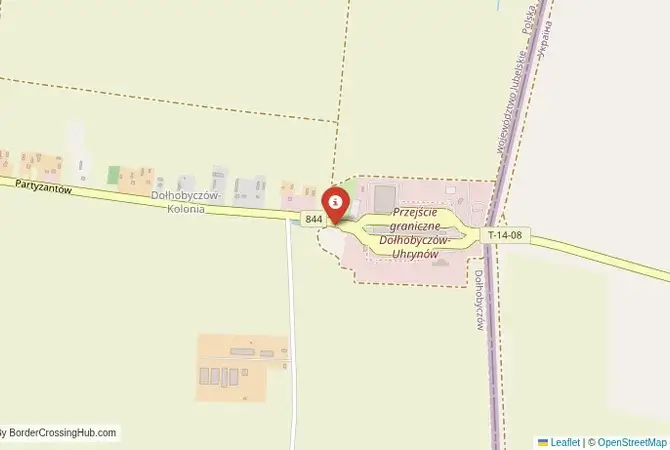
This checkpoint connects Ukraine's Lviv Oblast with Poland's Lublin Voivodeship. It is an international crossing with a crucial restriction: it is limited to passenger cars, buses, and vehicles with a total weight of up to 3.5 tonnes. This complete exclusion of heavy freight traffic is the key to its character, making it a much quieter and typically faster option for eligible travelers. It generally operates 24/7 and was built with a modern, streamlined layout to facilitate a smooth flow of traffic, a stark contrast to some of the older, more cramped border posts.
A History of a Divided Land
The history of this region is one of a deeply intertwined Polish and Ukrainian heritage, part of the historic lands of Red Ruthenia and Galicia. The villages on both sides of the border have shared a common history for centuries within the Polish-Lithuanian Commonwealth and the Austro-Hungarian Empire. The border on the Bug River, established after World War II, was a painful division that cut through communities and separated families. The opening of this new crossing in the 21st century was a significant event for the local population, a tangible result of Polish-Ukrainian cooperation and the EU's Eastern Partnership policy, designed to restore local connections that had been severed for decades.
Nearby Border Crossings
Border Crossing Procedure
The border crossing procedure is a standard two-part process for entering the EU and the Schengen Area, but it is often more efficient due to the modern design and the absence of trucks. You will first complete exit formalities at the Ukrainian checkpoint at Uhryniv. After a short drive, you will arrive at the Polish checkpoint at Dołhobyczów for a full EU entry inspection by the Polish Border Guard (Straż Graniczna) and Customs Service. You will need a valid passport, vehicle registration, and international insurance (Green Card). While the process is generally faster than at the major crossings, the increased traffic since 2022 means that queues can still form, especially during peak hours and holidays.
The Surrounding Region
The surrounding area is a rural landscape of rolling hills and agricultural fields. On the Ukrainian side, the crossing is near the historic town of Sokal. The road provides a good connection to the city of Lviv, a UNESCO World Heritage site and the main cultural and tourist center of western Ukraine. On the Polish side, Dołhobyczów is a small village. The crossing is a gateway to the Roztocze region of Poland, a beautiful area of hills and forests known for the Roztocze National Park. It is also a good route for those heading towards the historic Renaissance town of Zamość, another UNESCO site.
Practical Travel Information
Practical planning is key. The most important factor is the vehicle weight restriction of 3.5 tonnes. The roads leading to the crossing are regional and generally in good condition. The official currencies are the Ukrainian Hryvnia (UAH) and the Polish Złoty (PLN). Services at the border itself are very limited. It is essential to plan for fuel and any currency exchange in the larger towns like Sokal in Ukraine or Tomaszów Lubelski in Poland. You will need the Polish `e-TOLL` system if you are driving a vehicle over 3.5 tonnes, though such vehicles are not permitted here.
Final Considerations
The Uhryniv–Dołhobyczów border crossing is a modern and efficient option for passenger car travel between Ukraine and Poland. It stands as a successful example of cross-border cooperation aimed at improving local connectivity and easing pressure on major transport corridors. It offers a generally faster and less stressful experience for eligible travelers. In the current context, its role has become even more important, providing another crucial link for the movement of people. It is a border crossing that represents a forward-looking approach to border management, focused on the needs of people and communities.
View all border crossings between Ukraine and PolandPractical information
Fuel
Ukraine: <1 km - Poland: <1 km
Currency
Limited exchange; UAH, PLN
Safety information
Quiet rural crossing
Connectivity
3G coverage
Have you crossed here?
Help other travelers by sharing your experience, wait times, and any updates.