Monthly Update (October 2026):
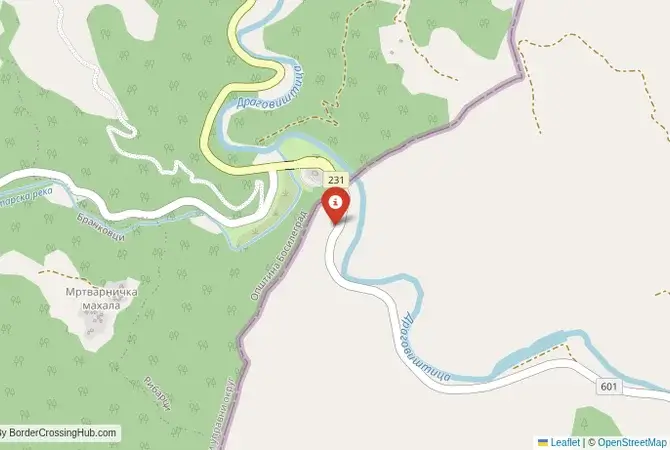
Oltomantsi & Ribarci remains closed and is not currently available for international traffic. That makes the crossing mainly relevant as a local or historical route rather than as an alternative to the active Bulgaria–Serbia checkpoints. Travelers heading between the two countries should use one of the operational crossings instead of planning a detour through Ribarci.
About this crossing
Operational Details
This checkpoint connected the Pčinja District of Serbia with the Kyustendil Province of Bulgaria. Its operation was extremely limited. It was typically open only on certain days of the week, for a few hours each day. It was strictly for pedestrians and perhaps very light vehicles, and only for permanent residents of the designated border communes. It was not open to tourists or citizens from other parts of the country. Its purpose was purely to facilitate local cross-border life, a pragmatic solution to the challenges of a border drawn through a sparsely populated, mountainous region where traditional life depends on movement across the valleys.
A History of a Shared Borderland
The history of this region is that of the historic Shopi region, a cultural area that spans the borders of Serbia, Bulgaria, and North Macedonia. The people of this area have their own unique dialects, traditions, and a reputation for being fiercely independent. The modern border, established in the late 19th century, divided this cohesive cultural landscape. The simplified crossing point was a vital link for these communities, allowing them to maintain the family and cultural connections that had been strained by the political division. It was a place where the shared Shopi heritage was more important than the national border.
Nearby Border Crossings

Former Border Procedure
The border crossing procedure, when it was operational, was a very simple affair. Local residents, who were on an approved list, could approach the checkpoint during its limited opening hours. They would present their local identity documents to the Serbian and Bulgarian border police stationed at either end of the crossing. The checks were focused on confirming identity and residency. It was a process based on community recognition rather than anonymous international travel protocols, where the border guards often knew the residents by name. It was a border crossing built on trust and local necessity.
The Surrounding Region
The surrounding area is a beautiful, mountainous landscape. On both the Serbian and Bulgarian sides, the region is characterized by high pastures, traditional stone villages, and a way of life that has changed little for centuries. This is one of the most remote and least-developed parts of the border. The nearest towns of any significance, like Bosilegrad in Serbia and Kyustendil in Bulgaria, are many hours' drive away on winding mountain roads. The appeal of the region lies in its pristine nature and its authentic, traditional culture.
Closure and Legacy
Simplified crossing points like Ribarci were suspended and closed as Bulgaria prepared to join the European Union. The strict requirements of the Schengen acquis meant that all border points had to be upgraded to full international standards, and small, informal crossings like this one were no longer permissible. The emphasis is now on a smaller number of full-fledged international checkpoints with sophisticated surveillance and control systems. The path is now likely overgrown, and the border is secured against any unauthorized passage, a hard reality for the local communities.
Final Considerations
The Ribarci border crossing is a ghost of a more informal and localized approach to border management. Its story is a fascinating glimpse into a time when special arrangements could be made to serve the needs of local communities living on a frontier, a recognition that borders are not just lines on a map but have a profound human impact. Its closure was an inevitable consequence of the modern emphasis on border security and the standardization of international protocols. It remains a poignant reminder of the human element of borders, of the simple need for a shepherd to cross a mountain to reach his pasture, or for a cousin to visit family in the next valley, even if that valley is in another country. It is a lost connection in a land that has known many divisions.
View all border crossings between Bulgaria and SerbiaPractical information
Fuel
Bulgaria: <1 km - Serbia: <1 km
Currency
Limited exchange; BGN, RSD
Safety information
Rural crossing; minimal risk
Connectivity
Basic mobile
Have you crossed here?
Help other travelers by sharing your experience, wait times, and any updates.