Staying near the crossing? Places to stay around Debar & Džepište on Booking.com Partner link: we may earn a commission, at no extra cost to you.
Monthly Update (October 2026):
The Debar & Džepište Border Crossing is currently busier than Qafë Thanë. On October 6, monitoring showed around 63 minutes from North Macedonia toward Albania, compared with about 25 minutes at Qafë Thanë. The route remains useful for local traffic around Debar, but travelers choosing it as an alternative should check the live queue first.
Driving there, or sending a driver? Send them this guide.
For reports and websites
Cite this page
Border Crossing Hub (2026). Debar & Džepište Border Crossing. Updated October 2026. https://bordercrossinghub.com/dzepiste-trebishte-debar-region-border-crossing/<a href="https://bordercrossinghub.com/dzepiste-trebishte-debar-region-border-crossing/">Debar & Džepište Border Crossing (Border Crossing Hub)</a>Put this crossing's card on your website
Free. It updates on its own when our information changes.
<iframe data-bch-card src="https://bordercrossinghub.com/dzepiste-trebishte-debar-region-border-crossing/?bch_view=card" width="100%" height="980" scrolling="no" style="border:0;max-width:480px;display:block" loading="lazy" title="Debar & Džepište border crossing information"></iframe>
<p style="font-size:12px;margin:4px 0 0">Crossing information: <a href="https://bordercrossinghub.com/dzepiste-trebishte-debar-region-border-crossing/">Border Crossing Hub</a></p>
<script src="https://bordercrossinghub.com/?bch_embed_js=1" async></script>Paste it where you want the card. The last line (a script) only adjusts the height and can be left out.
About this crossing
Operational Details
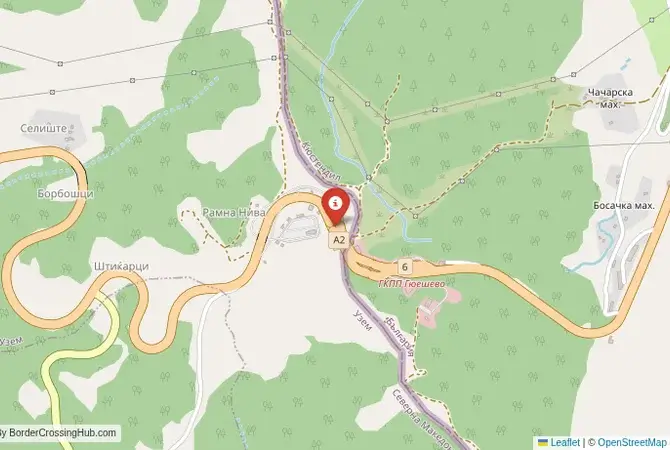
This checkpoint connects the Polog Statistical Region of North Macedonia with Albania's Dibër County. It is a smaller international crossing, and its most critical feature is its potential for limited operating hours or seasonal closures. Heavy snow can make the mountain road impassable in winter. It is intended for passenger cars and local traffic, and the exclusion of heavy freight preserves the tranquility of this rural area. The road leading to the crossing can be narrow and winding, demanding a cautious and unhurried driving pace. Its primary purpose is not to serve international transit, but the daily lives of the local population.
A History of a Divided Region
The history of this region is the history of the Dibra region, which has a predominantly Albanian population. For centuries, this was a unified cultural and economic area within the Ottoman Empire, with the city of Debar (Dibër in Albanian) as its main center. The modern border, established in the early 20th century, divided the region, leaving the main city of Debar in what would become Yugoslavia (and later North Macedonia) and the surrounding hinterland in Albania. This division separated the city from its traditional economic and social partners, a common and often painful story in the Balkans. The opening of this local crossing was a crucial step in reconnecting the divided communities and allowing for easier access to family, markets, and shared cultural sites.
Nearby Border Crossings
Border Crossing Procedure
The border crossing procedure is a standard two-part process. You will first complete exit formalities at one country's checkpoint and then proceed to the other country's checkpoint for entry inspection. You will need a valid passport or, for citizens of many European countries, a national ID card. Vehicle registration and international insurance (Green Card) are also necessary. As a small, local crossing, the process is usually very quick and personal, with none of the queues that can form at the main crossings. The guards are often from the local region and are familiar with the cross-border traffic, which contributes to the community feel of the checkpoint.
The Surrounding Region: North Macedonia Side
On the North Macedonian side, the crossing is in the municipality of Mavrovo and Rostuša, a wild and beautiful mountain region. The area is a gateway to the magnificent Mavrovo National Park, the largest national park in the country, with its beautiful lake, ski resort, and the famous half-submerged church of St. Nicholas. The nearby city of Debar is known for its thermal spas. The region is the heart of the Albanian community in this part of North Macedonia.
The Surrounding Region: Albania Side
On the Albanian side, the crossing is in the Dibër County, a mountainous and scenic region. The road from the border follows the valley of the Black Drin River. The nearby city of Peshkopi is the main regional center and is also known for its thermal sulphur baths. The region is part of the Korab-Koritnik Nature Park, and the highest peak in both Albania and North Macedonia, Mount Korab, is located on the border in this region. This crossing provides a more direct route for the residents of the Albanian Dibër region to access their historic center in Debar, North Macedonia.
Practical Travel Information
Practical planning is absolutely essential for this route. You must have a suitable vehicle and be comfortable with narrow, winding mountain roads. Check the weather and road conditions before you set out, especially outside of the summer months. The official currencies are the Macedonian Denar (MKD) in North Macedonia and the Albanian Lek (ALL) in Albania. There are no services at the border itself. You must be self-sufficient with fuel, food, and water. Ensure your vehicle's Green Card insurance explicitly covers both Albania and North Macedonia.
Final Considerations
The Džepište–Trebishte border crossing is a route for the traveler seeking an authentic glimpse into the life of a Balkan borderland. It is a journey through a landscape of stunning natural beauty and a region with a deep and proud shared heritage. It is not the fastest or the easiest way to cross the border, but it offers a unique and personal experience. It is a passage that highlights the human consequences of political borders and the importance of local connections in overcoming them. It is a bridge that helps to heal the divisions of a historic land.
View all border crossings between Albania and North MacedoniaHeading to Debar & Džepište? Take this with you.
One page with the hours, waits, emergency numbers and coordinates. Works without signal.
Practical information
Fuel
Albania: 2 km - North Macedonia: 2 km
Currency
Limited locally (ALL, MKD)
Safety information
Quiet area, low incidents
Connectivity
Basic 3G coverage
Have you crossed here?
Help other travelers by sharing your experience, wait times, and any updates.