Monthly Update (September 2026):
Qal’ai Khumb / Darwaz & Darwaz remains a highly remote Tajik–Afghan crossing in the Pamir region. There is no significant September development making the crossing easier for independent travelers, and the demanding mountain roads and security situation on the Afghan side continue to be more important than border queues. Tajikistan officially lists Ruzvay as the international automobile crossing serving Darvaz, so travelers should verify exactly which facility they are being directed to before setting out.
About this crossing
Location and Connections
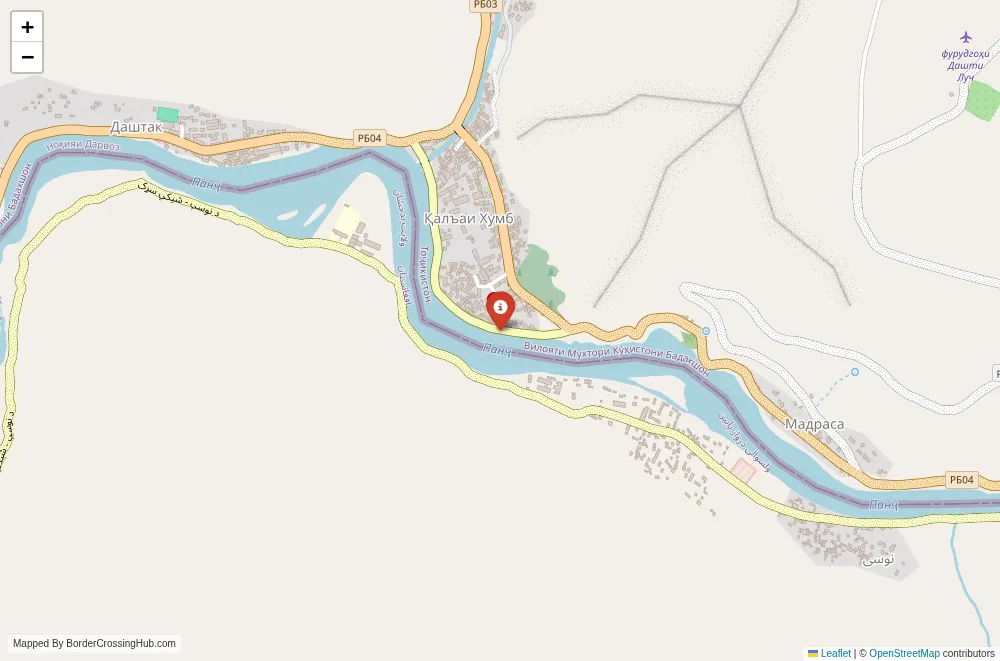
The bridge crosses the Panj River near Qal’ai Khumb, the administrative center of Darvoz district in Tajikistan's GBAO, positioned about 368 kilometers from Dushanbe and 235 kilometers from Khorog. On the Afghan side, it links to Shegnan or Darwaz districts in Badakhshan province, with rough unpaved tracks continuing toward Faizabad or the Wakhan Corridor. The Tajik approach follows the Pamir Highway (M41), a mostly paved but narrow and steep route with frequent military checkpoints and dramatic river views. The Afghan side consists of basic dirt roads vulnerable to landslides, floods, and seasonal blockages. The bridge's short span over the river minimizes the neutral zone, making crossings relatively quick when operational.
Historical and Geopolitical Background
The Tajikistan Afghanistan border traces the Panj River for much of its 1357 kilometer length, originating from 19th century Anglo Russian agreements that divided Pamiri communities sharing ethnic, linguistic, and religious ties. Qal’ai Khumb historically functioned as a fortress town in the independent Darvaz principality before Soviet integration. The bridge opened in 2007 to reconnect these divided groups after decades of disruption from the Tajik civil war and Taliban rule in Afghanistan. It enabled cross river markets on Saturdays and supported aid deliveries, but security incidents including drug smuggling and militant activity led to repeated closures. Fun fact: the Panj River often acts as a cultural mirror rather than a divider, with Pamiris on both banks speaking similar Pamiri languages and practicing Ismaili traditions, yet the frontier has long served as a corridor for narcotics and goods trade.
Nearby Border Crossings

Current Status and Operating Hours
As of early 2026, the Qal’ai Khumb Darwaz crossing remains closed to foreign travelers and general public movement. Most Tajik Afghan land borders, particularly in the north, stay shut due to ongoing cross border incidents, armed clashes, militant presence including groups linked to IS Khorasan, and Tajik security restrictions following the 2021 Taliban takeover. Only the southern Shir Khan Bandar Panji Poyon point functions for limited crossings. When previously active, hours restricted to weekdays with openings around 9:00 a.m. and limited afternoon windows, subject to local conditions. The Pamir's extreme climate brings heavy winter snow that closes roads for months, summer flash floods along the Panj, and year round high altitude challenges. Tajikistan maintains a strong military presence with CSTO support, and the bridge stands but sees no routine traffic. Confirm any potential changes through Tajik Border Service announcements, Afghan authorities, or traveler forums like Caravanistan, as geopolitical developments can influence access.
Crossing Procedures Step by Step
No procedures apply for public use because of the closure. In past operations, you cleared Tajik immigration near Qal’ai Khumb with passport exit stamp, GBAO permit verification, and security questions. You then crossed the bridge by foot or vehicle, followed by Afghan entry at Darwaz Shegnan with visa checks, customs review, and possible searches. The reverse sequence applied from Afghanistan. Wait times varied from under an hour to several hours depending on staff and manual processing. Foreigners required advance permits; any attempt now results in immediate denial or security intervention. Direct travel efforts to the open southern crossing for any Tajik Afghan land options.
Visa Requirements for Foreign Visitors
The crossing offers no entry possibilities at present. Tajikistan requires visas or e-visas for most nationalities, plus a mandatory GBAO permit for Badakhshan province access (apply well in advance). Afghanistan demands visas through embassies or approved channels under current authorities (visa on arrival unavailable at land points; strict controls apply). Bring passport photos, exact fees, and copies. Policies shift frequently; many nationalities face denials or extended waits. Restricted groups encounter heightened scrutiny. Verify through embassies, as Tajik Afghan borders maintain tight enforcement amid instability.
Transportation Options and Road Details
From Dushanbe or Kulob, 4WD vehicles or shared taxis follow the Pamir Highway to Qal’ai Khumb, a paved but challenging route with steep inclines, narrow sections, and multiple checkpoints. No public transport crosses; private or tour arrangements manage logistics when open. On the Afghan side, rugged 4WDs navigate unpaved mountainous tracks susceptible to weather disruptions. The bridge supports limited vehicles, but closure eliminates onward options. Roads require preparation: high altitude sickness risks, scarce fuel, and frequent landslides or snow blockages.
Scams & Warnings
This volatile frontier carries extreme risks. Afghanistan's Badakhshan province faces Taliban governance, militant threats, kidnappings, and general crime; Tajikistan deploys heavy military forces with regular clashes. Foreigners attempting unofficial approaches face arrest, detention, or violence. Proximity to drug smuggling routes intensifies patrols and scrutiny. Multiple governments issue high level advisories against travel to Afghanistan or border regions. Monitor news closely for incidents, refugee movements, or attacks. Register with embassies, avoid solo travel, and prepare evacuation plans.
Nearby Attractions and Practical Tips
Qal’ai Khumb provides stunning Pamir scenery, small local markets, and access to the Pamir Highway's iconic stretches. When conditions permit, the Afghan side opens to Wakhan Corridor nomadic routes and historic sites. Carry USD cash, warm clothing for altitude, water, snacks, and power banks; facilities remain sparse. Secure GBAO permits early when crossings are active. Rely on official channels only.
Final Notes for Planning
Qal’ai Khumb Darwaz remains closed due to persistent security concerns, offering no practical option for foreign travelers. Track updates through official sources; consider flights or alternative borders for Pamir exploration. Safety must come first in this highly sensitive region. Safe travels.
View all border crossings between Tajikistan and AfghanistanPractical information
Currency
TJS; AFN; USD common; cash only
Safety information
Remote gorge; security checks likely
Connectivity
Wi-Fi points; 4G
Have you crossed here?
Help other travelers by sharing your experience, wait times, and any updates.