
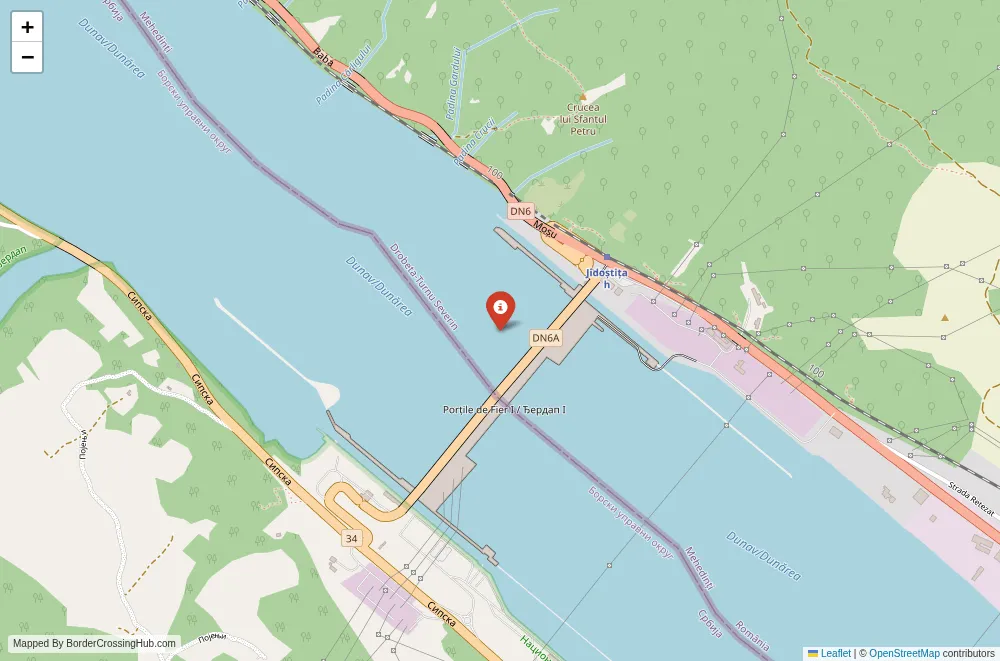
Approximate Border Location
Wait Times
Cars 20-90m; peaks 120-360m summer
Just crossed? Tap to report:
Operating Hours
Open 24 hrs (12:00 AM-11:59 PM)
Crossing Types
Cars,buses,trucks; border controls
Border Type
Land crossing via road+dam bridge
Peak Times
Fri-Sun 09:00 AM-01:00 PM; Jul-Aug
Daily Crossings
6,000-25,000/day
Currency Exchange
RON; RSD, EUR in Drobeta/Kladovo; ATMs
Safety Information
Bridge/tunnel traffic; checks slow flow
Languages Spoken
Romanian/Serbian
Accessibility Features
Paved lanes; step-free varies
About Portile de Fier II & Đerdap II
Monthly Update (March 2026):
As of 03/2026, the Portile de Fier II & Đerdap II Border Crossing ticks along steadily with moderate traffic. Vehicles cross the bridge without major queues most of the day. Afternoon travel toward Romania can slow slightly with returning drivers. Cross-border work trips keep the crossing active.
No Cell Service at the Border? No Problem.
Don’t get caught scrambling for paperwork when you lose signal. Download the complete Europe Transit Guide directly to your device and access every critical detail, fast-track strategy, and border rule – 100% offline.
The Portile de Fier II – Đerdap II border crossing carries you across the Danube River right on top of a major hydroelectric dam, connecting Romania’s Mehedinți County to Serbia’s Negotin area in a setup that blends engineering scale with river geography.
Alternative Names
Travelers often call this the Iron Gate II border, Porțile de Fier II, Đerdap II, or simply the dam border crossing between Romania and Serbia.
Current Status and Safety Note
This crossing remains open for road traffic as of early 2026, with no major closures reported recently unlike some smaller points along the Romania-Serbia line. It handles cars and light cargo vehicles, though always verify through official Romanian Border Police or Serbian authorities sites, especially during regional events or maintenance on the dam/lock systems. The area sees low crime against foreigners, but general Balkan border zones can have opportunistic issues like overcharging or minor scams, so stay alert.
Historical Background
Construction on the Iron Gate II dam kicked off in 1977 as a joint project between communist Romania and socialist Yugoslavia, wrapping up in 1984-1985 with the power station coming online. The dam sits downstream from the larger Iron Gate I (opened 1972), forming part of a broader effort to tame the Danube’s flow through the Iron Gates gorge for hydropower and navigation. The border checkpoint itself opened for vehicles in 2011, turning the dam road into a practical crossing point. Before that, the focus stayed on energy production rather than passenger traffic. The gorge has carried trade and military routes for centuries, with the name “Iron Gates” reflecting the narrow, rocky passage that challenged ancient shipping.
Geopolitical and Economic Role
Shared control of the dam underscores cooperation between Romania and Serbia on Danube resources, including power generation (total capacity around 591 MW) and river shipping via locks. The crossing supports local trade and travel in an otherwise less-trafficked border section compared to northern points like Moravița. For foreign visitors, it offers a direct route through the scenic Danube valley, linking western Romania to eastern Serbia without detours through busier hubs.
Operating Hours and Wait Times
The checkpoint runs 24 hours for road traffic at major Romania-Serbia crossings like this one. Recent community reports show short waits, often 5-15 minutes, though it can build during peak travel seasons or after weather events affecting the river area. Traffic volume stays moderate compared to busier borders, so mornings or mid-week passages usually move quicker.
Crossing Procedures
You cross by vehicle over the dam road itself. Approach from the Romanian side (near Izvoru Frumos or Gogoșu) or Serbian side (near the dam facilities). Both countries perform standard passport and vehicle checks.
EU/Schengen citizens (including most Western visitors) face no visa requirements for short stays in either Romania or Serbia, typically up to 90 days. Other nationalities should confirm entry rules in advance; Serbia allows visa-free for many, while Romania follows similar patterns for tourists. Have your documents ready, including car insurance valid in both countries (Green Card if needed). Officials may inspect vehicles briefly for customs declarations on goods. Pedestrians do not cross here; it’s vehicle-only. The process usually takes under 30 minutes total unless queues form.
Transportation Options
From Romania, reach the crossing via DN56B road from Drobeta-Turnu Severin (about 1-1.5 hours drive through hilly terrain). On the Serbian side, continue toward Negotin or Kladovo (short distances, 15-60 minutes). Buses run infrequent routes connecting nearby towns, but most foreign travelers use private cars or rented vehicles for flexibility. The dam road offers decent pavement, though watch for occasional trucks or slow-moving traffic near the power facilities. Hitchhiking sees some success on approaches, but queues form at the checkpoint.
Scams and Warnings
While not notorious like some tourist-heavy borders, watch for minor issues. Taxi drivers near larger Romanian cities might overcharge en route, or informal money changers at stops could offer bad rates. In border zones, avoid anyone pushing “fast-track” help or unofficial currency exchange. Travelers occasionally mention pressure from locals offering rides or services at inflated prices. Stick to official lanes, use ATMs in towns rather than border spots, and keep valuables secure during waits. No widespread reports of serious scams here, but standard caution applies.
Nearby Attractions and Side Trips
The Iron Gates gorge itself draws people for its dramatic cliffs and river views, with national parks on both shores (Đerdap National Park in Serbia, Porțile de Fier in Romania) offering hiking, archaeology sites from ancient times, and boat tours when available. Drobeta-Turnu Severin on the Romanian side has Roman ruins and a museum. In Serbia, Kladovo provides access to more Danube scenery and local eateries. The area suits those interested in industrial heritage, as you literally drive across the dam.
Seasonal Factors and Weather
Winter brings fog and occasional ice on the Danube, potentially slowing traffic or affecting visibility on the dam road. Summer heat can make waits less comfortable if lines build, though the river setting moderates temperatures somewhat. Spring and autumn offer the best conditions, with clearer roads and scenic foliage or blooming landscapes in the gorge. River levels from rain or dam operations rarely close the crossing but can cause minor delays.
Practical Tips
Carry sufficient fuel, as stations thin out in rural stretches. Bring euros or local currencies (RON for Romania, RSD for Serbia) since card acceptance varies. Download offline maps, as signal drops in the gorge. Check dam-related news for any lock maintenance affecting nearby roads. Start your drive early to enjoy daylight views of the river and cliffs. Double-check stamps and vehicle papers before driving off.
Final Thoughts on This Crossing
Approach with up-to-date checks from border police sites, pack patience for any wait, and treat it as a unique Danube experience tied to engineering history. It gives reliable access between the two countries when conditions align. Safe travels across the gates.
No reviews yet.