Monthly Update (September 2026):
Odesa Oblast & Palanca Border Crossing remains an important Moldova-Ukraine route toward the Odesa region, with no significant September closure identified. Moldova's Border Police recorded Palanca among the country's busiest land crossings on September 2, with 5,728 passenger crossings during the 24-hour period. The crossing remains usable, but travelers should allow for security checks and possible short-notice changes because the route enters Ukraine's Odesa region. For trips toward Odesa, checking conditions immediately before departure is still worthwhile.
About this crossing
Operational Details
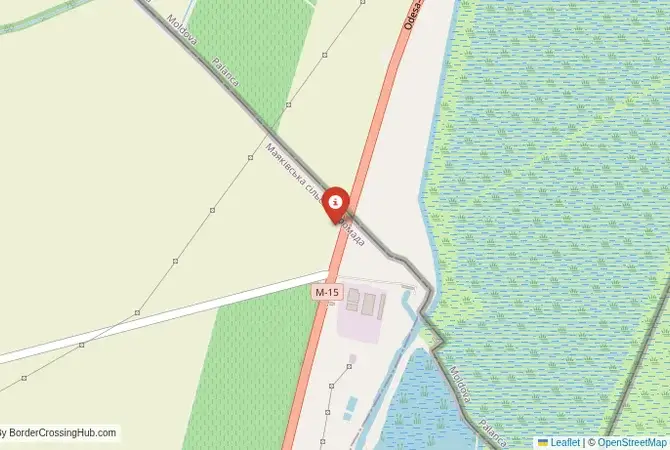
This checkpoint connects Moldova's Ștefan Vodă District with the Odesa Oblast in Ukraine. It is a major international crossing that, under normal circumstances, operates 24 hours a day, 7 days a week. The new, modern complex was opened in 2018 and is designed to handle a significant volume of traffic efficiently. Its most unique feature is the joint control system. Instead of stopping at two separate checkpoints, travelers stop only once at the single, integrated facility to be processed by both Moldovan and Ukrainian officials simultaneously. This innovative approach is designed to streamline the process and reduce waiting times, a model for efficient border management.
A Geopolitical History of a Road
The history of this crossing is a fascinating lesson in modern border demarcation. The main road from southern Moldova to Odesa briefly passes through a small section of Moldovan territory near the village of Palanca before re-entering Ukraine. For years, this created a logistical bottleneck and a point of contention. To solve this, Moldova transferred control of the 7.7km road section to Ukraine. In return, Ukraine transferred a small plot of land on the Danube riverbank at Giurgiulești to Moldova, giving Moldova crucial access to the sea for the construction of its port. The new, modern border facility was then built on the Ukrainian side of the border as a joint project, a powerful symbol of cross-border cooperation and pragmatic problem-solving.
Nearby Border Crossings

Streamlined Border Procedure
The border crossing procedure, in theory, is more streamlined than at other crossings. At the single, large checkpoint complex, you will present your documents to a window where both a Moldovan and a Ukrainian border guard are present. They will conduct their respective exit and entry checks in one stop. The same principle applies to customs inspections. However, given the current geopolitical situation, travelers should be prepared for thorough inspections and potentially long and unpredictable wait times, despite the modern design. You will need a valid passport, vehicle registration, and international insurance (Green Card). The efficiency of the joint control can be heavily impacted by the necessary heightened security measures. Recent official data shows average wait times of 1 to several hours for passenger vehicles, with extended delays common for freight and during heightened periods.
Gateway to Odesa and the Black Sea
The surrounding region is defined by the Dniester River and its estuary. On the Ukrainian side, the road leads towards the historic city of Bilhorod-Dnistrovskyi, home to the massive and well-preserved Akkerman Fortress, a medieval citadel that has been controlled by Greeks, Romans, Genoese, Moldavians, and Ottomans. Further on is the major Black Sea port city of Odesa, with its famous Potemkin Stairs, beautiful 19th-century architecture, and vibrant cultural scene. On the Moldovan side, the road leads to the Ștefan Vodă district, an agricultural region known for its vineyards and as a gateway to the self-proclaimed Transnistria region (though this is not accessible from this route). The crossing also provides access to the Talmaza forest, a protected nature area.
Essential Practical Planning
Practical planning is absolutely crucial for this route, especially in the current climate. You must have the Moldovan road use vignette. Ukraine does not use a vignette system, but international vehicle insurance (the Green Card) is mandatory. The official currencies are the Moldovan Leu (MDL) and the Ukrainian Hryvnia (UAH). The modern checkpoint has some facilities, but it is wise to be self-sufficient with fuel, food, and water for the journey and potential border waits. All travel plans must be flexible and undertaken with extreme caution. Always consult official government sources for the latest travel advisories and entry requirements before attempting a journey.
Final Considerations
The Palanca–Mayaki-Udobne crossing is a testament to modern cross-border cooperation and engineering. In normal times, its innovative joint control system represents a model for efficient border management. Today, its function as a vital link between southern Moldova and the Odesa Oblast is overshadowed by the realities of the ongoing war. Any travel through this checkpoint must be approached with the utmost seriousness and preparation. It remains a powerful symbol of the complex history and enduring connections of the Dniester region, a modern gateway on an ancient land that is currently a frontline of European history.
View all border crossings between Moldova and UkrainePractical information
Fuel
Moldova: 500 m - Ukraine: 500 m
Currency
Near Palanca (MDL, UAH)
Safety information
Remote, rural risks
Connectivity
Basic 3G coverage
Have you crossed here?
Help other travelers by sharing your experience, wait times, and any updates.