Monthly Update (August 2026):
Rupaidiha–Nepalgunj has had no major new restriction affecting travelers in August. The longer-term change to watch is the planned four-lane Barabanki–Bahraich highway in India, which is intended to improve the road connection to the Rupaidiha land port and should eventually make access to the crossing easier. For now, the project is still a future improvement rather than something changing the journey this month.
About this crossing
A History of Trade and Transit
The history of this crossing is one of commerce. Nepalganj developed in the 19th century as a major trading town, a point where goods from the hills of Nepal were brought down to be exchanged for products from the plains of India. The open border policy between the two countries allowed this trade to flourish. The Rupaidiha-Nepalganj crossing became a key chokepoint in this economic relationship. In the modern era, it has grown into one of the most significant trade points between the two nations, a major entry point for Indian goods destined for a large part of western Nepal. It is also a critical transit point for the millions of Nepalis who work in India and travel back and forth to visit their families. The infrastructure and the very character of both Rupaidiha and Nepalganj have been shaped by this constant cross-border flow. It is a border that is less about division and more about a deep, sometimes chaotic, economic and social interdependence.
The Border Crossing Procedure: A Step-by-Step Guide
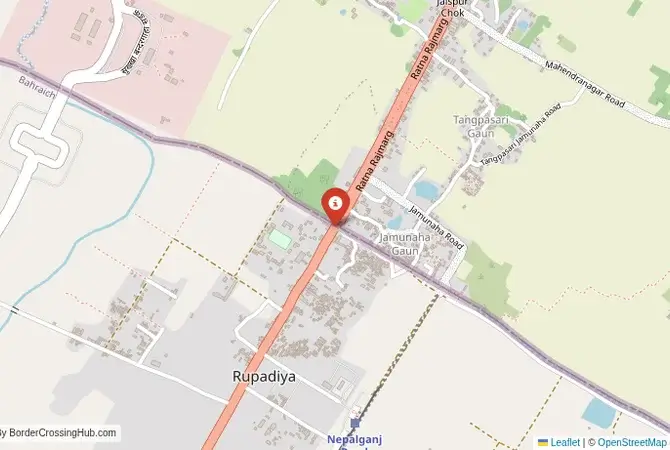
The border is open for most of the day and evening, but it is best to cross during standard business hours to ensure all offices are fully staffed. The process is straightforward but can be confusing due to the chaotic environment. The Indian and Nepali immigration offices are located a few hundred meters apart, with a busy no-man's-land in between. Exiting India (Rupaidiha): The Indian immigration office is a small building located on the main road on the Indian side of the border gate. You must make sure to stop here; it can be easy to miss in the chaos. You need to present your passport to the officer, who will record your details in a ledger and stamp you out of India. The process is usually quick, but you must be proactive in finding the office and getting the stamp. The No-Man's-Land: After getting your exit stamp, you will proceed through the border gate into the no-man's-land. This short stretch is a hive of activity, with cycle rickshaws, money changers, and street vendors. You can walk or take a rickshaw across to the Nepali side. Entering Nepal (Nepalganj): The Nepali immigration office is a larger, more obvious building on the right-hand side of the road as you enter Nepal. Here, you will need to get your Nepali visa on arrival (available for most nationalities). You will need to complete an application form, provide one passport-sized photograph, and pay the visa fee in a major currency (US dollars are preferred). The officers will process your application and place a visa sticker in your passport. If you are crossing with your own vehicle, you will also need to go to the adjacent customs office to pay a temporary import fee (bhansar) and get the necessary permit. This is a standard and relatively quick process.
Nearby Border Crossings


Route, Onward Travel, and Bardiya National Park
The nearest major Indian transport hub is the city of Lucknow, from where you can take a bus or taxi for the 4-5 hour journey to Rupaidiha. On the Nepali side, Nepalganj is a major city with an airport and extensive bus services. From the border, you can take a taxi or a local bus into the center of Nepalganj. The main reason for travelers to use this crossing is to access Bardiya National Park. Bardiya is a vast, wild, and relatively untouched wilderness that offers some of the best wildlife viewing in Nepal. From Nepalganj, it is a 2-3 hour bus or jeep ride to the park entrance at Thakurdwara. Many lodges in Bardiya can arrange a private pickup from the border or from Nepalganj, which is a convenient option. The Mahendra Highway, Nepal's main east-west road, runs near Nepalganj, providing connections to the rest of the country.
Final Planning Advice for the Mid-West Gateway
The Rupaidiha-Nepalganj crossing is a classic, bustling Terai border. The key to a smooth experience is to be prepared and stay alert. Have your documents, passport photo, and US dollars for the visa fee ready and easily accessible. Be assertive but polite with the crowds and the rickshaw drivers. The most important step is to not accidentally walk past the Indian immigration office without getting your exit stamp. This is a common mistake that can cause major problems later. By being prepared for a bit of chaos and keeping your wits about you, you can successfully navigate this important gateway and position yourself perfectly for an unforgettable wildlife adventure in the magnificent Bardiya National Park.
View all border crossings between India and NepalPractical information
Fuel
India: <1 km - Nepal: <1 km
Currency
Exchange near Rupaidiha (INR, NPR)
Safety information
Normal safety, congestion
Connectivity
4G mobile coverage
Have you crossed here?
Help other travelers by sharing your experience, wait times, and any updates.