Monthly Update (October 2026):
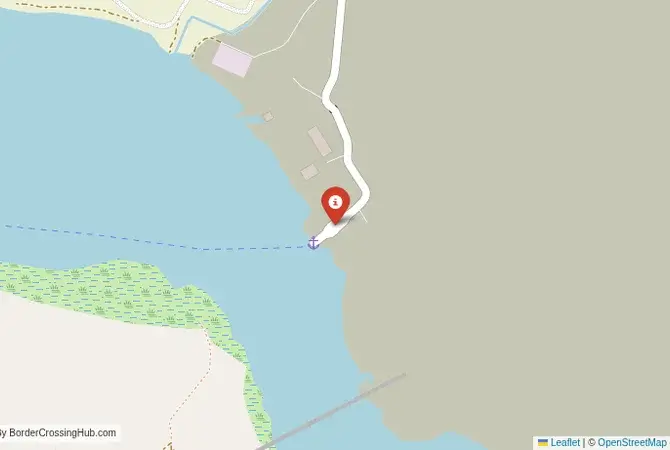
The Golubac & Moldova Nouă Border Crossing is currently handling traffic without a major buildup from the Romanian side. October 6 monitoring showed roughly a 25-minute wait heading into Serbia, while the opposite direction later showed a much longer queue of around 1 hour 55 minutes. Because this crossing uses the Danube ferry rather than a conventional road bridge, delays can reflect the ferry operation as well as border processing.
Driving there, or sending a driver? Send them this guide.
For reports and websites
Cite this page
Border Crossing Hub (2026). Golubac & Moldova Nouă Border Crossing. Updated October 2026. https://bordercrossinghub.com/moldova-noua-golubac-border-crossing/<a href="https://bordercrossinghub.com/moldova-noua-golubac-border-crossing/">Golubac & Moldova Nouă Border Crossing (Border Crossing Hub)</a>Put this crossing's card on your website
Free. It updates on its own when our information changes.
<iframe data-bch-card src="https://bordercrossinghub.com/moldova-noua-golubac-border-crossing/?bch_view=card" width="100%" height="980" scrolling="no" style="border:0;max-width:480px;display:block" loading="lazy" title="Golubac & Moldova Nouă border crossing information"></iframe>
<p style="font-size:12px;margin:4px 0 0">Crossing information: <a href="https://bordercrossinghub.com/moldova-noua-golubac-border-crossing/">Border Crossing Hub</a></p>
<script src="https://bordercrossinghub.com/?bch_embed_js=1" async></script>Paste it where you want the card. The last line (a script) only adjusts the height and can be left out.
About this crossing
Operational Details and Ferry Schedule
This ferry crossing connects the Romanian county of Caraș-Severin with Serbia's Braničevo District. The key to using this crossing is understanding that its operation is entirely dependent on the ferry schedule. This is not a 24/7 facility. The ferry typically makes a limited number of return trips per day, and the schedule can be affected by weather conditions, river levels, and mechanical issues. It is absolutely essential to check the latest official ferry schedule before you even consider this route. Arriving at the dock only to find the last ferry has sailed or is not running for the day can result in a detour of several hours to the next nearest crossing.
Historical Context of the Iron Gates
The history of this stretch of the Danube is written in stone and water. The river here formed the Limes, the frontier of the Roman Empire. For centuries, it was a contested boundary between the Kingdom of Hungary, the Ottoman Empire, and the Habsburg Monarchy. The Golubac Fortress is a direct product of this turbulent past. A medieval fortification of uncertain origin, it was expanded by Serbs, Hungarians, and Turks, each adding to its formidable defenses. Its position at the head of the gorge gave it strategic control over river traffic. Legends surround the fortress, including tales of an imprisoned Byzantine princess. Today, the fortress has been beautifully restored and is a major tourist attraction in Serbia, with walkways allowing you to explore its ramparts and towers.
Integrated Border Procedure
The border crossing procedure is integrated into the ferry journey. As Serbia is a non-EU country, you will undergo full immigration and customs checks. The process typically begins on the shore you are departing from. You will purchase your ferry ticket and then proceed to a checkpoint where border police and customs officials will inspect your documents. Passports are required for all travelers. Vehicle documents, including registration and international insurance (Green Card), are also necessary. Once cleared, you will board the ferry. The journey across the Danube takes approximately 30 minutes. Upon arrival on the other side, you will disembark and pass through the entry checkpoint for the destination country, where your documents will be checked again. The entire process is generally smooth, but it is inherently slower than a land crossing.
Attractions of the Danube Gorge
The main attraction is the journey itself. The views of the wide Danube, the forested hillsides of the Đerdap National Park in Serbia and the Porțile de Fier Nature Park in Romania, and the ever-present Golubac Fortress are exceptional. On the Romanian side, Moldova Nouă is a former mining town. The real appeal lies in following the Danube gorge eastward along the spectacular DN57 road, which features massive rock sculptures, including the face of the Dacian king Decebalus, carved into the cliffs. On the Serbian side, beyond the fortress, the road continues through the Đerdap National Park towards the town of Donji Milanovac, offering numerous viewpoints and hiking opportunities.
Practical Planning and Costs
Practical planning is paramount for this route. The cost of the ferry is significant compared to a land crossing and is usually priced per vehicle and per passenger. Payment is typically required in the local currency of the departure port (RON in Romania, RSD in Serbia). Vignettes are required for Romania (`rovinietă`), while Serbia uses a motorway toll system. The currencies are the Romanian Leu and the Serbian Dinar. It is unlikely you will find currency exchange facilities at the ferry docks, so obtaining cash in a nearby town is essential. Ensure you arrive at the dock well in advance of the scheduled departure time, especially during the busy summer tourist season.
Final Considerations
The Moldova Nouă–Golubac ferry crossing is an experiential route for the traveler who prioritizes scenery and history over speed. It is a journey that requires careful planning and a flexible schedule. The potential for delays or cancellations is real, but the reward is an unforgettable passage through one of Europe's most beautiful and historically significant landscapes. It transforms the administrative act of crossing a border into a memorable part of your adventure, a short cruise through the heart of Balkan history.
Nearby Border Crossings

Heading to Golubac & Moldova Nouă? Take this with you.
One page with the hours, waits, emergency numbers and coordinates. Works without signal.
Practical information
Fuel
Romania: 2 km - Serbia: 2 km
Currency
Near Moldova Nouă (RON, RSD)
Safety information
Remote, river risks
Connectivity
Basic 3G signal
Have you crossed here?
Help other travelers by sharing your experience, wait times, and any updates.