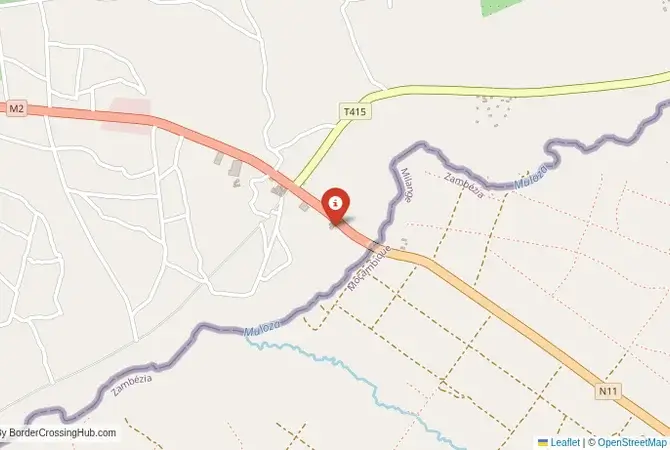
Monthly Update (September 2026):
Milange & Mulanje remains an established Malawi-Mozambique crossing connecting the southern Malawi highlands with Mozambique's Zambézia Province. There is no significant September closure reported. The route remains useful for regional travel, but travelers should allow extra time for the road approach and arrange onward transport in advance because services are thinner than on Malawi's main corridors.
About this crossing
A History of Plantations and a Porous Frontier
The history of this border is the history of the tea industry. The foothills of the Mulanje Massif have the perfect climate for growing tea, and the region was developed by the British in the colonial era as a major center for tea plantations, which still dominate the economy today. The border, which was drawn between British Nyasaland and Portuguese East Africa (Mozambique), cut through a region of shared cultures and languages, particularly the Lomwe people. For many years, the border was a porous and informal frontier, with people moving freely to work on the plantations or visit relatives. This changed dramatically during the long Mozambican Civil War. The region became a major route for refugees fleeing the conflict into the safety of Malawi. The town of Mulanje became host to a large refugee population, and the border was a tense and often dangerous place. The return of peace to Mozambique has allowed the crossing to normalize and to begin to develop as a trade and tourism route. It is a border that has been shaped by the gentle rhythms of the tea harvest and the brutal disruptions of war, a place that embodies both the colonial economic legacy and the post-colonial struggles of the region.
The Border Crossing Procedure: A Quiet and Basic Affair
This is a relatively quiet border, and the process is generally straightforward, but the facilities are more basic than at the main crossings. The border is open from 06:00 to 18:00 daily. You must have your visas sorted in advance. Exiting Malawi (Mulanje): The Malawian immigration and customs post is a simple, functional building. You will present your passport and get your exit stamp. The customs check for vehicles involves checking your temporary import permit. The process is generally relaxed and quick due to the low volume of traffic. The officials are accustomed to the mix of local traders and the occasional tourist. The No-Man's-Land: After clearing the Malawian side, you will proceed through a short, rural no-man's-land to the Mozambican side. This short transit offers a moment to appreciate the quiet, beautiful surroundings of the border area. Entering Mozambique (Milange): The process on the Mozambican side is the main challenge. You must have a pre-arranged Mozambican visa. Visas on arrival are generally not available at this land border. You will present your passport and visa to the immigration officer. The customs process for vehicles can be complex. You will need to have your vehicle registration and a temporary import permit. You will also need to purchase mandatory third-party insurance for Mozambique. The officials at this smaller post may be less accustomed to dealing with tourists, so a degree of patience and a friendly attitude is essential. The process can be slow and bureaucratic, so it is best not to be in a hurry.
Nearby Border Crossings
Route, Onward Travel, and The Zambezia Province
This crossing is on a secondary road. On the Malawian side, the road from the commercial capital, Blantyre, to the town of Mulanje is a beautiful, paved road that passes through endless, vibrant green tea estates. The town of Mulanje is the main base for hiking and climbing on the spectacular Mount Mulanje, a massive granite inselberg that is a major attraction. On the Mozambican side, the road from the Milange border to the town of Mocuba and on to the coastal city of Quelimane has been recently paved and is now in excellent condition. This is a major improvement, as it was once a very difficult dirt track. This makes the crossing a much more viable option for travelers. The journey takes you through the remote and beautiful Zambezia Province of Mozambique, a region of high mountains, vast plantations, and a rich, complex history. There is limited public transport on this route. It is a journey that is best done with your own vehicle or by hiring a private car. This allows you to stop and appreciate the incredible scenery along the way.
Final Planning Advice for a Scenic Backroad
The Mulanje-Milange crossing is a fantastic option for the adventurous overland traveler with their own vehicle who is looking for a scenic and unique route. The key to a successful crossing is meticulous preparation. You must have your Mozambican visa in your passport before you arrive. You must have all your vehicle documents in perfect order. Be prepared for a slow and bureaucratic process on the Mozambican side. The reward is a journey through one of the most beautiful and least-visited parts of southeastern Africa. It is a passage from the stunning mountains and tea fields of Malawi into the remote and fascinating heart of central Mozambique. It is a border for the true explorer, a journey that offers a deep and authentic experience of this beautiful and resilient region, a perfect choice for those who want to see the Africa that lies beyond the main tourist highways.
View all border crossings between Malawi and MozambiquePractical information
Fuel
Malawi: <1 km - Mozambique: <1 km
Currency
Exchange near Mulanje (MWK, MZN)
Safety information
Safe, traffic moderate
Connectivity
Wi-Fi at checkpoints, 4G
Have you crossed here?
Help other travelers by sharing your experience, wait times, and any updates.