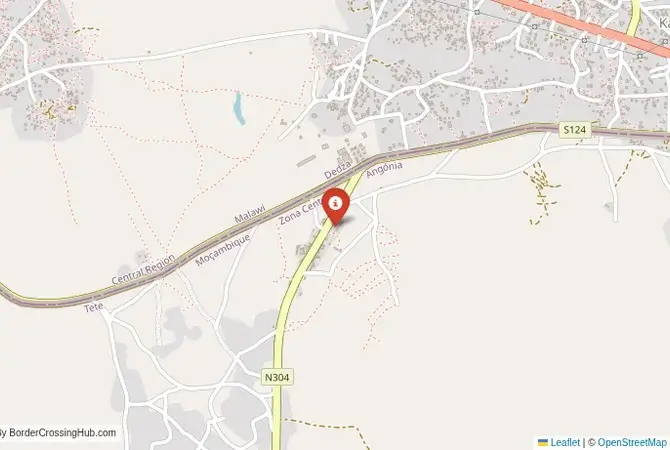
Monthly Update (September 2026):
Calomué & Dedza remains an established Malawi-Mozambique crossing on the route between central Malawi and Tete Province. There is no significant September closure or new passenger restriction to report. The crossing is much quieter than Mwanza-Zobue, so travelers using this route should plan their transport on both sides in advance and avoid arriving close to the end of the operating day.
About this crossing
A History on a Chewa Frontier
The history of this border is the history of the Chewa people, the largest ethnic group in Malawi, whose traditional homeland extends into Mozambique and Zambia. The town of Dedza is a major center of Chewa culture. The border is a colonial legacy, a line drawn between British Nyasaland and Portuguese East Africa that cut through the heart of the Chewa kingdom. For centuries, the people of this region moved freely across the plateau. The modern border crossing formalized this movement. During the Mozambican Civil War, the border region was a major route for refugees fleeing the conflict in the Tete province into the safety of Malawi. In the post-war era, the crossing has become a key part of the regional transport network. It is a vital link in the corridor that connects the capital of Malawi with the main highway between Zimbabwe and the Mozambican coast. It is a border that has been shaped by the deep cultural unity of the Chewa people and the modern economic need for regional connectivity.
The Border Crossing Procedure: A Relatively Smooth Process
The border is open from 06:00 to 21:00 daily following the One-Stop Border Post inauguration in June 2025. The process is generally more straightforward and less chaotic than at Mwanza-Zobue. You must have your visas sorted in advance. Exiting Malawi (Dedza): The Malawian immigration and customs post is a functional facility located in the town of Dedza. You will present your passport and get your exit stamp. The customs check for vehicles involves checking your temporary import permit. The process is generally relaxed and efficient. The No-Man's-Land: After clearing the Malawian side, you will proceed through a short, scenic no-man's-land to the Mozambican side. Entering Mozambique (Calomué): The process on the Mozambican side is the main part of the crossing with joint procedures under the new OSBP. You must have a pre-arranged Mozambican visa. Visas on arrival are generally not available at this land border. You will present your passport and visa to the immigration officer. The customs process for vehicles still requires some bureaucracy. You will need to have your vehicle registration and a temporary import permit. You will also need to purchase mandatory third-party insurance for Mozambique. While the process still involves multiple steps, the officials at this crossing are generally considered to be more accustomed to tourists and the process can be smoother than at other crossings.
Nearby Border Crossings


Route, Onward Travel, and The Tete Corridor
This crossing is on a major highway. On the Malawian side, the road from the capital, Lilongwe, to the Dedza border is a good, paved road, a journey of about 1.5 hours. The Dedza region is famous for its ancient rock art sites, a UNESCO World Heritage site. On the Mozambican side, the road from Calomué leads directly to the city of Tete, a journey of about 2-3 hours on a good, paved road. Tete is a major city on the Zambezi River, famous for its massive suspension bridge. From Tete, you are on the main Tete Corridor, and you can travel east to the port of Beira or west to the border with Zimbabwe at Nyamapanda, which is the main route to the capital, Harare. For those without a car, there are direct international bus services that run from Lilongwe in Malawi to Harare in Zimbabwe. These buses use this crossing and are the most highly recommended option for travelers, as the bus company handles the border formalities.
Final Planning Advice for the Capital Route
The Dedza-Calomué crossing is the best and most popular gateway for overland travel from the capital of Malawi to Mozambique and Zimbabwe. It is a relatively efficient and very scenic border with ongoing OSBP improvements for faster clearance. The key to a successful crossing is meticulous preparation. You must have your Mozambican visa in your passport before you arrive. You must check the current security situation on the Tete corridor in Mozambique, although it is generally much safer than in the past. Taking a direct international bus from Lilongwe to Harare is the safest and most practical option. If you are driving, be prepared for the bureaucratic process for your vehicle on the Mozambican side. This is a journey through the beautiful highlands of central Malawi and into the historic heart of the Zambezi valley, a classic and highly recommended African overland route.
View all border crossings between Malawi and MozambiquePractical information
Fuel
Malawi: <1 km - Mozambique: <1 km
Currency
Limited exchange (MWK, MZN)
Safety information
Safe, remote area
Connectivity
Limited Wi-Fi, 3G
Have you crossed here?
Help other travelers by sharing your experience, wait times, and any updates.