Monthly Update (October 2026):
Manzhouli–Zabaykalsk remains the dominant China–Russia land gateway for freight and one of the busiest crossing points on this frontier. There is no major October shutdown to report, but autumn logistics can still produce substantial truck traffic as trade moves through Inner Mongolia toward Russia. For passenger travelers, the scale of freight operations is usually more noticeable than any routine immigration delay.
About this crossing
Location and Basic Connection
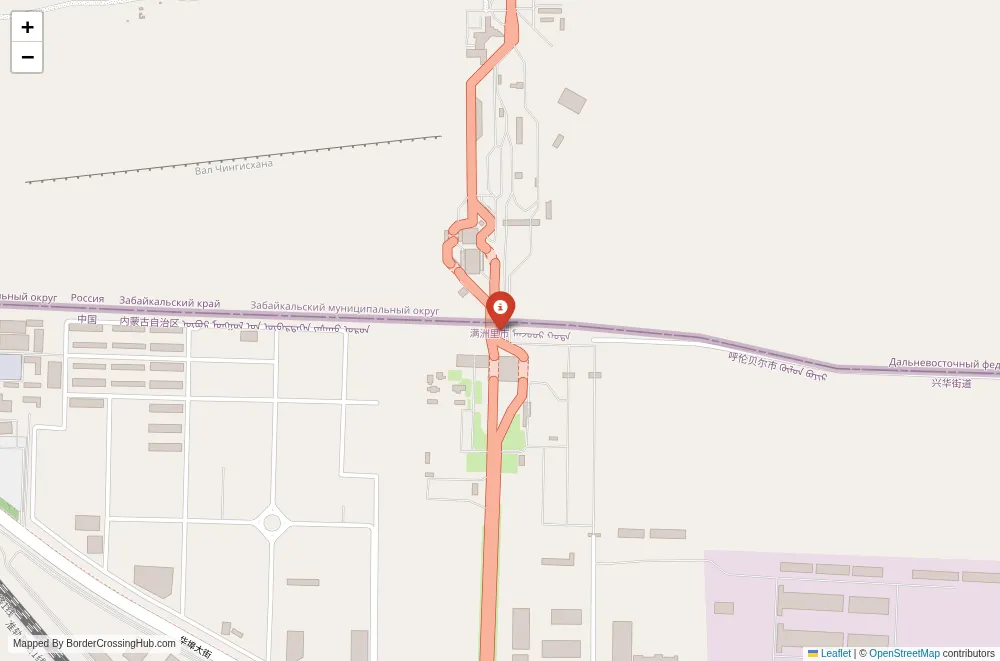
Manzhouli sits in Hulunbuir, Inner Mongolia Autonomous Region, China, while Zabaykalsk (also spelled Zabaikalsk) lies in Zabaykalsky Krai, Russia. This crossing handles both road and rail traffic on a grand scale, linking Chinese highways and the Binzhou Railway to Russia's Trans-Baikal Railway. It processes massive freight volumes, often over 20 million tons annually, and supports passenger movement via buses and limited local services. The border lies in steppe country, with flat expanses giving way to distant hills.
Historical Background
The line here traces roots to the early 20th-century Chinese Eastern Railway, built under Russian influence to shorten routes to Vladivostok. Post-1949, it became central to Sino-Soviet ties, though tensions in the 1960s closed parts of the frontier. The 1990s saw reopening and upgrades, turning it into a trade powerhouse. Geopolitically, it embodies deepening China-Russia economic links, especially post-2014 as Russia pivoted eastward. Recent expansions reflect record cargo flows, with plans for further rail and road capacity to handle growing bilateral commerce.
Nearby Border Crossings



Current Operating Status
As of early 2026, the crossing runs 24 hours daily for freight, reflecting its role as China's highest-volume land port with Russia. Passenger operations focus on road (buses and vehicles), with hours typically aligning to daytime for checks but extending as needed. Rail passenger services on the historic Trans-Manchurian route (Moscow-Beijing via this path) remain suspended since 2020, with no firm reopening date. Visa-free entry for Chinese citizens into Russia (up to 30 days until September 2026) and reciprocal rules boost short trips, though foreigners need standard visas or e-visas where eligible. Confirm status via embassies or recent reports, as holiday closures or surges occur.
Practical Crossing Procedures
You cross by road bus, private car, or on foot in limited cases. From the Chinese side in Manzhouli, complete exit formalities at customs and immigration. Move across to Zabaykalsk for Russian entry. Russia accepts e-visas for many nationalities here, or visa-free for qualifying groups under current pilots. Carry passport, docs like accommodation proof or onward tickets, and cash. Procedures include scans, questions, and vehicle checks if driving. The process takes 30-90 minutes normally, but freight dominance can cause minor overlaps. For rail alternatives, domestic trains reach each side separately.
Wait Times and Peak Periods
Passenger waits stay reasonable outside peaks, often quicker early morning. Freight congestion hits hard, with truck queues sometimes stretching days due to high volumes and electronic queuing since late 2025. Tourism spikes from visa waivers add bus crowds in warmer months or holidays. Midday sees more activity; aim for off-peak to minimize delays.
Transportation Options
Buses connect Manzhouli to Zabaykalsk and onward to Chita or other Russian towns, with regular services (some daily except certain days). From Harbin or Beijing, high-speed trains reach Manzhouli, then switch modes. Private cars or taxis work with paperwork. On the Russian side, rail links Zabaykalsk to the Trans-Siberian mainline. International bus routes, like those launched in 2025, run scheduled trips across. Stick to official operators for reliability.
Scams & Warnings
This busy crossing sees occasional touts offering "help" with paperwork or exchanges at poor rates; ignore and use official counters. Unofficial taxis at stations demand inflated fares. Crowds raise petty theft risks, so guard belongings. Language barriers complicate issues, so prepare apps or phrases. The area feels commercial rather than risky for foreigners during operations, but remote stretches mean limited immediate help. No major recent scam waves reported, but standard border caution applies.
Road Conditions and Scenery
Roads approach through Inner Mongolia's grasslands, vast and open with occasional yurts and wind farms. Crossing into Russia, terrain stays flat with steppe views, small towns, and rail yards. Paved highways hold up well, though winter snow or dust storms affect visibility. Freight trucks dominate, so expect traffic.
Seasonal Variations and Weather Impacts
Winter brings extreme cold, shortening comfort but not closing the 24-hour freight ops; snow slows buses. Summer offers long days and easier travel, though dust or heat tires you. Visa-driven tourism peaks in warmer seasons. Freight surges year-round but worsen with seasonal trade.
Nearby Attractions
Manzhouli features Matryoshka Square with giant Russian nesting dolls, a nod to cross-cultural ties, plus border markets selling goods from both sides. The Hulunbuir Grasslands nearby offer horseback riding and nomadic experiences. In Zabaykalsk, options stay basic, but head to Chita for Decembrist history or lakes. The crossing itself draws those fascinated by massive rail yards and transshipment.
Cultural and Economic Role
Freight dominates: coal, timber, machinery, and consumer goods flow constantly, supporting jobs in logistics and trade. Manzhouli grew into a modern city from border commerce, with Russian architectural influences. Tourism adds layers, with short visa-free trips fostering people-to-people contacts in this strategic zone.
Final Planning Tips
Arrive prepared with currencies (yuan/rubles), printed docs, translation tools, and weather gear. Check visa rules and train/bus schedules ahead, especially with suspensions. Factor buffers for queues. With planning, you manage the formalities and tap into this vital Eurasian link.
Summing Up the Border
Manzhouli-Zabaykalsk handles immense scale in China-Russia exchanges, blending rail heritage with modern trade demands. Prep for crowds and logistics, stay vigilant on basics, and it becomes a solid step across continents. Safe travels.
View all border crossings between China and RussiaPractical information
Fuel
China: <1 km - Russia: 2 km
Currency
CNY; RUB in Manzhouli/Chita; ATMs
Safety information
Congestion likely; strict inspections
Connectivity
Wi-Fi points; 4G
Have you crossed here?
Help other travelers by sharing your experience, wait times, and any updates.