Monthly Update (September 2026):
Jagoi Babang & Serikin remains an important Indonesia-Malaysia crossing in West Kalimantan, with its significance expected to increase as Indonesia and Malaysia expand formal cross-border trade arrangements. The September 3 Joint Trade and Investment Committee meeting specifically emphasized making legitimate border trade more efficient and strengthening connectivity, although the immediate agreement focused on Entikong-Tebedu rather than Jagoi Babang. No significant September passenger closure has been reported.
About this crossing
The Serikin Market Crossing: A Weekend Phenomenon
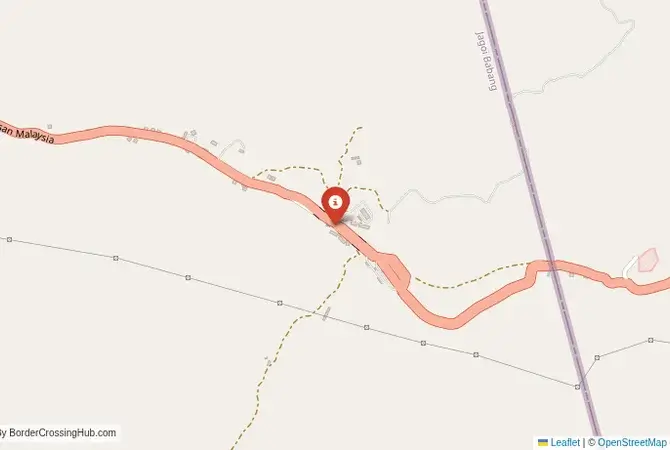
The Serikin border crossing is less a formal gateway and more a weekend cultural and commercial event. Every Saturday and Sunday, the small Malaysian village of Serikin, located about an hour's drive from the Sarawak capital of Kuching, transforms into a massive, sprawling open-air market. The unique feature of this market is that the vast majority of the vendors are Indonesian, from the nearby communities in West Kalimantan. They cross the border, which is just a simple post a few hundred meters away, to sell their goods to the thousands of Malaysians who flock here from Kuching and the surrounding areas. The atmosphere is that of a lively, colorful, and friendly village fair. The market is a vibrant mix of Indonesian handicrafts, textiles (batik), furniture, food products, and plants. It is a place where the border becomes almost invisible, a testament to the deep and enduring economic and cultural ties between the people of this shared land.
A History of a Bidayuh Homeland
The history of this border is the history of the Bidayuh people, one of the main indigenous groups of southern Sarawak and the adjacent parts of West Kalimantan. The Anglo-Dutch colonial border was drawn directly through their ancestral lands, dividing villages and families. For centuries, the Bidayuh people moved freely through the hills and valleys, and the border was a line that existed only on maps. The Serikin market is a modern manifestation of this historical unity. It is a pragmatic arrangement that allows the Bidayuh and other communities on the Indonesian side to access the more prosperous Malaysian market, and it provides Malaysians with access to a huge variety of affordable and unique Indonesian goods. The market is a powerful symbol of the "soft border," a place where local needs and historical connections have created a unique form of cross-border cooperation that operates outside the rigid formalities of a major international checkpoint. It is a border that is defined by people, not by politics.
Nearby Border Crossings


Border Procedures: For Locals and Goods, Not Tourists
As this is not an international crossing for foreigners, there are no procedures for tourists. The crossing operates under a special, localized agreement. The Process for Local Traders: Indonesian vendors from the designated border areas are allowed to cross into Serikin on the market days. They may need to show a special border pass or local identity card to the officials at the simple checkpoints on both sides. Their goods are subject to informal customs checks. Their movement is restricted to the Serikin market area, and they must return to Indonesia by the end of the day. For a foreign traveler, there is no way to get a legal entry or exit stamp at this location. The border posts here are not equipped with the necessary systems or legal authority to process international passports or visas. A tourist visiting the Serikin market can walk right up to the border post and look across into Indonesia, but they cannot legally cross. Any attempt to do so would be a violation of immigration law and would result in detention by the authorities.
The Regional Context: A Popular Day Trip from Kuching
The Serikin market is a very popular weekend day trip for locals and tourists based in Kuching, the capital of Sarawak. The journey from Kuching is a pleasant drive through a rural landscape of pepper farms and villages. The market itself is the destination. It is a fantastic place to shop for souvenirs, sample local foods, and experience the vibrant cross-border culture. The setting, in a beautiful valley surrounded by limestone hills, adds to the charm. The market is a complete, self-contained experience. For a traveler in Sarawak, it offers a fascinating glimpse of Indonesia without the need for a visa or a formal border crossing. It is a taste of another country, a few steps away from the border line. For any actual overland travel between Sarawak and West Kalimantan, you must use the official international crossing at Tebedu-Entikong.
Final Contextual Note: A Market on the Line
The Serikin-Jagoi Babang crossing is a wonderful example of a living, breathing border, a place where the international frontier is a backdrop for a vibrant and peaceful weekly festival of commerce and culture. It is a must-visit for anyone spending a weekend in Kuching. However, it is crucial to understand its function. It is a market, not an international gateway. It is a place to experience the richness of the Borneo borderlands, but it is not a place to cross them. The line here, while soft and friendly, is still a legal and formal international boundary that must be respected.
View all border crossings between Malaysia and IndonesiaPractical information
Fuel
Indonesia: <1 km - Malaysia: <1 km
Currency
Limited exchange (IDR, MYR)
Safety information
Safe, remote area
Connectivity
Limited Wi-Fi, 4G
Have you crossed here?
Help other travelers by sharing your experience, wait times, and any updates.