
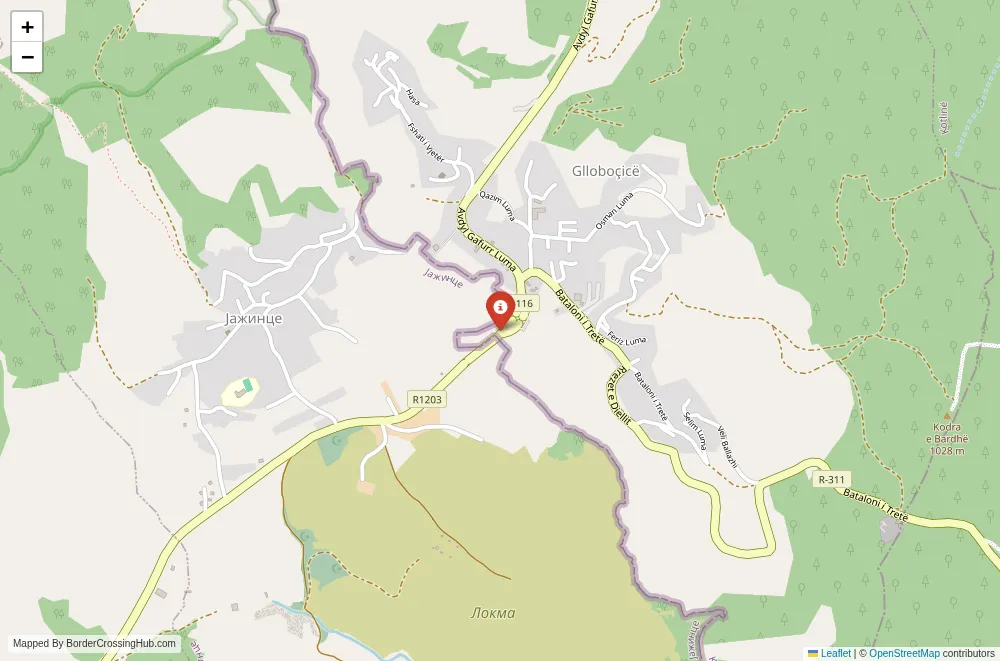
Approximate Border Location
Border Countries
Border Cities
- 🇲🇰Globočica
- 🇷🇸Jažince
Wait Times
Cars 20-90m; peaks 120-360m
Just crossed? Tap to report:
Operating Hours
Open 24 hrs (12:00 AM-11:59 PM)
Crossing Types
Ped,cars,buses; border controls
Border Type
Land crossing via road (mountain)
Peak Times
07:00-10:00 AM; 04:00-08:00 PM
Daily Crossings
3,000-15,000/day
Currency Exchange
RSD; MKD; EUR common; ATMs in towns
Safety Information
Mountain approach; queues possible
Languages Spoken
Macedonian/Serbian
Accessibility Features
Basic step-free; uneven lanes
About Hinterschellenberg & Feldkirch
Monthly Update (March 2026):
As of 03/2026, the Hinterschellenberg & Feldkirch Border Crossing feels quiet and open with little sign of formal controls. Cars pass through steadily without stopping most of the time. Weekday mornings sometimes bring a few extra commuters. Local travel between Liechtenstein and Austria shapes the flow.
No Cell Service at the Border? No Problem.
Don’t get caught scrambling for paperwork when you lose signal. Download the complete Europe Transit Guide directly to your device and access every critical detail, fast-track strategy, and border rule – 100% offline.
The Hinterschellenberg-Feldkirch border crossing stands as one of the quietest and most picturesque land connections between Liechtenstein and Austria, positioned in the northern Rhine Valley where Liechtenstein’s municipality of Schellenberg meets Austria’s Vorarlberg state in the town of Feldkirch. You typically reach this point when traveling overland from Vaduz or Schaan in Liechtenstein toward Feldkirch or farther into Austria’s Alpine region, often choosing it as a peaceful alternative to the busier Balzers-Schaanwald or Bendern-Schaan crossings farther south. Alternative names include the Hinterschellenberg Border Post (Liechtenstein side), Feldkirch Border Post (Austria side), or simply the Hinterschellenberg-Feldkirch crossing.
Location and Basic Connection
Hinterschellenberg lies in northern Liechtenstein near the small village of the same name in Schellenberg municipality, along the Rhine Valley floor at the foot of the Three Sisters mountains. Feldkirch sits immediately across the border in Austria’s Vorarlberg, with the crossing connecting Liechtenstein’s Route 16 (from Schaan) to Austria’s L190 road toward Feldkirch town center. It handles passenger vehicles, motorcycles, bicycles, and local foot traffic in a scenic valley setting of rolling meadows, vineyards, and the dramatic backdrop of the Liechtenstein Alps.
Historical Background
The border follows the 1719 creation of the Principality of Liechtenstein from the counties of Schellenberg and Vaduz, with the Rhine Valley line established through Habsburg and later Liechtenstein-Austrian agreements. Hinterschellenberg remained a quiet farming hamlet, while Feldkirch grew as a regional market town. During World War II, the area gained unique historical significance: on May 3, 1945, approximately 500 soldiers of the First Russian National Army (Vlasov Army collaborators) fled into Liechtenstein seeking asylum, crossing near Hinterschellenberg and refusing Soviet repatriation. Liechtenstein famously refused to hand them over, granting asylum to most after years of diplomatic pressure. The crossing has remained peaceful since, serving local communities and occasional tourists drawn to the Vlasov incident’s legacy.
Current Operating Status
As of early 2026, the crossing operates daily from 05:00 to 01:00 local time (UTC+1 for both countries; both observe daylight saving). It remains open without major disruptions reported recently. Liechtenstein offers visa-free entry for many nationalities (90 days for most, aligned with Schengen); Austria provides visa-free entry or visa-on-arrival for eligible travelers (often 90 days, Schengen). The post sees modest local traffic and occasional tourism, with very low foreign use. Confirm via embassies or official border service websites, as hours can adjust for holidays or winter weather.
Practical Crossing Procedures
You cross by vehicle or on foot. From Liechtenstein at Hinterschellenberg, complete exit formalities at the small Liechtenstein border post for passport stamps and basic checks. Proceed across the short road segment (often a bridge over a stream) to Feldkirch in Austria for entry. Austria requires document review, questions about purpose or accommodation, and possible luggage or vehicle inspections. Bring passport photos, cash for any minor fees, proof of funds, and onward travel details. The process typically takes 20 to 50 minutes for straightforward cases, with basic facilities on both sides.
Wait Times and Peak Periods
Queues remain short due to modest foreign traffic, often clearing in under an hour. Early mornings or late afternoons move quickest. Peaks occur with local market days, seasonal tourism, or holiday movements from Liechtenstein to Austria, but this post avoids heavy delays. No significant backups reported recently.
Transportation Options
Local roads from Vaduz or Schaan reach Hinterschellenberg in Liechtenstein. In Austria, connections head toward Feldkirch or Bregenz. Shared taxis, private vehicles, or bicycles work; no regular buses cross directly. Use official hires. Roads on both sides are paved and well-maintained, with occasional curves through the valley. Arrange transport ahead, especially in winter.
Scams and Safety Warnings
Scam reports stay minimal at this quiet post, but watch for informal offers of “help” with forms or currency exchange at poor rates; ignore and use official counters. Petty overcharges for transport happen occasionally. The rural valley area feels low-risk during open hours, with no major crime noted. Both countries maintain standard security; expect routine checks. Standard border caution applies. Stick to marked zones and avoid unofficial deals.
Road Conditions and Scenery
Liechtenstein’s approach features smooth paved roads through green meadows, vineyards, and traditional Alpine villages. The border zone includes modernized posts amid open valley floor. Austria’s side starts with similar paved roads, surrounded by rolling hills, distant Alpine peaks, and the Ill River valley. Scenery includes the Rhine Valley views, forested slopes, and the dramatic Three Sisters massif. Dry season keeps roads clear; wet periods or winter snow add minor hazards.
Seasonal Variations and Weather Impacts
Dry season (May-September) offers best conditions and higher tourism. Wet autumn and spring can worsen minor potholes. Winter snow and ice affect roads, though the crossing rarely closes. Traffic remains low year-round.
Nearby Attractions
Hinterschellenberg offers the historic Schellenberg Castle ruins and the Vlasov Army memorial plaque commemorating the 1945 asylum event. Nearby Vaduz provides the Prince’s Castle and modern art museum. In Austria, Feldkirch features the Schattenburg Castle, medieval old town, and Montforthaus cultural center. The area suits those interested in Alpine history, quiet rural exploration, or WWII memorial sites over major tourism.
Cultural and Economic Role
Local trade in agricultural goods, wine, and essentials sustains the crossing, supporting small communities on both sides. It enables family ties and small exchanges across the frontier. The post reinforces practical links in this historic valley region, though traffic remains modest.
Final Planning Tips
Arrive early with cash (USD or local currencies), printed documents, and offline maps. Prepare for Alpine weather (cold nights, possible snow) and basic facilities. Check road conditions and status ahead via embassies or forums. With preparation, you manage formalities and enjoy the scenic valley passage.
Wrapping Up the Crossing
Gornji Brgat-Trebinje keeps things simple and scenic between Croatia and Bosnia and Herzegovina. Time your visit thoughtfully, handle the essentials, and it offers a peaceful route through Dinaric highlands. Safe travels.
No reviews yet.