Monthly Update (August 2026):
The Ghulam Khan & North Waziristan area Border Crossing is also part of the gradual reopening of Pakistan–Afghanistan trade routes this summer. Pakistan reopened Ghulam Khan to Afghan goods in early July, after months in which the frontier had been heavily disrupted by the broader dispute between the two countries. This is a meaningful change from the quieter, scanner-related delays described in the previous Border Crossing Hub update: commercial movement has resumed, but the security situation in North Waziristan remains a much bigger variable than traffic volume. The crossing is still not a normal route for independent foreign travelers, and any reopening should not be interpreted as a relaxation of the area's security restrictions.
About this crossing
Operational Details
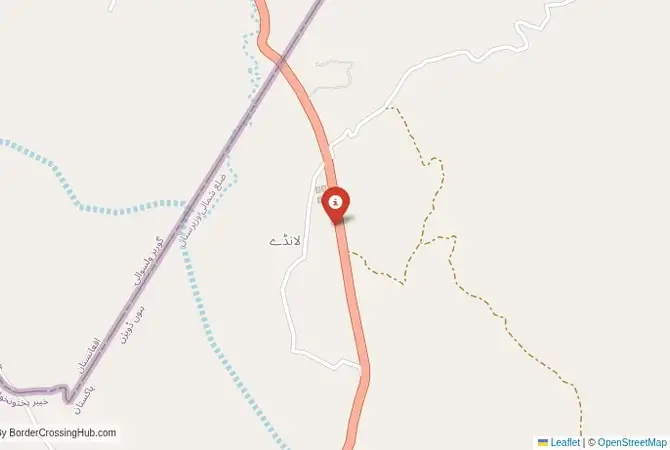
This checkpoint connects Pakistan's Khyber Pakhtunkhwa province with Afghanistan's Khost Province. It is one of the three major, officially recognized crossings between the two countries. The crossing has been modernized in recent years to improve the processing of trade, as it is the most direct route for goods moving between the Afghan capital, Kabul, and the Pakistani port of Karachi. Despite the modern facilities, the crossing is frequently closed due to security incidents, military operations, or political disputes. Its operation is always subject to the prevailing security situation.
A History of the "Graveyard of Empires"
The history of this region is the history of Waziristan, a fiercely independent tribal area that has resisted outside control for centuries, earning the wider region the nickname "Graveyard of Empires." The border, the Durand Line, was drawn by the British in the 19th century, cutting through the heart of the Wazir tribe's territory. After the 9/11 attacks, North Waziristan became the main sanctuary for al-Qaeda and the Taliban, and the headquarters of a global jihadist insurgency. The region has been the scene of a long and bloody war between the Pakistani military and various militant groups, as well as a major theater for US drone strikes. The Ghulam Khan crossing has been a key strategic point throughout this conflict.
Nearby Border Crossings


The Border Crossing Procedure
The border crossing procedure is an extremely rigorous and meticulous process, reflecting the extreme security situation. You will need a valid passport and valid visas for both countries, which must be obtained well in advance. The checks by both Afghan and Pakistani authorities are intense. The area is a major transit point for militants, smugglers, and refugees, and the security forces on both sides are on high alert. For foreigners, crossing here would be an exceptional event, requiring high-level official permission and a major security detail. It is not a standard procedure.
The Surrounding Region: Pakistan Side
On the Pakistani side, the crossing is in the North Waziristan district. The main town is Miranshah. The region is a landscape of rugged, barren mountains and narrow valleys. It has been heavily affected by years of war, with many towns and villages destroyed and rebuilt. The area is still subject to military control, and access is heavily restricted. The journey from the main city of Bannu to the border is a journey through numerous military checkpoints.
The Surrounding Region: Afghanistan Side
On the Afghan side, the crossing is in the Khost Province. The nearby city of Khost is a major trading center and has a long history as a strategic military outpost. The province has been a major stronghold for the Haqqani network, one of the most powerful and violent factions of the Taliban. The security situation is extremely volatile. The road from the border leads towards the city of Gardez and the capital, Kabul.
Practical Travel Information
Travel on this route is not possible for independent tourists. The entire region is a high-risk security zone. The official currencies are the Pakistani Rupee (PKR) in Pakistan and the Afghan Afghani (AFN) in Afghanistan. Any travel would have to be part of an official, heavily guarded convoy. The risks of kidnapping, IEDs, and terrorist attacks are extremely high.
Final Considerations
The Ghulam Khan border crossing is a journey into the heart of one of the world's most famous and dangerous conflict zones. It is a place where modern geopolitics, tribal traditions, and religious extremism have converged to create a landscape of perpetual conflict. It is a vital economic artery that operates under the constant shadow of war. It is a border that is not for the traveler, but for the soldier, the spy, the trader, and the people who call this beautiful but unforgiving land their home. It is a true frontier, a line that is written in blood.
View all border crossings between Afghanistan and PakistanPractical information
Fuel
Afghanistan: <1 km - Pakistan: <1 km
Currency
Limited exchange; AFN, PKR
Safety information
Restricted zone; high vigilance
Connectivity
Basic 3G signal
Have you crossed here?
Help other travelers by sharing your experience, wait times, and any updates.