Monthly Update (September 2026):
Gbalamuya and Pamelap remains one of the main Guinea-Sierra Leone road crossings, with no significant September closure identified. The most notable recent development on the Guinea-Sierra Leone frontier has been the reopening of the disputed Yenga crossing in June, after more than a year of closure. The reopening restored movement of people and goods and followed diplomatic and military discussions between the two governments. That improvement in bilateral relations is positive for cross-border travel, although it does not directly change procedures at Gbalamuya-Pamelap.
About this crossing
Often called the Pamelap Border on the Guinean side and Gbalamuya Crossing on the Sierra Leonean side, it connects Guinea’s coastal corridor with Sierra Leone’s northern provinces. It is widely used by locals, traders, and overland travelers.
Location and regional importance
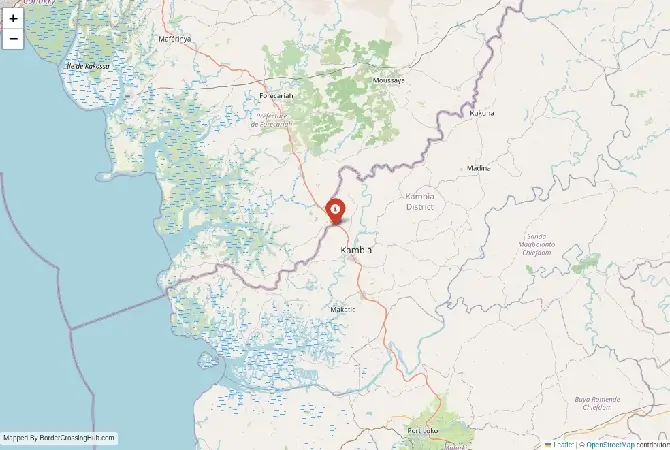
Pamelap sits in western Guinea near the coast, while Gbalamuya lies just across the border in northern Sierra Leone. The crossing forms part of a regional road network linking Conakry to Freetown via inland routes.
Nearby Border Crossings




This positioning gives it steady traffic. You will see shared taxis, minibuses, motorcycles, and small cargo vehicles moving through regularly. It is not as chaotic as major freight borders, but it is far from quiet.
For travelers moving between the two countries by land, this is one of the more accessible options.
A border shaped by proximity and daily movement
Communities on both sides share cultural and economic ties. Cross-border trade is common, especially in agricultural goods and everyday supplies.
The border developed around this local interaction rather than large-scale infrastructure. Even today, the flow of people often reflects routine movement rather than long-distance travel.
You will likely hear multiple languages, including French, English, and local dialects, depending on which side you are on.
What the crossing looks like
The setup is simple but functional. On the Guinean side in Pamelap, immigration offices are modest but clearly identifiable. On the Sierra Leonean side, Gbalamuya offers a similar level of infrastructure.
You will not find a large terminal, but you will find enough structure to guide you through the process. The area around the crossing includes small shops, informal vendors, and transport waiting points.
Compared to more remote crossings, this one feels more organized, though still informal by international standards.
Border procedures and documentation
The process follows the usual pattern. You exit one country, then enter the other. Start in Pamelap or Gbalamuya depending on your direction, and complete both sets of formalities.
Visa requirements depend on your nationality. Guinea generally requires a visa, while Sierra Leone may offer visa-on-arrival for some travelers, though you should confirm this before arrival.
Yellow fever vaccination proof is commonly required when entering either country, so keep your certificate accessible.
Processing is usually straightforward, and officials are accustomed to handling both local and foreign travelers.
Wait times and flow
This crossing is relatively efficient compared to others in the region. On a typical day, you can complete the process in 20 to 40 minutes.
Delays can occur during busy periods or if transport vehicles arrive in groups. However, long waits are less common than at major freight borders.
Arriving earlier in the day helps avoid any buildup and ensures you have time to deal with unexpected issues.
Transport and road conditions
Access to Pamelap from Conakry is relatively direct, with a main road connecting the capital to the border. Conditions vary, but much of the route is passable year-round.
On the Sierra Leone side, roads lead toward towns like Kambia and onward to Freetown. These routes can be uneven in places, but they are widely used.
Shared taxis and minibuses are the primary means of transport. Vehicles typically leave when full, so you may need to wait.
Motorcycle taxis are available for short distances near the border.
Seasonal considerations
The rainy season, from roughly May to October, can affect travel. Roads may become muddy, and travel times can increase slightly.
In the dry season, conditions improve, though dust and heat can be noticeable, especially while waiting at the border.
Despite these factors, this crossing remains usable throughout the year.
Scams & Warnings
While this is not a high-risk border, you should still be cautious. You may encounter individuals offering to help with paperwork or transport.
These services are usually unnecessary. It is best to handle the process yourself unless you clearly understand what is being offered.
Occasional requests for small unofficial payments may occur. If this happens, remain polite and ask for clarification or a receipt.
Currency exchange is available informally, but rates are often unfavorable. Exchange money in advance if possible.
Nearby areas and travel context
Pamelap is a small border town with limited services. Most travelers pass through rather than stay.
Gbalamuya is similar, serving mainly as a crossing point rather than a destination. Kambia, further inside Sierra Leone, offers more options if you need accommodation or supplies.
This border is best understood as part of a larger journey between Conakry and Freetown rather than a standalone stop.
Cultural and economic role
The crossing supports everyday interaction between Guinea and Sierra Leone. Traders, families, and transport operators move through regularly, maintaining connections that go beyond national boundaries.
You will see how local economies depend on this movement, with goods and people flowing in both directions.
The atmosphere is generally relaxed, reflecting the routine nature of the crossing for those who use it frequently.
Practical tips before crossing
Have all your documents ready, including passport, visa, and vaccination certificate. Keep printed copies as a backup.
Carry small amounts of local currency, and plan your transport on both sides in advance if possible.
Travel during daylight hours and keep your belongings secure. Even in relatively calm areas, basic precautions are important.
Stay patient and follow the flow of people if you are unsure where to go.
Final thoughts
A reliable option in the region
The Pamelap–Gbalamuya crossing is one of the more manageable borders in West Africa. It combines steady traffic with relatively simple procedures, making it a practical choice for overland travel.
With basic preparation and awareness, you can expect a straightforward experience compared to many other crossings in the region.
View all border crossings between Guinea and Sierra LeonePractical information
Fuel
Guinea: <1 km - Sierra Leone: <1 km
Currency
GNF,SLL offices
Safety information
Busy but orderly
Connectivity
Highway,buses
Have you crossed here?
Help other travelers by sharing your experience, wait times, and any updates.