
Monthly Update (September 2026):
Boten & Mohan remains one of the most important Laos-China land gateways, connecting northern Laos with Yunnan and the wider China-Laos economic corridor. There is no significant September closure reported, while the adjacent Boten-Mohan corridor continues to benefit from the broader expansion of cross-border transport and trade links between the two countries. Travelers using the crossing should expect a strongly commercial environment, particularly around freight movements, but passenger traffic remains an important part of the route.
About this crossing
A History of a New Economic Corridor
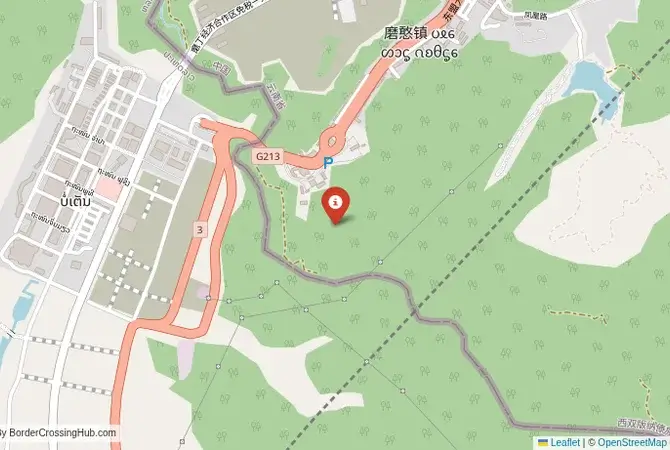
For most of history, this was a remote and undeveloped frontier, a region of dense jungle inhabited by various ethnic minority groups. The old road was a rough dirt track. The transformation of the Boten-Mohan crossing is a very recent story. It began in the early 2000s with the creation of the Boten Golden City Special Economic Zone, a casino and entertainment complex built with Chinese investment that quickly gained a notorious, lawless reputation before being shut down. The real change came with the Belt and Road Initiative. The crossing was chosen as the entry point for the landmark China-Laos railway, a multi-billion dollar project that connects Kunming, the capital of Yunnan, with the Lao capital of Vientiane. The railway, which opened in 2021, has been a game-changer, dramatically cutting travel times and creating a powerful new economic corridor. The entire border area has been redeveloped, with a new city, the "Beautiful Boten Specific Economic Zone," rising on the Lao side, and a massive port of entry on the Chinese side.
The Border Crossing Procedure: Rail or Road
The border is open during extended hours, with the railway checkpoint operating from 06:30 AM to 10:00 PM. The process is modern and highly organized, but the Chinese side is extremely thorough. You must have a valid visa for the country you are entering, obtained in advance. A "one location, two inspections" system (implemented progressively from 2025 agreements) streamlines procedures at railway stations. Crossing by Train: This is the newest and most popular option. The high-speed train travels from Kunming to Vientiane. The border procedure takes place at the railway stations on either side of the border. The train will first stop at the Mohan Railway Station on the Chinese side. All passengers must disembark with all their luggage, go through Chinese exit immigration and customs, and then re-board the train. The train then crosses the border to the Boten Railway Station in Laos. Here, all passengers must again disembark with all their luggage, go through the Lao visa on arrival and immigration process (or eVisa validation), and then re-board the train to continue to Vientiane. The entire process at the border can take around 52-60 minutes per side but is very well-organized. Crossing by Road: You can also cross by bus or private vehicle. You will first go to the exit immigration building of the country you are leaving. After getting your exit stamp, you will cross a short no-man's-land to the other country's immigration hall. The Chinese entry process at Mohan is very strict, involving fingerprinting and a thorough customs search of your luggage, including the scanning of electronic devices. The Lao entry process at Boten is more relaxed, with a straightforward visa on arrival service for most nationalities (passport photo and cash in US dollars required).
Nearby Border Crossings




Route, Onward Travel, and Northern Laos
This crossing is the main gateway to northern Laos. On the Chinese side, Mohan is connected by expressway and high-speed rail to Kunming and the rest of China. On the Lao side, from Boten, you can take the high-speed train south to the major tourist destinations of Luang Prabang, Vang Vieng, and Vientiane. This is by far the fastest and most comfortable way to travel through Laos. The old road, Route 13, still exists and runs parallel to the railway. You can take buses from Boten to the city of Luang Namtha, the main hub for trekking and eco-tourism in northern Laos, and on to other destinations like Oudomxay and Luang Prabang. The train has revolutionized travel in the region, turning what was once a multi-day bus journey into a comfortable trip of just a few hours.
Final Planning Advice for the High-Speed Gateway
The Boten-Mohan crossing is the modern, efficient, and highly recommended gateway for travel between China's Yunnan province and Laos. The new high-speed railway is a game-changer and the best way to make the journey. The key to a successful crossing is to have your Chinese visa sorted out well in advance. Be prepared for the very thorough security checks on the Chinese side. For Laos, have a passport photo and clean US dollar bills ready for your visa on arrival, or use eVisa in advance. This border is a powerful symbol of China's growing influence and the rapid modernization of Southeast Asia. It is a smooth and comfortable passage through a remote and beautiful landscape, a journey on a steel ribbon that is tying this once-isolated region ever closer together.
View all border crossings between Laos and ChinaPractical information
Fuel
China: <1 km - Laos: <1 km
Currency
Exchange near Boten (CNY, LAK)
Safety information
Safe, traffic moderate
Connectivity
Wi-Fi at checkpoints, 4G
Have you crossed here?
Help other travelers by sharing your experience, wait times, and any updates.