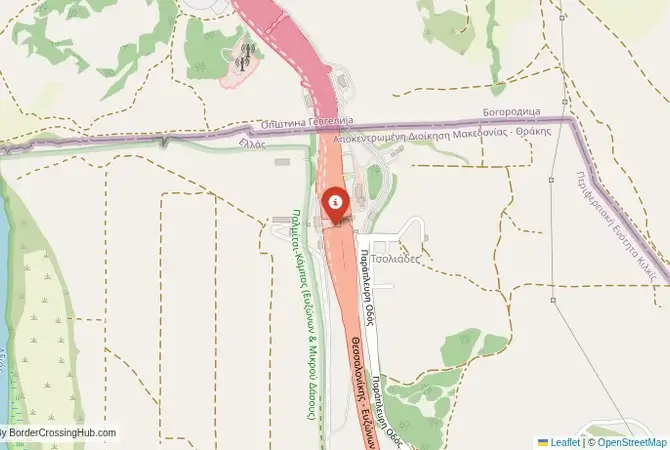
Monthly Update (September 2026):
Evzoni & Gevgelija is currently experiencing heavy traffic in the Greece-bound direction. On September 4, live monitoring showed waits of several hours toward Greece, reaching about 4 hours 20 minutes in the afternoon, while the opposite direction was around 55 minutes. The crossing remains open 24/7, so this is congestion rather than a closure. Travelers heading into Greece should avoid the busiest daytime periods where possible and check the queue before setting out.
About this crossing
Historical and Geopolitical Context
The border was established in 1991 when North Macedonia gained independence from Yugoslavia, with Evzoni (once Matsikovo) and Gevgelija becoming key transit points. Historically, Gevgelija was part of the Ottoman Salonica Vilayet, and during World War I, Evzoni saw action in the 1916 Salonika Campaign. The 2015 migrant crisis led to temporary closures and bus replacements for trains, impacting regional travel. Today, the crossing handles daily commuters, driven by tourism, trade, and agriculture. Schengen rules ease movement for EU citizens, but non-EU travelers face stricter checks. In 2024, EU-funded infrastructure upgrades, including automated cameras and weighbridges, improved efficiency. Confirm border status, as construction may cause delays until late 2025.
Crossing Procedures and Wait Times
EU citizens need a valid ID, while non-EU travelers require a passport and possibly a visa for North Macedonia. Customs inspections focus on alcohol (1L spirits) or tobacco (200 cigarettes), with Greek officers vigilant for tax evasion. Pedestrians and cyclists cross in 10-15 minutes via side paths or footbridges, while vehicles wait 20-40 minutes during peak hours (7-9 AM, 4-6 PM). The border operates 24/7, with delays up to 60 minutes during summer tourist peaks (July-August) or Gevgelija’s cultural festivals. Random health checks may occur, though COVID-19 restrictions ended in 2022. Early crossings or midweek travel help avoid congestion.
Nearby Border Crossings

Routes and Transportation
From Evzoni, KTEL buses or taxis (20 minutes, €4-€6) reach Gevgelija’s central station. By car, the E75/A1 highway crosses in 15 minutes (7km), with clear signage. Cyclists can follow the Vardar Cycle Route, a 25km path through fields and vineyards. From Gevgelija, buses connect to Skopje (1.5 hours, €8-€12), but train services to Thessaloniki remain suspended until 2025 due to track upgrades. Roads are well-paved, offering mountain views. Summer traffic or winter snow may slow rural routes, so check conditions. Avoid unofficial taxis at Gevgelija’s station, as travelers report €30 overcharges for short trips to Evzoni or nearby towns.
Scams & Warnings
Always carry ID or passport for checks, especially on buses or at border posts. Gevgelija’s shops advertise deals on rakija, local cheeses, or souvenirs, but prices may be inflated for tourists; compare at Evzoni’s markets for better value. Use ATMs in Evzoni or Gevgelija for EUR or MKD to avoid poor exchange rates at roadside kiosks. Pickpocketing is rare but reported at Gevgelija’s station during summer festivals like the Gevgelija Wine Festival. Fake customs helpers may charge €15 for paperwork; deal only with official personnel. Declare goods when crossing to avoid fines up to €150 for undeclared items.
Cultural and Economic Significance
With daily crossings, the region thrives on tourism, trade, and agriculture. Greek and Macedonian languages blend, with bilingual menus in cafes and restaurants. Evzoni’s markets sell olive oil, feta, and ouzo, while Gevgelija’s offer ajvar, wines, and grilled meats. The Vardar Festival unites both sides with music, dance, and artisanal crafts. Economic differences fuel cross-border shopping, with Greeks favoring Gevgelija’s cheaper goods and Macedonians visiting Evzoni for EU products, boosting local economies. The E75’s role as a trade corridor strengthens regional connectivity.
Nearby Attractions
Evzoni’s nearby Kilkis features archaeological sites and wineries, perfect for a day trip. Gevgelija’s casinos and Vardar River walks offer local charm. For a detour, Thessaloniki (1 hour) boasts Byzantine churches and vibrant markets, while Skopje (1.5 hours) has historic bazaars and statues. Visit Evzoni’s tavernas for souvlaki or Gevgelija’s cozy cafes for Macedonian baklava and coffee.
Seasonal and Weather Considerations
Summer (June-August) brings 25-35°C weather, ideal for cycling or hiking, but crowds peak during Thessaloniki’s cultural festivals or Macedonian holidays. Winter (December-February) sees 0-10°C with occasional snow or fog, slowing rural roads. Spring and fall offer mild 10-20°C weather, though rain may affect cycle paths or visibility. Check forecasts for heatwaves or sudden snow before traveling to plan effectively.
Planning Recommendations
Cross early to avoid peak-hour delays and carry EUR or MKD for convenience. Book bus tickets via KTEL or local apps for discounts, and check schedules for updates. Confirm border status for construction or visa checks, especially during holidays or festivals. Visit Gevgelija’s tourist office for cycling maps, event schedules, or hiking guides. Pack sunscreen for summer or warm layers for winter to handle the region’s weather. Purchase Greece’s digital toll pass (€10 weekly) online to avoid highway penalties. With preparation, this crossing connects you to the Vardar valley’s cultural and scenic allure seamlessly.
View all border crossings between Greece and North MacedoniaPractical information
Fuel
Greece: <1 km - North Macedonia: <1 km
Currency
Near Evzoni (EUR, MKD)
Safety information
Busy, low risk
Connectivity
Wi-Fi stations, 4G/5G
Have you crossed here?
Help other travelers by sharing your experience, wait times, and any updates.