Monthly Update (September 2026):
Bavet & Moc Bai remains the principal Cambodia-Vietnam road gateway and continues to be a major route for international overland travel. Current September travel information still identifies Moc Bai-Bavet as the busiest Cambodia-Vietnam road crossing, with regular cross-border services operating through the gate. There is no significant September closure reported, so travelers crossing between Ho Chi Minh City and Phnom Penh can continue to use this route, subject to normal immigration requirements.
About this crossing
A History on a Strategic Highway
The history of this crossing is the history of the highway it serves, the Asian Highway 1 (AH1). This has been a strategic route for centuries, connecting the Mekong Delta with the heart of Cambodia. Its modern history was forged during the Vietnam War, when the region was a key area for the movement of troops and supplies. The border was a flashpoint during the Cambodian-Vietnamese War that followed the fall of the Khmer Rouge, when Vietnamese forces entered Cambodia through this very gateway. In the peaceful era that has followed, the crossing has been transformed into a major economic corridor. Both Cambodia and Vietnam have invested heavily in upgrading the road and the border facilities, with support from international development banks. The goal has been to create a seamless link between the two major economic centers of Phnom Penh and Ho Chi Minh City. The rise of the casino industry in Bavet is a more recent phenomenon, a cross-border economic quirk driven by Vietnam's restrictions on gambling, similar to the situation on the Thai-Cambodian border.
The Border Crossing Procedure: A Well-Organized Process
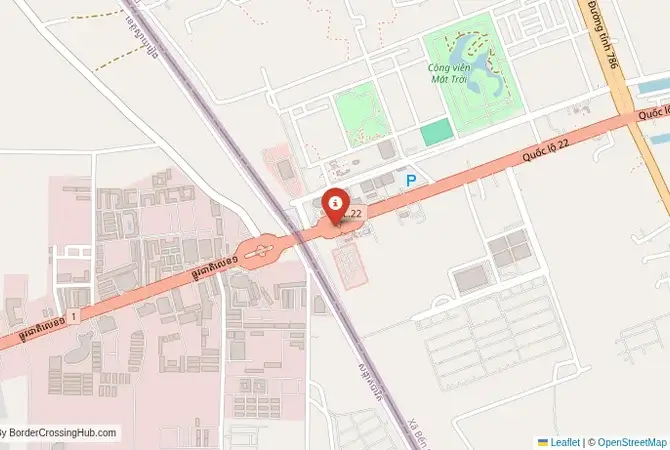
The border is open 24 hours, though it is best to cross during the day to avoid potential delays from heavy truck traffic. The process is very well-organized and accustomed to handling large numbers of foreign tourists. You must have a valid visa for the country you are entering, obtained in advance. Visas on arrival are not available at this land border. Exiting Cambodia (Bavet): You will arrive at the large Cambodian immigration and customs complex. If you are on a direct bus, the bus attendant will often collect everyone's passports and handle the process for you as a group. If traveling independently, you will go to the immigration hall, present your passport, and get your exit stamp. The process is usually quick and professional. The No-Man's-Land: After clearing Cambodian immigration, you will walk or be driven by your bus a few hundred meters through a wide, open no-man's-land to the Vietnamese side. You will walk past the large casino entrances on your left. Entering Vietnam (Moc Bai): You will then enter the large and modern Vietnamese immigration facility. You will queue and present your passport and your pre-arranged Vietnamese visa (or e-visa printout) to the immigration officer. They will process your entry and give you a stamp. After immigration, your luggage will be passed through an X-ray scanner for a customs check. The Vietnamese officials are professional and the process is generally efficient. Once you are cleared, you are officially in Vietnam.
Nearby Border Crossings

Route, Transportation, and Direct Buses
The most convenient and highly recommended way to navigate this crossing is by taking one of the many direct bus services that run between Phnom Penh and Ho Chi Minh City. Numerous reputable companies (like Giant Ibis or Mekong Express) operate modern, air-conditioned buses. The journey takes about 6-7 hours in total, including the border stop. The bus companies are experts at the border procedure and make it a very smooth and stress-free experience for passengers. If you choose to travel independently, you can take a local bus or taxi to the Bavet border. On the Vietnamese side, from Moc Bai, there are frequent local buses for the 2-hour journey into Ho Chi Minh City. The road on both sides is a paved, major highway, but it can be very busy with traffic, especially on the Vietnamese side as you approach the city.
Final Planning Advice for the Main Southern Gateway
The Bavet-Moc Bai crossing is the workhorse of Cambodia-Vietnam travel. It is modern, efficient, and the most popular route for a reason. The key to a successful crossing is to have your Vietnamese visa or e-visa sorted out well in advance. Visas on arrival are not available at this land border. Booking a ticket with one of the major direct bus companies is the best decision you can make. It simplifies the entire process, eliminates the need to negotiate with local transport, and is very comfortable and affordable. This crossing is a straightforward and predictable passage between two of Southeast Asia's most dynamic and fascinating cities, a perfect route for any traveler exploring the region.
View all border crossings between Cambodia and VietnamPractical information
Fuel
Cambodia: <1 km - Vietnam: <1 km
Currency
Exchange near Bavet (KHR, VND)
Safety information
Safe, heavy traffic
Connectivity
Wi-Fi at checkpoints, 4G
Have you crossed here?
Help other travelers by sharing your experience, wait times, and any updates.