Monthly Update (September 2026):
Amdalai & Karang remains an important Gambia-Senegal crossing and a major route for regional trade and passenger movement. Cooperation between the two countries remains active at both sides of the border, with Gambian and Senegalese customs officials emphasizing smoother cross-border trade and coordination at Karang and Amdalai. There is no significant September closure to report. Security cooperation has also been highlighted elsewhere along the Gambia-Senegal frontier this month, reinforcing the importance of coordinated border management while normal cross-border movement continues.
About this crossing
Position and connections
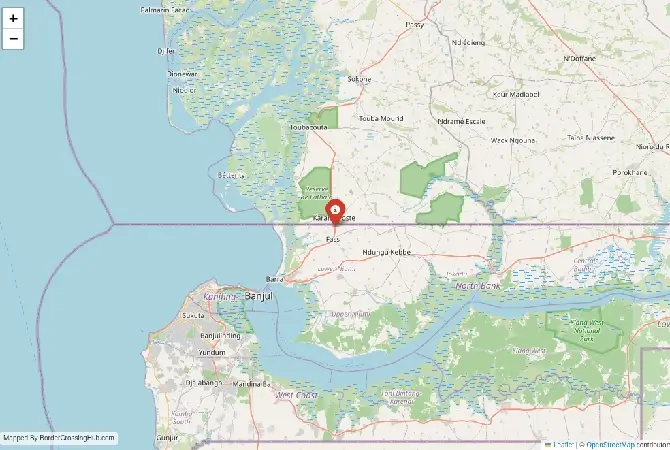
Amdalai sits in The Gambia’s North Bank Region while Karang lies just across in Senegal. The border runs through flat savanna and agricultural land near the Gambia River. From the Gambian side you connect via the ferry at Barra then onward to Banjul. On the Senegalese side the road heads toward Velingara or Ziguinchor and eventually Dakar. Trade moves steadily with goods like fish, rice, and consumer items crossing daily. For outsiders this route avoids the longer southern options and gives access to both coastal and inland areas.
Background details
The crossing reflects the close ties between the two nations, which almost surround each other geographically. Joint meetings and cross-border engagement events have taken place here in recent years to improve cooperation. While occasional political or logistical issues arise, the post has stayed operational as a key link for people and commerce. Communities on both sides share ethnic links and move frequently for markets and family visits.
Nearby Border Crossings


Operating hours
The border usually opens from early morning around 7 or 8 AM until 6 or 7 PM. Both sides work in the same time zone. Arrive with enough daylight left, especially if continuing by road. Hours can shift slightly with volume or staffing, so checking locally near your travel date helps avoid surprises.
Crossing from The Gambia into Senegal
At Amdalai you complete Gambian exit formalities first. Officers check your passport and stamp you out. Then you move the short distance across to Karang for Senegalese entry. Many nationalities enjoy visa-free entry into Senegal for up to 90 days. Present your yellow fever certificate and be ready for basic questions. Processing involves immigration counters on both sides.
Entering The Gambia from Senegal
Start with exit checks at Karang. Cross over and handle entry at Amdalai. The Gambia offers visa-free access or visa on arrival for many foreign visitors depending on nationality. Have cash ready for any fees (often around USD 20-100 plus security charges) and show proof of onward travel or sufficient funds. Yellow fever vaccination remains mandatory.
Wait times and daily flow
Full crossings often take 45 to 120 minutes when traffic stays light. Peak market days or truck movements push waits longer, sometimes up to two hours or more with extra questions. The process can feel drawn out due to multiple counters and occasional pauses. Rainy season from June to October brings heavier downpours that slow roads and increase minor delays.
Transport options
From the Gambian side shared taxis and minibuses run regularly between Barra and Amdalai. After crossing, sept-place taxis or buses head deeper into Senegal. On the Senegalese side you find connections toward major towns. No large formal terminal sits right at the post, so drivers often wait nearby. Arrange onward rides after clearing immigration for the best flow.
Roads and scenery
Approach roads include paved sections mixed with laterite surfaces. You pass through villages, fields, and wooded patches typical of the region. Traffic mixes taxis, trucks, motorcycles, and pedestrians. Conditions worsen during rains with mud and potholes. The short no-man’s-land area stays easy to walk even with luggage.
Security situation and caution
The route generally stays calm for travelers who stick to main roads and daylight hours. Still, check current official advisories before crossing as sporadic issues can occur along borders in the region. Travel during the day and avoid unnecessary stops. Most foreign visitors report straightforward experiences when prepared.
Scams & Warnings
This crossing sees occasional unofficial helpers offering to speed up processes for fees that prove unnecessary. Reports mention extra questions aimed at extracting small payments or confusion at counters. Some drivers have added unexpected stops. Carry exact change in dalasi and CFA francs, use only official buildings, and politely decline unsolicited assistance. Stay patient and document your steps if needed.
Nearby spots
Amdalai offers a typical border town feel with small markets. Karang provides similar local insights on the Senegalese side. Further out you reach Banjul’s busy streets or the quieter roads toward Senegal’s Casamance with its forests and beaches. The immediate area mixes everyday commerce with West African border life.
Preparation steps
Confirm your visa situation and yellow fever requirements well ahead. Bring passport copies, sufficient local currency, and proof of funds or onward travel. Download offline maps since signal can drop near the border. If driving, prepare vehicle temporary import documents. Dress simply and travel during daylight hours. Review any recent updates on border procedures.
Economic and cultural role
The post supports strong trade and family connections across the long shared boundary. Markets on both sides stay active with daily goods moving back and forth. It forms a practical link that reflects the intertwined lives of people in The Gambia and Senegal despite the international line.
Seasonal and practical factors
Dry season from November to May usually brings better road conditions and fewer weather disruptions. Rainy months increase mud and potential delays. Holidays or peak trading periods raise volumes at the post. Build extra time into your plans regardless of season.
Crossing advice
Double-check details right before travel, allow buffer for processing, and stay patient with procedures. With good preparation you handle Amdalai and Karang without major trouble and continue exploring between The Gambia and Senegal. Safe travels on this route. (Word count: 1047)
View all border crossings between Gambia and SenegalPractical information
Fuel
Gambia: <1 km - Senegal: <1 km
Currency
GMD,XOF exchangers
Safety information
Busy, controlled flow
Connectivity
3G/4G mobile coverage
Have you crossed here?
Help other travelers by sharing your experience, wait times, and any updates.