Monthly Update (October 2026):
Saatse & Krupp remains unsuitable as an ordinary route through the Estonia-Russia frontier in October. Estonia permanently closed the road through the Saatse Boot after increased Russian military activity was observed in 2025, and the route has been rebuilt around the Russian territory. Travelers should not plan an itinerary around passing through Saatse & Krupp as if the former shortcut were still available.
About this crossing
Location and Basic Connection
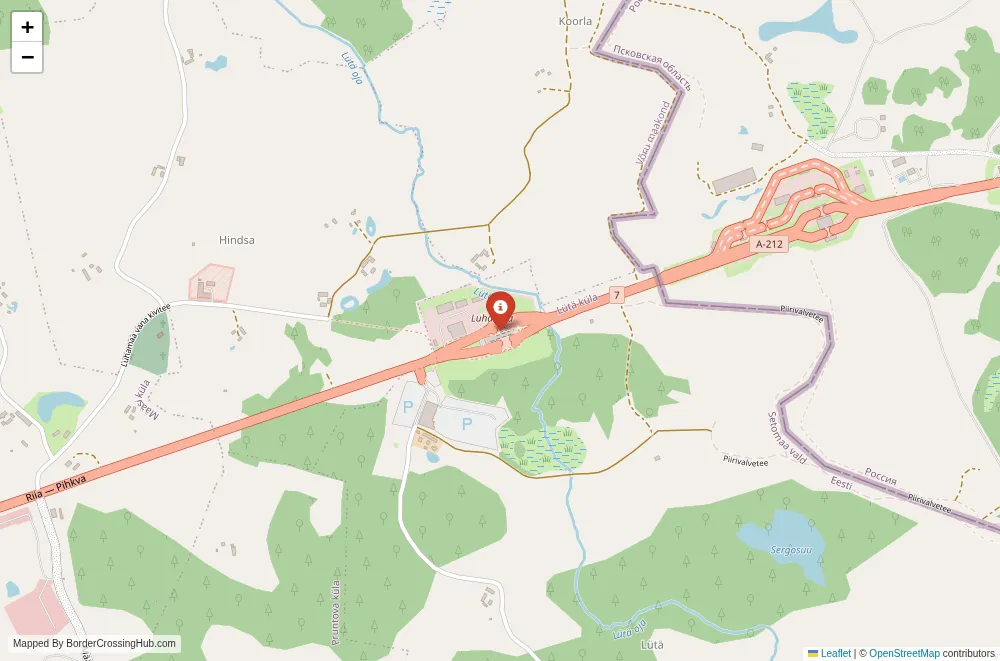
Saatse lies in Estonia near the small village of the same name in Setomaa Parish, Võru County, while Krupp sits across in Pechorsky District, Pskov Oblast, Russia. The crossing connects secondary gravel and paved roads through rolling countryside, forests, and small agricultural fields in the Seto cultural region. It handles passenger vehicles, motorcycles, and limited local traffic in a sparsely populated area near the tripoint of Estonia, Russia, and Latvia (about 20 km northwest). The post remains one of the least trafficked along the 294-kilometer Estonia-Russia land border.
Historical Background
The border line follows the 1920 Tartu Peace Treaty between Estonia and Soviet Russia, which placed the Petseri (Pechory) region in Estonia. The area was inhabited by the Seto people, whose cultural homeland straddles the frontier. In 1944, Soviet forces annexed Petseri and surrounding areas to the Pskov Oblast of the RSFSR, creating the current border. Saatse-Krupp became a formal crossing after Estonia's independence in 1991, though it remained minor due to limited infrastructure and low demand. The region carries deep cultural significance for the Seto, with many families divided by the line. Recent years have seen occasional bilateral discussions on border management, but no major upgrades have occurred.
Nearby Border Crossings



Current Operating Status
As of early 2026, the crossing operates daily from 08:00 to 18:00 local time (UTC+2 for Estonia, UTC+3 for Russia; Estonia observes daylight saving, Russia does not). It remains open without major disruptions reported recently. Estonia offers visa-free entry for many nationalities (90 days for most); Russia requires visas for most foreigners (e-visa available for some nationalities, pre-arranged for others, with $52 USD fee). The post sees very low foreign traffic, primarily local residents and occasional overlanders. Confirm via embassies or official border service websites, as hours can adjust for holidays or security situations.
Practical Crossing Procedures
You cross by vehicle or on foot. From Estonia at Saatse, complete exit formalities at the small immigration office for passport stamps and basic checks. Proceed across the short distance to Krupp in Russia for entry. Russia requires visa presentation (pre-obtained or e-visa confirmation), document review, questions about purpose or accommodation, and possible luggage or vehicle inspections. Bring passport photos, cash for fees, proof of funds, hotel bookings, and onward travel details. The process typically takes 30 to 90 minutes, with basic facilities on both sides.
Wait Times and Peak Periods
Queues remain short or nonexistent due to very low traffic. Early mornings or late afternoons move fastest. Peaks occur only during local events, seasonal trade, or rare holiday movements, but this post avoids any significant delays. No backups reported recently.
Transportation Options
Local roads from Võru or Petseri reach Saatse in Estonia via paved and gravel sections. In Russia, tracks lead toward Pechory or Pskov. Shared taxis, private vehicles, or motorcycles work; no regular buses cross directly. Use official hires. Roads on both sides remain unpaved or secondary, with 4x4 useful for extensions.
Scams & Warnings
Scam reports stay minimal at this quiet post, but watch for informal offers of "help" with forms or currency exchange at poor rates; ignore and use official counters. Petty overcharges for transport happen occasionally. The rural area feels low-risk during open hours, with no major crime noted. Russia's border regions maintain security checks; standard caution applies. Stick to marked zones and avoid unofficial deals.
Road Conditions and Scenery
Estonia's approach features paved and gravel roads through Seto villages, forests, and fields. The border zone includes basic posts amid rolling countryside. Russia's side starts with similar secondary roads, surrounded by mixed woodlands and agricultural land. Scenery includes traditional Seto farmsteads, wooden churches, and open rural landscapes. Dry season keeps paths passable; wet periods add minor mud.
Seasonal Variations and Weather Impacts
Dry season (May-September) offers best conditions and steadier local flows. Wet season and winter snow can slow travel on unpaved sections, though the crossing rarely closes. Trade or local movement aligns with drier months, maintaining modest activity.
Nearby Attractions
Saatse offers Seto cultural sites, including the Seto Museum and traditional smoke saunas. Nearby Petseri (Pechory) in Russia features the historic Pechory Monastery. The area suits those interested in Seto heritage, rural exploration, or quiet border travel over major tourism.
Cultural and Economic Role
Local trade in agricultural goods, crafts, and essentials sustains the crossing, supporting Seto communities divided by the line. It enables family connections and small exchanges in this cultural frontier. The post reinforces practical links without the scale of larger corridors.
Final Planning Tips
Arrive early with USD cash for visas, printed documents, and offline maps. Prepare for basic facilities and possible weather delays. Check status ahead via embassies or forums. With preparation, you manage formalities and experience this quiet cultural border.
Wrapping Up the Crossing
Saatse-Krupp keeps things simple and rural between Estonia and Russia. Time your visit thoughtfully, handle the basics, and it offers a peaceful passage through Seto countryside. Safe travels.
View all border crossings between Estonia and RussiaPractical information
Currency
EUR only; no services in corridor
Safety information
Stay on road; fines for stopping/off-road
Connectivity
4G
Have you crossed here?
Help other travelers by sharing your experience, wait times, and any updates.