Monthly Update (October 2026):
Pskov Oblast & Võru County remains a restricted Russia-Estonia frontier in October, with travelers increasingly concentrated on the designated crossings at Luhamaa and Koidula. Estonia continues to warn against travel to Russia and retains the ability to close its crossings at short notice for security reasons. Anyone using this route should therefore check the crossing status immediately before departure rather than relying on older schedules.
About this crossing
A History of a Contested and Divided Land
The history of this border is the history of the contested Petseri County and the division of the Seto homeland. For centuries, the region was a fluid frontier zone where Estonian, Russian, and Seto cultures mingled. The magnificent 15th-century Pskov-Caves Monastery in the town of Pechory (Petseri) is a major center of Russian Orthodoxy. Following the Estonian War of Independence, the 1920 Treaty of Tartu awarded the entire Petseri County to the new Republic of Estonia. This was reversed after World War II, when Moscow, having forcibly annexed Estonia into the USSR, redrew the internal boundary and transferred most of the county, including the monastery, to the Pskov Oblast of Russia. When Estonia regained its independence in 1991, this Soviet-drawn line became the de facto international border. This division was a traumatic event for the Seto people, an indigenous Finno-Ugric group with a unique language and polyphonic singing tradition (Leelo), as it cut their ancestral lands and many families in two. The modern border crossings at Koidula and Luhamaa are the formal checkpoints on this historically painful and sensitive line. They are places where the grand politics of the 20th century have had a deep and lasting impact on a small, ancient community.
Comparing the Two Crossings: Koidula vs. Luhamaa
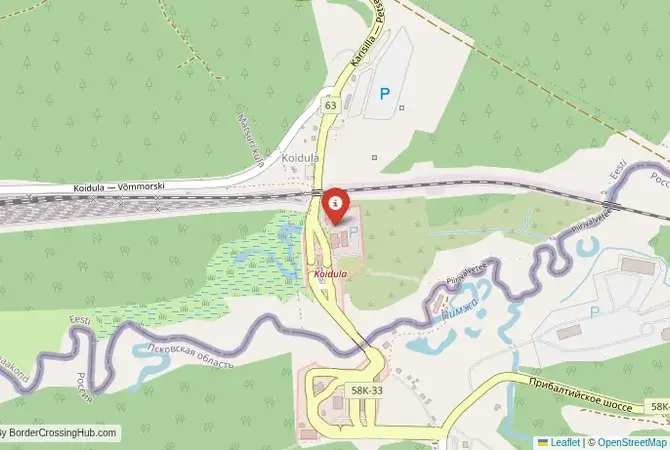
While both crossings are modern EU external borders with rigorous procedures, they offer different experiences for the traveler. Luhamaa-Shumilkino: This is the southern gateway, located on the main E77 highway. Its primary function is as a transit corridor for traffic moving between Russia and Latvia. It is a large, 24-hour facility, and it is almost always busy with commercial trucks. The procedures are professional but can be very slow due to the high volume of traffic. It is a border of logistics, a functional and often congested artery of international trade. Koidula-Pechory: This is the newer and more northerly of the two crossings in the region. The Koidula terminal on the Estonian side is a massive, state-of-the-art road and rail facility built in 2011. It is exceptionally modern and, due to its lower traffic volume, often much faster to cross than Luhamaa. Its location makes it the direct gateway to the historic Russian town of Pechory and its famous monastery, and to the city of Pskov. For the traveler focused on culture and history, Koidula is the more logical and pleasant choice. It is a border of modern efficiency set in a landscape of deep history. Luhamaa truck queues variable into 2026 (up to 10+ km reported), passenger cars significantly faster with GoSwift pre-booking; Koidula traffic remains very low (usually under 30 minutes, often near-instant for cars).
Nearby Border Crossings


The Crossing Procedure: A Meticulous EU Entry
Regardless of which crossing you choose, the procedure is fundamentally the same and is extremely thorough. You must have a valid Russian visa obtained in advance. When exiting Russia, you will go through a detailed passport check (where your migration card is taken) and an exhaustive customs search of your vehicle. When entering Estonia (and the Schengen Area), you will face an equally meticulous process. Estonian immigration will check your passport and Schengen visa (if required) and may ask about your travel plans. Estonian customs will strictly enforce EU rules on the import of goods, especially alcohol and tobacco. The process is professional and by-the-book on both sides, but it requires significant patience. Using Estonia's GoSwift online queue booking system is highly recommended for either crossing to minimize waiting times.
Final Planning Advice for the Southeastern Frontier
The border between the Pskov Oblast and Võru County is a fascinating region to travel through. The key to a successful journey is to choose the right crossing for your itinerary and to be meticulously prepared. For transit towards Latvia, Luhamaa is the most direct route. For visiting Pechory and Pskov, Koidula is the superior choice. In either case, having your Russian visa sorted months in advance is essential. Be prepared for a long, slow, and detailed process, and use the online queue management system. This frontier is more than just a line on a map; it is a journey into the heart of a complex and beautiful borderland, a region where history, culture, and modern geopolitics are written into the very landscape. It is a quiet but profound frontier, offering a deeper understanding of the forces that have shaped this corner of Europe.
View all border crossings between Russia and EstoniaPractical information
Fuel
Russia: 2 km - Estonia: 2 km
Currency
Limited near Pskov Oblast (RUB, EUR)
Safety information
Generally safe, remote risks
Connectivity
Limited Wi-Fi, 4G
Have you crossed here?
Help other travelers by sharing your experience, wait times, and any updates.