Monthly Update (September 2026):
Temaghza & El Hamdania remains a quiet secondary Tunisia–Algeria crossing, with no significant September change reported. Its remote location means travelers are more likely to encounter a long approach and limited services than a substantial queue at the border. It remains an option for travelers heading through southern Tunisia and eastern Algeria rather than a major international gateway.
About this crossing
Location and Basic Connection
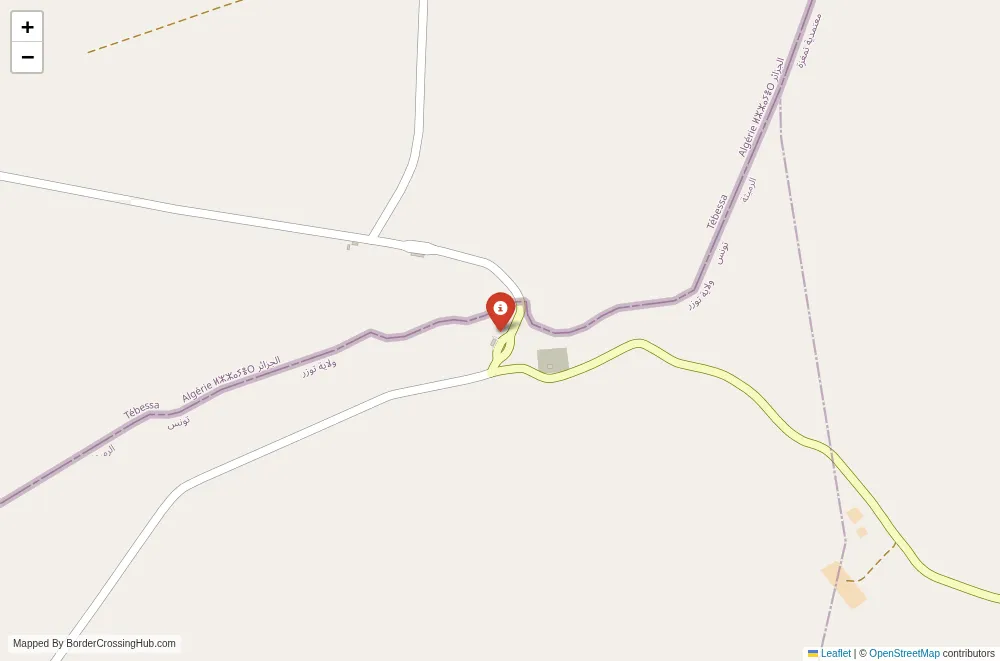
Temaghza lies in Tunisia near the small oasis settlement of the same name in the Dahar, while El Hamdania sits across in Algeria's El Oued Province, close to the town of Hamdania. The crossing connects gravel and sand tracks through flat, stony desert and low dunes, linking Tunisia's P16 or local pistes to Algeria's secondary roads toward El Oued or Taleb Larbi. It handles passenger vehicles (mostly 4x4), occasional motorcycles, and local foot traffic in one of the emptiest stretches of the 1,000-kilometer Tunisia-Algeria frontier.
Historical Background
The border follows colonial lines drawn in the 1930s between French Tunisia and French Algeria, with the area long used by nomadic tribes for seasonal movements. During the Algerian War of Independence, the region saw smuggling and support routes for the FLN. After independence, the crossing remained a minor pastoral post, occasionally closed during periods of tension or sandstorms. In recent years, it has stayed open as part of efforts to maintain peripheral connectivity, though it sees almost no commercial traffic and very few foreigners.
Nearby Border Crossings
Current Operating Status
As of early 2026, the crossing operates daily from 08:00 to 16:00 or 17:00 local time (UTC+1 for both sides). It remains open without major disruptions reported recently, though actual activity is extremely low. Tunisia offers visa-free entry for many nationalities (including Algerians and most Europeans for 90 days); Algeria provides visa-on-arrival for eligible travelers (often $80-120 USD cash, though pre-approval is strongly recommended for this remote post). The post sees primarily local pastoralists and rare overlanders. Confirm via embassies or recent traveler reports, as hours can shorten dramatically in summer heat or during sandstorms.
Practical Crossing Procedures
You cross by 4x4 vehicle or on foot. From Tunisia at Temaghza, complete exit formalities at the small immigration post for passport stamps and basic checks. Proceed across the unmarked or lightly marked desert track (several kilometers of no-man's-land) to El Hamdania in Algeria for entry. Algeria requires visa payment (USD cash essential), document review, questions about purpose, accommodation, and often a detailed itinerary check. Bring multiple passport photos, cash for fees, proof of funds, yellow fever vaccination certificate (frequently requested), and printed hotel bookings or invitation letters. The process takes 1 to 3 hours due to deliberate pacing and limited staff. Facilities remain extremely basic, often just a few buildings with no electricity or water in summer.
Wait Times and Peak Periods
Queues essentially do not exist; you may be the only traveler of the day. Early mornings move fastest before the heat becomes intense. Peaks occur only during rare local festivals or livestock movements, but even then volume stays minimal. No backups ever reported at this post.
Transportation Options
No public transport reaches either side. You must arrive by private 4x4 from Tataouine (Tunisia) or Taleb Larbi (Algeria), or hire a local driver who knows the piste. Some overlanders from Djerba or Tozeur route via Remada and Temaghza. On the Algerian side, occasional shared taxis wait at El Hamdania for Debila or El Oued. Prepare for complete self-sufficiency; fuel, water, and food must be carried.
Scams & Warnings
Scams are virtually unknown due to the absence of touts. The real challenge is the extreme isolation and harsh desert environment: temperatures exceed 45°C in summer, water sources are scarce, and mobile coverage is nonexistent for long stretches. Vehicle breakdowns can be life-threatening. Algeria maintains military patrols in the area for border security; expect thorough checks and possible escorts. The region remains calm, but standard desert travel risks (dehydration, getting lost, sandstorms) dominate. Many governments classify this area as requiring essential travel only.
Road Conditions and Scenery
Tunisia's approach consists of gravel and sand pistes through stony reg and low dunes, often marked only by tire tracks. The no-man's-land is pure desert with no signage. Algeria's side starts with similar pistes that improve slightly toward El Oued. Scenery features endless flat desert, occasional camel herds, small oases, and dramatic sunsets over the Grand Erg Oriental. The emptiness is profound; you may drive hours without seeing another vehicle.
Seasonal Variations and Weather Impacts
Winter (November-March) offers the only comfortable period with temperatures 15-25°C. Summer (June-September) brings extreme heat that can make the crossing dangerous; many locals avoid midday travel entirely. Sandstorms can close the piste without warning for days. Rain is rare but turns tracks into mud traps when it occurs.
Nearby Attractions
Temaghza itself is a tiny oasis with a basic ksar and date palms. Nearby Ksar Ghilane (south in Tunisia) offers a desert oasis and hot spring. On the Algerian side, El Oued (the city of a thousand domes) lies several hours north with unique architecture and souks. The area suits experienced desert travelers seeking absolute solitude rather than conventional tourism.
Cultural and Economic Role
Minimal trade in dates, livestock, and salt sustains the crossing for local families. It enables rare family visits and traditional movements across the desert. The post reinforces one of the quietest frontiers in North Africa, used almost exclusively by those who know the desert intimately.
Final Planning Tips
Travel only in convoy or with an experienced local driver, carry satellite phone or Garmin inReach, stock several days of water and fuel, and inform embassies of your itinerary. Pre-arrange Algerian visa if possible; cash USD is mandatory. Attempt only between November and March. With rigorous preparation, you complete one of the most isolated formal crossings in the Maghreb.
Wrapping Up the Crossing
Temaghza-El Hamdania delivers absolute desert solitude between Tunisia and Algeria. Attempt it only with serious preparation and respect for the environment, and it becomes one of the most memorable empty-quarter experiences in North Africa. Safe travels, and travel well prepared.
View all border crossings between Tunisia and AlgeriaPractical information
Currency
TND; DZD; EUR common; cash only
Safety information
Remote oasis route; checks possible
Connectivity
Wi-Fi points; 4G
Have you crossed here?
Help other travelers by sharing your experience, wait times, and any updates.