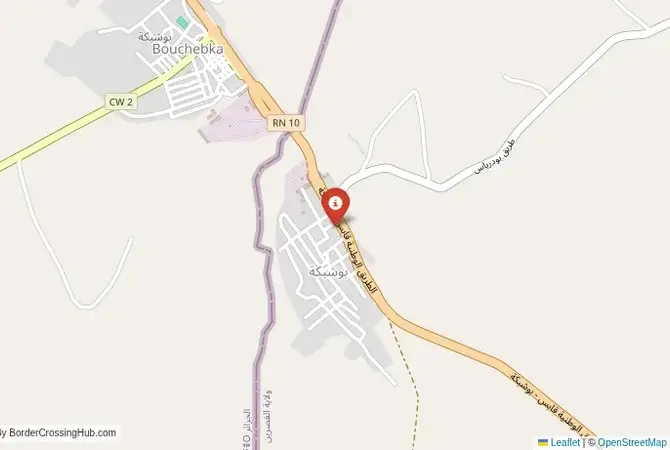
Monthly Update (September 2026):
Bouchebka & Kasserine remains an established Algeria-Tunisia crossing serving the central border region. There is no significant September closure reported. The surrounding Kasserine area is more sensitive than Tunisia's main coastal tourist routes, so travelers should check the local security situation before heading into the interior and allow extra time for the border formalities.
About this crossing
A History on a Roman and World War II Frontier
The history of this crossing is the history of the high steppes. This was the frontier of the Roman Empire, and the region is dotted with the ruins of ancient Roman towns and fortifications, such as the magnificent archaeological sites at Haidra and Sbeitla in Tunisia. In the modern era, the region became world-famous during the North African Campaign of World War II. The Battle of Kasserine Pass in 1943 was the first major engagement between American and German forces in the war, a bloody battle that was a harsh lesson for the inexperienced American army. The border region was also a critical rear base and sanctuary for the Algerian National Liberation Front (FLN) during their long and brutal war for independence from France. The crossing at Bouchebka was a key point on the supply lines for the Algerian fighters. It is a border that is saturated with the history of ancient empires and modern wars, a place where the quiet, rolling hills have been the scene of major historical turning points.
The Border Crossing Procedure: A Formal and Functional Process
The border is open 24 hours a day. The process is formal and well-organized, but it can be slow due to the volume of commercial traffic and recent high seasonal flows leading to extended waits. You must have the correct visas if your nationality requires them. Exiting Algeria (Bouchebka): You will arrive at the large Algerian border post. You will first go to the police post to get your passport stamped for exit. If you are in a vehicle, you will then need to go to the customs office to have your vehicle's temporary import permit processed for exit. This can be a slow, bureaucratic process. The No-Man's-Land: After clearing the Algerian side, you will drive a short distance to the Tunisian side. Entering Tunisia (Bouchebka): You will arrive at the Tunisian border post. You will go to the immigration hall. For most nationalities, Tunisia offers visa-free entry. The officer will check your passport and provide an entry stamp. After immigration, you will proceed to the customs office. If you are in a vehicle, you will need to get a temporary import permit. The customs check for luggage is usually a brief formality for tourists. The Tunisian officials are known for being professional and efficient.
Nearby Border Crossings


Route, Onward Travel, and The High Steppes
This crossing is on the main N10/RN15 highway. On the Algerian side, the road connects to the major city of Tébessa. On the Tunisian side, the road from the border leads to the city of Kasserine. The road quality is generally good. For those without a car, there are shared taxis (louages) and bus services that run to the border from both sides. You would need to take a taxi to the Algerian border, walk across, and then take another taxi from the Tunisian border to Kasserine, from where you can get onward transport to the rest of Tunisia. The main attraction of this route for tourists is the opportunity to explore the magnificent Roman ruins of the central Tunisian steppes, particularly the vast and well-preserved sites at Sbeitla (Sufetula) and Haidra (Ammaedara). This crossing is the perfect gateway for a tour of these less-visited but incredibly rewarding archaeological sites. It is also important to be aware of the security situation in the Kasserine region, which has been the site of counter-terrorism operations, and to consult travel advisories before your journey.
Final Planning Advice for the Steppes Route
The Bouchebka-Kasserine crossing is a major, functional inland border. It is a key gateway for overland travel between eastern Algeria and central Tunisia. The key to a successful crossing is to be prepared for a potentially long wait, especially during peak hours or high-traffic seasons. Have all your documents in order, especially your vehicle papers if you are driving. This crossing is a journey into the historical and agricultural heartland of the Maghreb. It is a border that offers a direct passage into a land of immense archaeological wealth and a powerful, layered history. It is a perfect starting point for exploring the magnificent legacy of the Roman Empire and the dramatic events of the 20th century in this beautiful and rugged part of North Africa.
View all border crossings between Algeria and TunisiaPractical information
Fuel
Algeria: <1 km - Tunisia: <1 km
Currency
Limited near Bouchebka (DZD, TND)
Safety information
Generally safe, remote risks
Connectivity
Limited Wi-Fi, 3G
Have you crossed here?
Help other travelers by sharing your experience, wait times, and any updates.