Monthly Update (August 2026):
Josefsdal has had little recent change in August, and the crossing remains a quiet option into the Bulembu area. The dry winter weather is favorable for the mountain road, although this remains a remote route where road conditions matter more than queues or border delays. There is no new restriction affecting travelers to flag this month.
About this crossing
A History of an Asbestos Boomtown
The history of this crossing is the history of the Havelock Asbestos Mine and the company town of Bulembu. In the 1930s, one of the world's richest asbestos deposits was discovered here, high in the mountains of what was then Swaziland. The town of Bulembu was built from scratch to house the thousands of workers for the mine. To transport the asbestos out, a spectacular, 20-kilometer-long aerial cableway was built, which ran from the mine in Bulembu, over the mountains, to the town of Barberton in South Africa. The Josefsdal border post was a minor checkpoint on the rough road that also served the mine. For decades, Bulembu was a thriving, if isolated, industrial hub. The closure of the mine in the early 2000s, due to the global collapse of the asbestos market, turned Bulembu into a virtual ghost town. In recent years, the town has been undergoing a remarkable revival, taken over by a Christian mission that is restoring the village and turning it into a tourist destination and a home for orphans. The border crossing is a key part of this new story, a gateway to this fascinating and resilient community.
The Border Crossing Procedure: A Basic and Rustic Affair
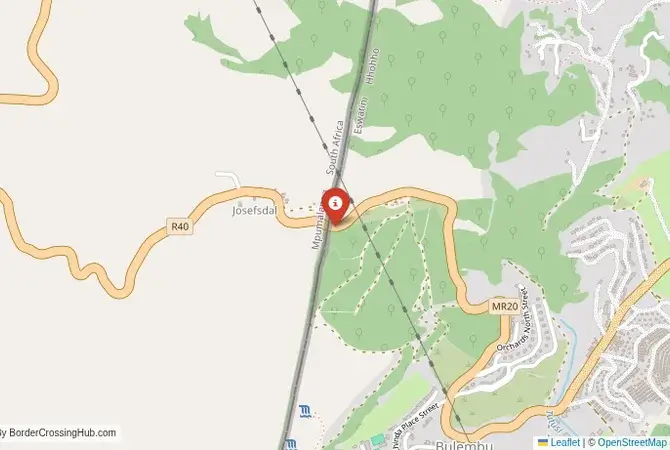
This is a very quiet border, and the process is generally very relaxed and personal. The border is open from 08:00 to 16:00, and it is essential to check the current operating times before you travel. Exiting South Africa (Josefsdal): The South African immigration and customs post is a very basic facility, likely a small, simple building. You will present your passport and get your exit stamp. The process will be manual, with your details recorded in a ledger. The officials are generally friendly and may be surprised to see a foreign traveler. The No-Man's-Land: After clearing the South African side, you will proceed a short distance on a gravel road to the Eswatini side. Entering Eswatini (Bulembu): The Eswatini post is equally basic. You will go to the immigration office and present your passport. For most nationalities, Eswatini offers visa-free entry. The officer will stamp your passport. The customs check is usually a very informal and brief formality. The entire process on both sides can often be completed in less than 30 minutes.
Nearby Border Crossings


Route, Onward Travel, and Extreme Challenges
This crossing is for high-clearance vehicles only, and a 4x4 is highly recommended. The road on the South African side, the R40 from Barberton, is paved for the first part but the final 20 kilometers to the border is a steep, winding, and very rough gravel pass. The road on the Eswatini side from the border to the town of Piggs Peak is also a gravel road, though it is generally in better condition. There is no public transport on this route. You must be completely self-sufficient. The main reason to use this crossing is to visit the historic town of Bulembu. The town is a perfectly preserved 1940s-style village, and you can take tours of the old mine workings and the town itself. It is a fascinating and slightly eerie experience. From Bulembu, you can explore the beautiful highlands of northern Eswatini. This is a route for the dedicated adventurer who enjoys challenging drives and unique, off-the-beaten-path destinations.
Final Planning Advice for a Mountain Backroad
The Josefsdal-Bulembu crossing is a true overland adventure. It is not a border for tourists in a regular car, but for serious, well-equipped adventurers. The logistical challenges are significant. The key to using this crossing is to have a very capable vehicle and to check the road conditions in advance, especially after heavy rains. It is absolutely essential to check the current operating hours of the border before you set out. The reward is a journey through one of the most beautiful and geologically significant mountain ranges in the world and a visit to the unique and inspiring community of Bulembu. It is a passage that feels like a true expedition, a journey into the deep history and rugged beauty of the Eswatini highlands.
View all border crossings between South Africa and EswatiniPractical information
Fuel
South Africa: ~30 km - Eswatini: ~30 km
Currency
None available
Safety information
Generally safe, traffic moderate
Connectivity
Wi-Fi at checkpoints, 4G
Have you crossed here?
Help other travelers by sharing your experience, wait times, and any updates.