Monthly Update (September 2026):
Talkalakh & Wadi Khaled remains a sensitive Lebanon-Syria crossing in the northern border area, with movement affected by heightened efforts to control irregular crossings. Lebanese authorities reported on September 2 that 108 Syrians had been arrested for entering Lebanon illegally in various locations, while security operations and temporary checkpoints were being used to combat infiltration. This makes the formal crossing and documentation requirements particularly important for anyone traveling in the region. Travelers should avoid relying on unofficial routes around Wadi Khaled and use an officially operating checkpoint.
About this crossing
History of a Cross-Border Community
The Wadi Khaled region is predominantly inhabited by Sunni Arab tribes whose presence predates the creation of modern Lebanon and Syria. When the French Mandate drew the border line along the river, it arbitrarily split clans and even immediate families. For decades, this was a minor inconvenience, as movement was relatively fluid, and social and economic life continued to be integrated. The outbreak of the Syrian civil war in 2011 changed everything. Talkalakh was an early site of anti-government protests and subsequent crackdowns. Wadi Khaled, on the Lebanese side, became a primary refuge for thousands of Syrians, many of whom were their own relatives, fleeing the violence. The area became a hub for humanitarian aid but also a conduit for fighters and supplies, leading to intense security scrutiny from the Lebanese Army and periodic cross-border shelling. The war transformed a soft, familial border into a hard, militarized one.
The Border Procedure: A Tense Formality
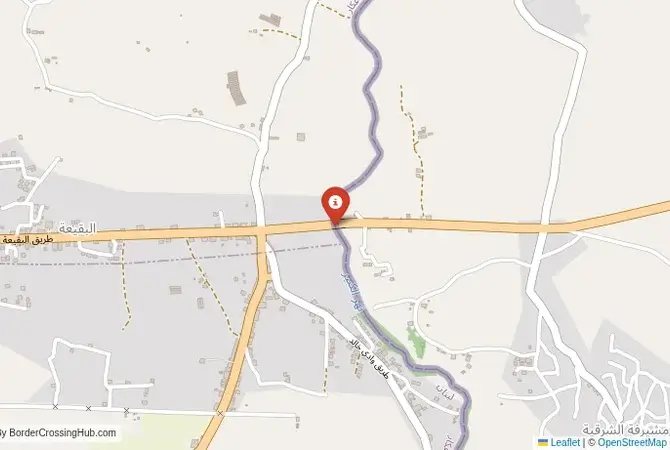
This crossing, when operational, is not intended for international tourists. Its use is limited almost exclusively to local residents with specific permits, and UN or NGO staff with the requisite high-level clearances, with northern crossings like this often closed or restricted for official traffic as of late 2025. The process is defined by heavy security. Leaving Lebanon (Wadi Khaled): The journey begins with clearing several Lebanese Armed Forces checkpoints leading to the official General Security border post. Officials will scrutinize all documents, including passports and any special permits required for movement in this sensitive area. An exit stamp is given only after all checks are satisfactory. Entering Syria (Talkalakh): After crossing the bridge over the Nahr al-Kabir, you arrive at the Syrian immigration and customs facility. A pre-obtained Syrian visa is absolutely mandatory in traditional cases, though visa on arrival or fee-based entry applies for many nationalities since 2025 transitional policies. The process is lengthy and involves multiple layers of security.1. Document Scrutiny: Your passport, visa, and any supporting letters will be examined by various security and intelligence officials.2. Questioning: Expect detailed questions about your identity, your reasons for entering Syria, your contacts, and your destination. The process is designed to filter out any perceived security threats.3. Searches: Thorough searches of vehicles and all personal belongings are standard. The temporary importation of a vehicle is a complex bureaucratic process. The entire procedure can take many hours and is subject to the mood and directives of the local security commanders.
Nearby Border Crossings
The Regional Context: Akkar and Rural Homs
Wadi Khaled is located in the Akkar District of northern Lebanon, one of the country's most underdeveloped regions. It is rural and conservative, and the influx of refugees has placed an enormous strain on its already limited infrastructure. The Lebanese Army's presence is pervasive, aimed at preventing spillover from the war and controlling smuggling. On the Syrian side, Talkalakh is in the Homs Governorate. The town and its surroundings have been deeply scarred by the conflict. While it is under the control of the Syrian government, the security situation remains tense. The area is a patchwork of loyalties and grievances, and movement is tightly controlled by military checkpoints. For any outsider, this is an opaque and unpredictable environment.
Final Thoughts on a Fractured Frontier
The Talkalakh crossing is a powerful illustration of the human cost of conflict. It is a place where a line on a map, once a mere inconvenience, has become a dangerous barrier dividing a single community. It is a border defined not by trade or tourism, but by security, surveillance, and the memory of recent violence. It stands as a testament to the resilience of the local people who navigate these new, harsh realities, but it is unequivocally a no-go zone for any form of independent travel. Its story is a crucial part of understanding the Syrian war's impact on Lebanon and the broader region.
View all border crossings between Syria and LebanonPractical information
Fuel
Lebanon: <1 km - Syria: <1 km
Currency
Near Talkalakh; LBP, SYP
Safety information
Extreme risk zone; high security threat
Connectivity
Limited Wi-Fi, 3G
Have you crossed here?
Help other travelers by sharing your experience, wait times, and any updates.