Monthly Update (September 2026):
Jousieh & Qusayr remains one of the principal passenger routes between Lebanon and Syria, alongside Masnaa. Syria reported approximately 625,000 travelers through Jousieh during the first half of 2026, confirming its importance for cross-border movement. Current information lists Jousieh-Qaa as operating for passengers from 06:00 to midnight. The crossing remains a practical alternative to Masnaa, particularly for travelers heading toward Homs and central Syria.
About this crossing
A History Forged in Strategy and Conflict
The history of the Qaa-Jousieh area is one of trade, agriculture, and tribal connections that long predated the modern border. The region's strategic value, however, thrust it into the spotlight with the onset of the Syrian civil war. The nearby Syrian city of Qusayr became the site of a pivotal battle in 2013, with its capture by Syrian government forces and Hezbollah being a major turning point in the conflict. The Jousieh crossing became a critical logistical channel. Its control has been a priority for security forces on both sides, as it sits astride routes that could be used for smuggling people and materials. The communities here, a mix of Christian and Sunni Muslim towns on the Lebanese side, have lived for years in the shadow of the war, experiencing shelling and security incidents that underscore the border's volatility.
The Crossing Procedure: A Security-Driven Process
For any individual authorized to use this crossing, the procedure is dominated by security checks. It is a slow and meticulous process that can take several hours, and its operational status can change with no notice. Leaving Lebanon (Qaa): The process starts at the Lebanese General Security and Army checkpoints near Qaa. Your vehicle and documents will be thoroughly inspected. You will need to present your passport and any required permits to the departure office to receive a Lebanese exit stamp. The security presence is high, reflecting the area's sensitivity. Entering Syria (Jousieh): After a short drive through a buffer zone, you arrive at the Syrian checkpoint. The process here is even more intense.1. Initial Document Check: Multiple security personnel will check your passport and, most importantly, your Syrian visa. A valid Syrian visa, obtained well in advance from an embassy, is mandatory, though recent updates may allow entry without visa in some contexts; no visas are issued here.2. Immigration and Security Clearance: You will be directed to the immigration building. Your passport will be taken for verification, which involves checks with multiple security branches. This can be a very lengthy wait. You will likely be questioned about the purpose of your visit, your contacts in Syria, and your travel plans.3. Customs Inspection: A detailed search of your vehicle and all personal belongings is standard procedure. Officials are looking for contraband and any items deemed a security risk. For vehicles, a temporary import permit must be processed, involving significant paperwork and fees.
Nearby Border Crossings


Route Conditions and Regional Context
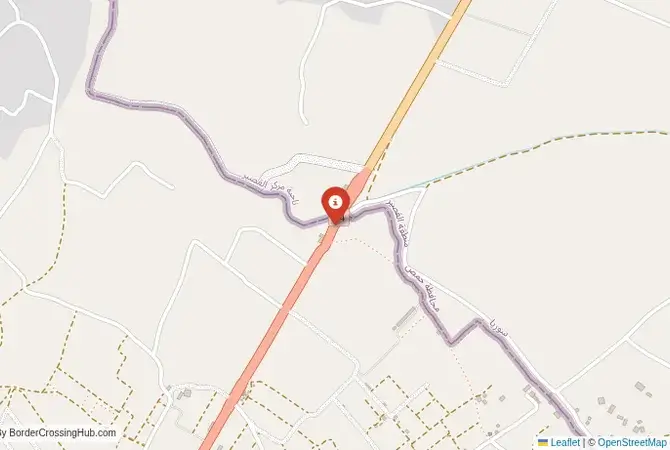
The crossing is located at the far northern tip of the Beqaa Valley, a region known for its agriculture but also for its complex security environment. The roads leading to Qaa from within Lebanon pass through numerous Lebanese Army checkpoints. On the Syrian side, the road from Jousieh towards Qusayr and Homs is under the firm control of the Syrian military and allied forces. The entire region is a high-security zone. Independent travel is impossible. Any movement by authorized foreigners, such as UN or ICRC staff, is done with extensive security protocols, often in convoys. The local population endures these conditions as a part of daily life, but for an outsider, the environment is unpredictable and carries a high level of risk. Recent rehabilitations and electronic systems have improved processing at times.
Final Considerations for a High-Risk Zone
The Jousieh border crossing is a direct window into the security dynamics of the Syrian conflict. It is not a tourist route or a commercial hub but a strategic chokepoint on a sensitive frontier. Its function is dictated by the military and security situation on the ground. Any consideration of this route must begin and end with an acknowledgment of the extreme dangers involved and adherence to official government warnings that advise against all travel to this region. The crossing is a testament to the enduring, albeit tense, state functions that persist even in the most challenging of circumstances.
View all border crossings between Lebanon and SyriaPractical information
Fuel
Lebanon: <1 km - Syria: <1 km
Currency
Near Jousieh; LBP, SYP
Safety information
Extreme risk; strict security checks
Connectivity
Limited Wi-Fi, 3G
Have you crossed here?
Help other travelers by sharing your experience, wait times, and any updates.